
Diet & Nutrition · 10 min read
What Do Hedgehogs Eat? The Complete Diet Guide
A hedgehog's diet is roughly 70% high-protein kibble, 20% insects, 10% other. Which kibbles, which insects, what to skip, and the mistakes that quietly hurt hedgehogs.
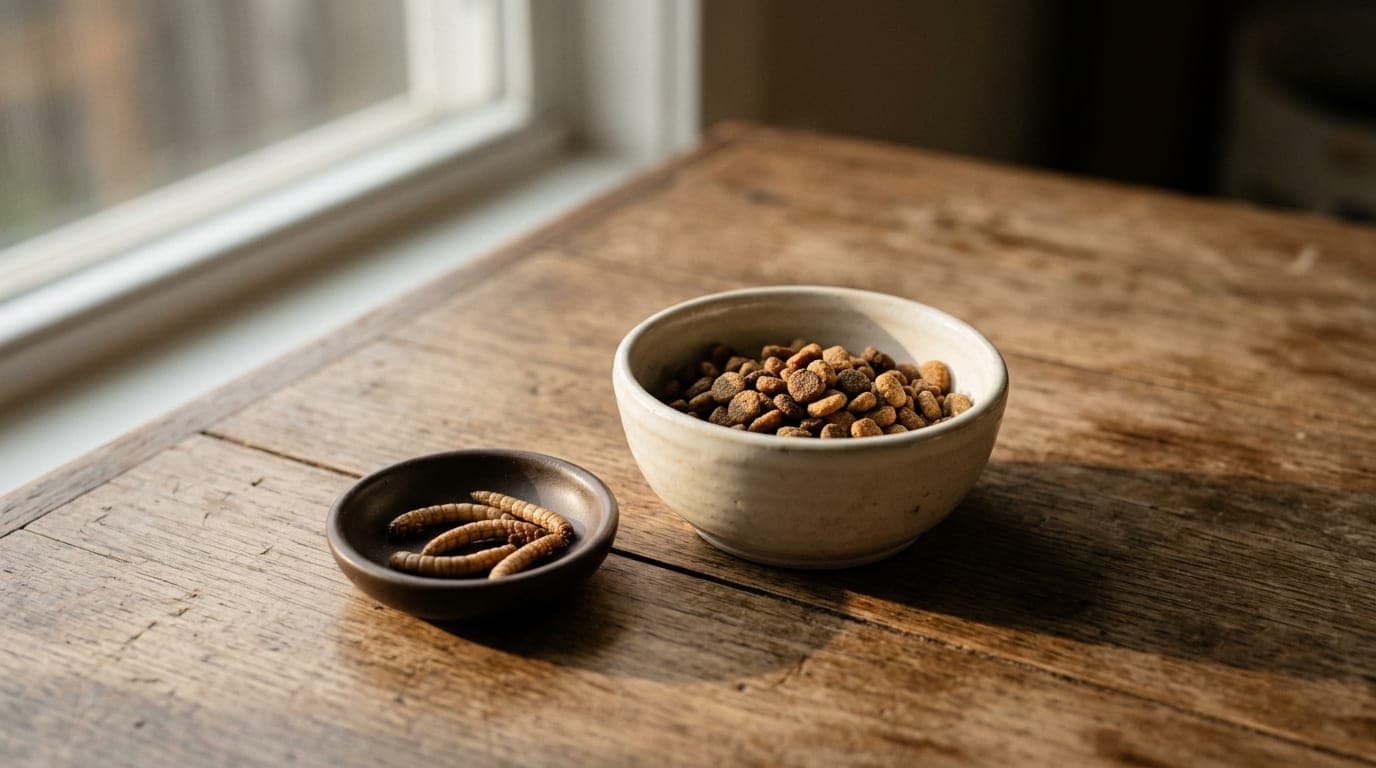
Kibble and insects — the two staples
Hedgehogs are insectivores. Their diet should be roughly 70% high-protein dry food, 20% insects, and about 10% everything else combined. Fruit, vegetables, occasional cooked egg. Most experienced owners feed a quality grain-inclusive adult cat kibble as the staple, freeze-dried or live insects two to four times a week, and a small treat once or twice a week. The pet-store "hedgehog food" most beginners buy first is usually worse than the cat kibble next to it.
That's the short version. The longer version is worth reading because almost every hedgehog health issue we've helped diagnose started as a diet problem.
The basic structure of a hedgehog diet
A captive African pygmy hedgehog isn't a wild animal anymore. They don't forage for hours, don't cover the ground a wild hedgehog covers, don't burn off the calories the way they would in a hedgerow. So feeding them like a wild animal: heavy on insects, low on consistency. Leads to two outcomes: obesity, or pickiness severe enough that they refuse to eat at all.
The 70/20/10 ratio works because it accounts for that. Here's what each part does:
The 70%. Kibble. A high-protein dry food gives consistent calories, predictable nutrition, dental wear from the chewing, and no surprise allergens. It's the base layer. Most hedgehog deaths from preventable causes trace back to a bad kibble being the foundation of every meal.
The 20%: insects. Hedgehogs evolved to eat bugs. Mealworms, crickets, dubia roaches, black soldier fly larvae. These provide the chitin-derived fiber, the specific amino acids, and the moisture content that kibble alone misses. They're also the part hedgehogs visibly enjoy, which matters for handling and bonding.
The 10%. Everything else. Small amounts of fruit, vegetable, cooked egg. This is the part owners overdo. We've never seen a hedgehog get sick from eating too little of this category. We've seen many get sick from eating too much.
The kibble: what to feed and how to read the label
This section is the longest because it's the one most owners get wrong, and the consequences compound over the hedgehog's whole life.
Why cat food, not "hedgehog food"
The dedicated hedgehog food sold next to the hedgehogs at most pet stores is usually a worse product than the cat kibble two aisles over, at the same price. Common issues:
- Mealworm-heavy formulations that train a hedgehog to expect mealworms in every meal, then refuse food when they're not there
- Corn or cereal filler that bulks the bag without contributing protein
- Crude protein percentages around 22–25%, well below what an insectivore needs
- Pellet shapes too large for hedgehog teeth, leading to wasted food and dental wear in the wrong places
A grain-inclusive adult cat kibble in the 30–35% protein range, with poultry as the first ingredient, almost always outperforms the hedgehog-specific bag. That's not because cat food was designed for hedgehogs. It's because cat food has had decades of competitive nutritional refinement, and hedgehog-specific food has had almost none.
What to look for on the label
The numbers that matter, in order:
- Crude protein: 30%+ for adults. 32–35% is the sweet spot.
- Crude fat: ≤15%. Higher than that and you'll see weight gain over months.
- First ingredient: A named meat (chicken, turkey, lamb), not "meat meal" or "by-product meal."
- Grain inclusion: Yes, surprisingly. Grain-free formulas often substitute legumes that have been linked to heart issues in cats. We avoid them by default.
- Kibble size: Small enough that an adult hedgehog can pick up and chew a single piece. Most adult cat kibble is fine; some "indoor cat" formulas are better-sized than "performance" lines.
If you want a specific brand recommendation, our kibble guide goes deeper. But picking off any reputable brand's adult, grain-inclusive, 30%+ protein line will outperform 90% of what's sold as hedgehog food.
What to actively avoid
- Kitten food. Too high in fat and calorie-dense. Causes weight gain that's hard to reverse.
- Senior cat food. Protein restricted for cat kidney issues, which is the wrong direction for a hedgehog.
- Grain-free diets. As above. The legume substitutes are unproven and have raised concerns in cats and dogs.
- Prescription diets unless directed by a vet for a specific condition.
- Anything with a long color-coded ingredient list designed to look like vegetables. Hedgehogs don't eat from a salad bar in the wild.
Insects: necessary, not optional
The 20% of the diet that's insects isn't a treat. It's a nutrient category that kibble can't fully replace.
Mealworms
Mealworms are the most common insect feeder, the most addictive, and the most overdone.
- Safe portion: Three mealworms, twice a week, max. Some owners go four. None of the experienced owners we know go higher than that as a regular schedule.
- Live vs. dried vs. freeze-dried: All are fine. Live are slightly more enrichment (the hedgehog has to catch them); freeze-dried is the most convenient. Dried (from the bird-feeding aisle) is the cheapest and the lowest nutritional value.
- Why so few: They're calorie-dense and unusually palatable. A hedgehog that's been on free-flowing mealworms will refuse kibble until you cave. The two-times-a-week limit prevents the dependency from forming.
Crickets, dubia roaches, BSF larvae
Better insects than mealworms. Higher calcium-to-phosphorus ratio, lower fat percentage, less likely to cause an addiction pattern. Downsides: harder to source, higher cost, slightly more work.
- Crickets: Closest to a wild diet. Live crickets are the gold standard for enrichment but require their own care and tend to escape. Freeze-dried is the practical alternative.
- Dubia roaches: Best nutritional profile of the common feeders. Don't escape (they don't climb glass), don't bite, don't smell. The squeamishness factor is the only real downside.
- Black soldier fly larvae: High calcium, low fat. Sold as "calci-worms" or "phoenix worms." A good rotation option.
A reasonable insect schedule for an adult hedgehog: BSF larvae or dubia twice a week (3–5 each), crickets once a week (2–3), mealworms as the rare weekend treat (3, twice a week max if you must).
Wax worms. Never as a staple
Wax worms are the candy of the insect world. Extremely fatty, addictive, and the leading cause of obese hedgehogs in our experience. Reserve for medication-assistance situations or as an extreme rarity.
Treats: fruit, vegetable, and what counts as "a treat"
This is the 10% slice. Treats include fruits, vegetables, cooked egg, occasional cooked plain chicken. Anything outside the kibble + insect baseline.
The rules across all treats:
- Pea-sized portion unless the food is naturally smaller (a single blueberry half, a single mealworm)
- Once or twice a week per food type
- Room temperature, never cold from the fridge
- Plain. No salt, no oil, no seasoning, no cooking method beyond steam or plain boil
For specific foods, our A–Z food reference covers the common ones. The short version of the most-asked:
- Yes, with care: Watermelon, blueberries, apple, strawberries, cucumber, bell pepper, scrambled egg, plain cooked chicken
- No or never: Avocado, grapes/raisins, citrus, onion family, garlic, chocolate, dairy products, raw meat, anything with added sugar or salt
When in doubt, skip it. There's no fruit or vegetable that closes a meaningful nutritional gap a kibble + insect diet leaves open. Treats are for variety and bonding, not nutrition.
Foods that will hurt your hedgehog
A short list of the foods that aren't "use sparingly" but actually toxic. Each gets its own page in the food reference; this is the headline-level summary.
- Avocado. Contains persin, toxic to most pets. Full reasoning here.
- Grapes and raisins. Suspected toxicity in many small mammals. The mechanism isn't fully understood but the risk-benefit ratio is wrong.
- Onion family: onions, garlic, leeks, chives. Causes red blood cell damage in most pets. Even small amounts add up.
- Citrus. Too acidic. Causes mouth and stomach irritation.
- Chocolate: theobromine toxicity. Same mechanism as in dogs.
- Dairy. Hedgehogs are lactose intolerant. Causes diarrhea, which dehydrates a small animal fast.
- Raw meat: bacterial risk that a small carnivore's gut isn't built for.
- Anything wild-caught. Risk of pesticide exposure and parasites that domestic feeders don't carry.
- Bread and processed human food. High salt, low nutrition, no upside.
If your hedgehog has eaten any of these and you're not sure how much: call an exotic-animal vet. Don't wait to see if symptoms develop. At hedgehog body weight (350–700g), the dose-to-toxicity ratio compounds fast.
Water: bowl, bottle, and how much
Hedgehogs need access to clean water 24/7. The format matters less than people argue about online.
- Bowl: A small ceramic dish, heavy enough not to tip, refilled daily. Most natural for the animal. Downside: they'll walk through it, sleep next to it, occasionally drag bedding into it.
- Bottle: A small-animal water bottle clipped to the cage. Cleaner. Downside: harder to drink from, and a stuck ball means the hedgehog gets nothing all day without you noticing.
The pragmatic answer: offer both. The hedgehog will pick the one they prefer and ignore the other. Watching which one they actually drink from is the cheapest way to find out.
Tap water is fine in most municipalities. Bottled spring water is fine. Distilled water is not. It lacks the trace minerals that a small animal's body relies on.
Feeding schedule and portions
Hedgehogs are nocturnal. They eat at night. The routine that works for most:
- Evening (around your bedtime): Refresh kibble, refresh water, offer insects if it's an insect night. Remove uneaten fresh food from earlier in the day.
- Morning: Check that water hasn't been knocked over. Note roughly how much kibble was eaten.
- Weekly: Weigh the hedgehog. Adjust kibble portion if weight is trending more than 10% in either direction.
For an adult African pygmy:
- 1–2 tablespoons dry kibble per night
- Insects: 2–4 times a week, 3–5 insects per session depending on type
- Treats: 0–2 times a week, pea-sized portion
Pregnant or lactating females, growing juveniles, and very active adults need more. Sedentary adults and seniors need less. Weight, not appetite, is the metric that matters.
Special situations
The overweight hedgehog
The most common diet issue we see. Causes: too many mealworms, too much treat, sometimes the wrong kibble. The fix:
- Switch to a lower-fat (≤12%) kibble for 6–8 weeks
- Cut insects to twice a week, no mealworms
- Cut treats to once every two weeks
- Increase wheel hygiene so they actually use the wheel
- Weigh weekly; expect 5–10g loss per week. Anything faster is too aggressive.
Don't crash-diet a hedgehog. Sudden caloric restriction can trigger hepatic lipidosis (fatty liver disease), which is much harder to treat than the original obesity.
The underweight hedgehog
Less common but more urgent. First step: rule out illness. Underweight without an obvious diet cause is almost always a vet visit. If diet-driven (refusing kibble, picky eating), strategies include:
- Switch kibble brand or flavor (sometimes this is enough)
- Soak kibble in warm water for 5 minutes to soften, especially for older hedgehogs with dental wear
- Add a high-calorie supplement under vet guidance
- Increase insect frequency temporarily
The picky hedgehog
Almost always trained, not innate. The pattern: a hedgehog learns that holding out gets more mealworms or treats, so they stop eating kibble. The fix is cold but works: put down the kibble, leave it 24 hours, no treats, no insects. They will eat. After two days, resume normal schedule with strict treat limits.
The sick or post-surgery hedgehog
Follow your vet's instructions specifically. As a general principle: the appetite is the recovery indicator. If they're eating, they're recovering. If they refuse food for 24+ hours, escalate.
Common diet mistakes
The pattern recognition from years of helping new owners debug their hedgehog's diet:
- Free-flowing mealworms. The most common, most preventable mistake. If your bag of mealworms lasts less than a month, you're feeding too many.
- "Hedgehog food" from a chain pet store. Almost always a worse product than equivalently-priced cat kibble. The packaging is the only reason to buy it.
- Cold treats. Fridge-cold fruit upsets a small animal's digestive system. Always room-temp.
- Trying every food a hedgehog "likes." Hedgehogs like things that are bad for them, the same way kids like candy. Liking it is not the standard.
- Skipping the weekly weigh-in. A 50g change in either direction is 10% of body weight for an adult. By the time it's visible to your eye, it's often a vet visit.
- Trusting a random YouTube video over a vet. Most pet-care content on social platforms is wrong, and the cute videos are often the worst. When stakes are health, trust the boring source.
When to talk to a vet about diet
The threshold is lower than people think. Schedule a non-emergency conversation if:
- Your hedgehog has gained or lost more than 10% of body weight in a month
- They've refused food for more than 24 hours
- Their stool has been consistently abnormal for more than 48 hours
- They're three years or older and you haven't reviewed their diet in a year (senior diet shifts apply)
Most exotic-animal vets will do a 15-minute phone consultation on diet specifically. It's cheaper than a visit and almost always worth the time.
We update this guide as our understanding shifts. The major sections were last reviewed by our exotic-animal vet on the date stamped at the top of this page.
Common questions
Common questions
Can I just feed my hedgehog cat food?
Yes, most experienced owners do. Pick adult cat kibble that's grain-inclusive (so the protein isn't all meat-meal), 30%+ crude protein, ≤15% fat. Avoid kitten food — too rich. Skip dedicated 'hedgehog food' from pet stores; most of it is lower-quality than the cat kibble at the same price point.
How much should a hedgehog eat per day?
Adults need roughly 1 to 2 tablespoons of dry kibble per night, weighed weekly. Active or pregnant females need more; sedentary or older hedgehogs need less. Watch the weight, not the bowl. Sudden swings of more than 10% in either direction warrant a vet call.
Why are mealworms a problem?
They're not a problem in moderation. The problem is they're addictive — high fat, soft texture, easy to chew — and hedgehogs will refuse better food while holding out for more. Three mealworms twice a week is the upper safe limit. Daily mealworms cause obesity and tooth issues.
Do hedgehogs need fresh food daily?
Kibble plus water (bowl or bottle, room temperature) every night. Live or freeze-dried insects 2 to 4 times a week. Fruit or vegetable treats once or twice a week, optional. Adjust portions based on weekly weight, not appetite — hedgehogs will overeat treats happily.
Can hedgehogs eat dog food?
Generally no. Most adult dog kibble is too low in protein for hedgehogs and the kibble pieces are usually too large for their teeth. Grain-inclusive adult cat food is the better default.
Is hedgehog-specific food in pet stores any good?
Most of it is mediocre to bad. Common issues: too much corn or cereal filler, mealworms baked in (which trains a treat dependency), low protein percentages disguised by long ingredient lists. The exceptions are a few specialty brands sold at exotic-pet stores or online; we cover them in the kibble guide.
What should I feed a pet hedgehog day to day?
The simple version of what to feed a hedgehog: about 70% high-protein adult cat kibble as the staple, 20% insects (crickets, dubia roaches, mealworms only in moderation), and 10% occasional treats like a little fruit, vegetable, or cooked egg. Skip the pet-store 'hedgehog food' as a base; a quality cat kibble is usually better. Fresh water always. That ratio is the whole answer; the rest of this guide is the detail behind it.
Related on this site
Every guide in Diet & Nutrition
- Hedgehog Feeding Schedule: How Much, How Often, When
- What Insects Can Hedgehogs Eat? The Complete Feeder Insect Guide
- Can hedgehogs eat watermelon?
- Can hedgehogs eat blueberries?
- Can hedgehogs eat banana?
- Can hedgehogs eat apple?
- Can hedgehogs eat avocado?
- Can hedgehogs eat strawberries?
- Can hedgehogs eat grapes?
- Can hedgehogs eat mealworms?
- Can hedgehogs eat eggs?
- Can hedgehogs eat chicken?
- Can hedgehogs eat cucumber?
- Can hedgehogs eat carrot?
- Can hedgehogs eat cheese?
- Can hedgehogs eat bread?
- Can hedgehogs eat onion?
- Can hedgehogs eat tomatoes?
- Can hedgehogs eat raspberries?
- Can hedgehogs eat broccoli?
- Can hedgehogs eat sweet potato?
- Can hedgehogs eat pumpkin?
- Can hedgehogs eat bell pepper?
- Can hedgehogs eat mango?
- Can hedgehogs eat cantaloupe?
- Can hedgehogs eat spinach?
- Can hedgehogs eat pineapple?
- Can hedgehogs eat waxworms?
- Can hedgehogs eat crickets?
- Can hedgehogs eat cat food?
- Can hedgehogs eat dog food?
- Can hedgehogs eat peanut butter?
Sources
Sources
- Husbandry and Nutrition of Insectivorous and Omnivorous Mammals — Veterinary Clinics of North America: Exotic Animal Practice
- African pygmy hedgehog (Atelerix albiventris) — clinical and dietary considerations — Wildpro / Twycross Zoo Veterinary Reference