
Diet & Nutrition · 2 min read
Can Hedgehogs Eat Pineapple? (Rarely)
Rarely — pineapple is acidic enough to irritate a hedgehog's mouth and digestive tract. Tiny piece occasionally, not regular.
Verdict
Rarely
Portion · Frequency
Half-pea-sized piece of soft flesh · Twice a month at most
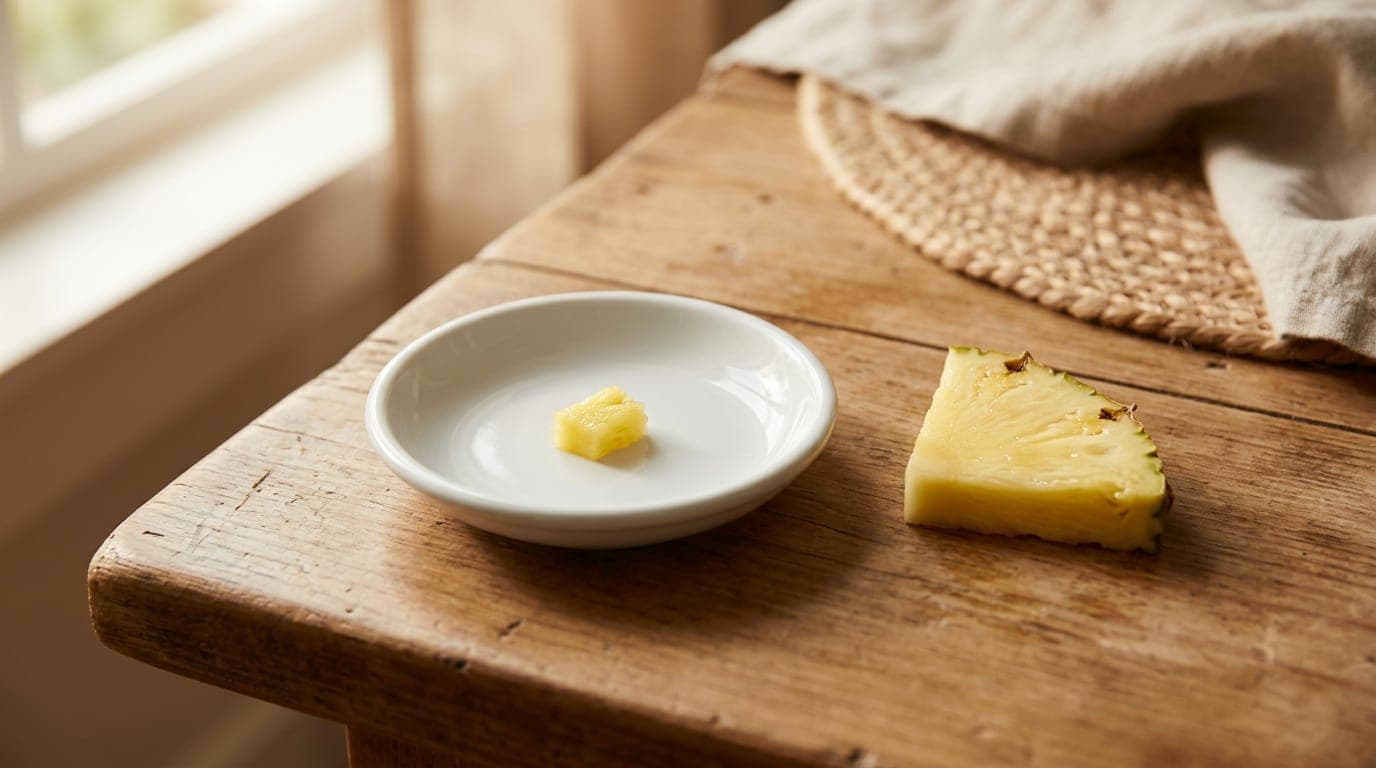
Smaller than pea · fresh only · monthly max
Pineapple is one of those foods where the answer is technically "not toxic" but practically "not worth it." The acid and bromelain (an enzyme that breaks down protein) in pineapple irritate most hedgehogs' mouths and stomachs. Some hedgehogs tolerate a tiny piece without reaction; others get visibly uncomfortable. Given that there's no nutritional gap pineapple fills, most experienced owners skip it.
Why
Pineapple is roughly 9% sugar and noticeably acidic — pH around 3.3, similar to citrus. The bromelain in fresh pineapple is the same enzyme used in commercial meat tenderizers, and at hedgehog scale it can cause mild mouth irritation in animals that are sensitive to it.
The vitamin C content is real but unnecessary. The variety it adds to the rotation isn't worth the gut-irritation gamble for most hedgehogs. If your hedgehog has previously had problems with citrus or tomato, skip pineapple entirely.
How to actually serve it
If you decide to try it: a piece smaller than a pea, from the softest part of a ripe pineapple (not the firm core, not near the skin). Serve at room temperature. Watch closely for the next hour for any sign of mouth discomfort or refusal of food.
Three rules, no exceptions
- Smaller than pea-sized — start with half that the first time
- Soft flesh only — never the firm woody core or anywhere near the skin
- Fresh, never canned (canned pineapple has added sugar and is even more acidic)
What it’s actually good for
Some hedgehogs tolerate pineapple fine and visibly enjoy it. Vitamin C content. The bromelain (in tiny doses) may have some anti-inflammatory effect, though there's no practical reason to feed pineapple specifically for that.
What it’s not good for
Acidic enough to irritate sensitive hedgehogs. Sugar content is moderate-high. Bromelain causes mouth irritation in some animals. The risk-benefit math leans toward skipping it.
Signs to watch for
Drooling, excessive lip licking, refusing food, or pawing at the mouth within an hour of eating pineapple means it's irritating them — stop, rinse mouth gently with water on a soft cloth, and don't offer pineapple again. Loose stool 6–24 hours later means too much or too acidic.
Compare to other fruits
| Food | Safe? | Rule |
|---|---|---|
| Watermelon | Yes | No seeds, no rind, pea-sized, weekly |
| Blueberries | Yes | Half a berry, weekly — high in antioxidants |
| Banana | Yes | Pea-sized, biweekly — highest sugar of the safe fruit |
| Apple | Yes | No seeds (cyanide), no skin if waxed, pea-sized |
Common questions
Common questions
What about canned pineapple in juice?
No. Canned pineapple — even "in juice" rather than syrup — has added sugar and is more acidic than fresh. If you're going to try pineapple at all, only fresh.
Is pineapple core safe?
No. The core is firm and fibrous, hard for an animal this size to chew, and even more concentrated in bromelain than the soft flesh.
Why do some sites say pineapple is fine?
Because it's not technically toxic. But the practical experience among experienced owners is that pineapple causes more digestive issues per serving than other fruit, and there's no nutritional reason to feed it specifically. Other fruits do the same job better.
Related on this site