
Diet & Nutrition · 2 min read
Can Hedgehogs Eat Waxworms? (Rarely)
Rarely — waxworms are extremely fatty and addictive. Use them as a special treat, never as a staple insect.
Verdict
Rarely
Portion · Frequency
One waxworm, no more than two · Twice a month at most
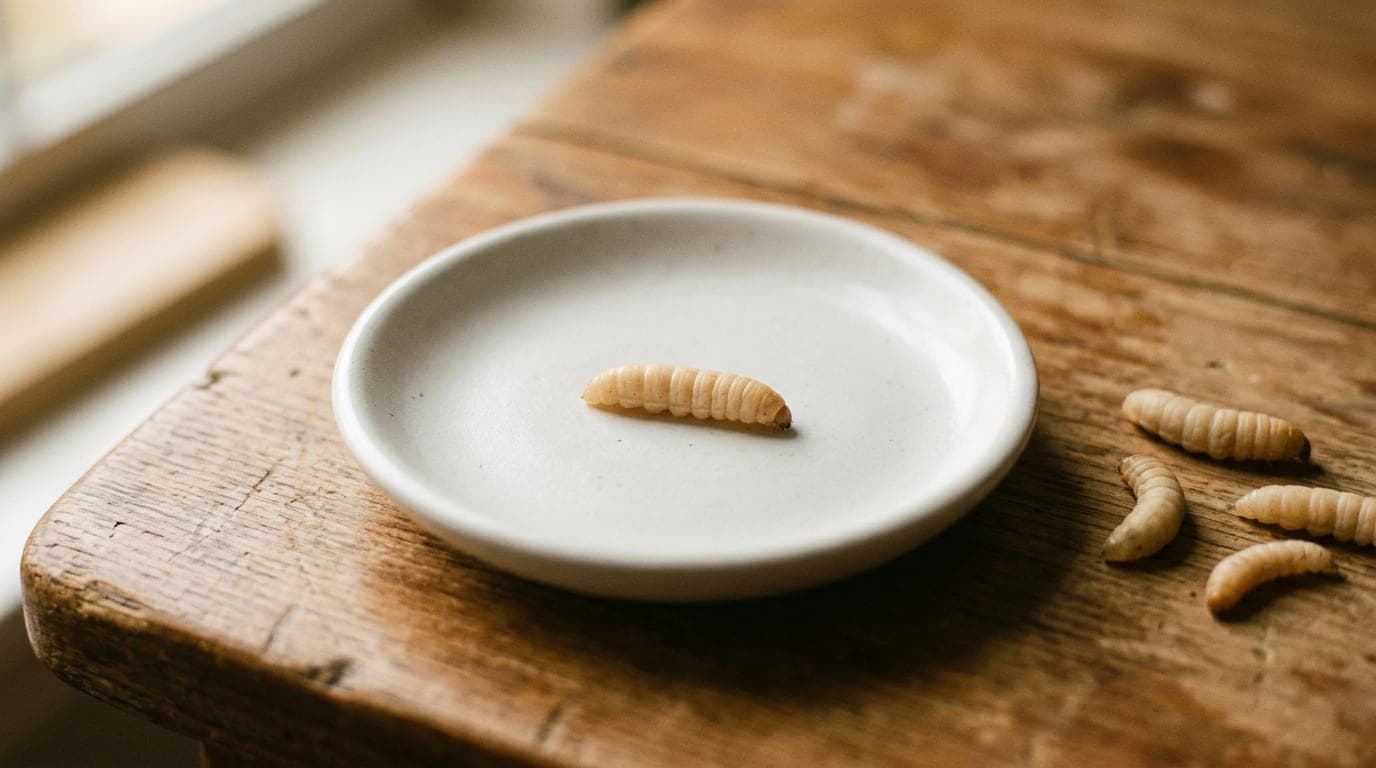
One waxworm · twice a month max
Waxworms are the candy of the insect world. Hedgehogs love them, which is exactly why they're a problem. They're roughly 55% fat by dry weight — about three times the fat content of mealworms, and four to five times that of crickets or dubia roaches. Fed regularly, they cause weight gain that's hard to reverse and create an addiction pattern where your hedgehog refuses normal food because they're holding out for waxworms.
Why
Hedgehogs in the wild eat insects across a wide range of fat profiles. In captivity, the insects readily available — mealworms, crickets, dubia roaches, black soldier fly larvae — already cluster on the higher end of fat compared to what a wild hedgehog would average. Adding waxworms on top of that pushes the diet toward calorie surplus.
The addiction pattern is the bigger practical problem. A hedgehog that has had waxworms a few times will visibly anticipate them, ignore other food, and out-stubborn most owners. Breaking this pattern requires removing waxworms from rotation entirely for at least 6–8 weeks while resetting their food expectations.
The situations where waxworms earn their keep are narrow: as a once-a-month special treat for a hedgehog whose weight is stable, or to mask bitter oral medication when nothing else works.
How to actually serve it
One waxworm, no more than two. Fed by hand or in a small dish — not free in the cage where they can hide and surprise you. Live or freeze-dried both work; live is slightly more enrichment but harder to source.
Three rules, no exceptions
- One waxworm per session, never a handful
- Twice a month maximum
- If your hedgehog starts refusing kibble, remove waxworms entirely for 6–8 weeks
What it’s actually good for
Useful for masking medication. Useful as a one-off special treat for a thin hedgehog who needs encouragement to eat. Most hedgehogs visibly enjoy them, which makes them a useful tool for bonding with shy animals.
What it’s not good for
Fat content is the leading dietary cause of preventable obesity in pet hedgehogs we've seen. Addictive enough to cause picky-eater behavior that can take months to undo. Almost no protein per serving compared to other feeders, so they're not even nutritionally useful.
Signs to watch for
Weight gain over weeks. Picky behavior — refusing kibble in expectation of treats — within a few servings. Hepatic lipidosis (fatty liver) is the long-term risk, and it's much harder to treat than the underlying obesity. If your hedgehog has gained more than 10% body weight in a month after starting waxworms, stop entirely and call a vet.
Compare to other insects
Common questions
Common questions
Why do people feed waxworms at all?
Because hedgehogs love them and they look cute eating them. It's an emotional reason, not a nutritional one. Used sparingly as a special treat or for medication-masking, they're fine. Used daily, they cause real harm.
What insects should I be feeding instead?
Crickets, dubia roaches, and black soldier fly larvae are the better staples. Mealworms in moderation (2–3, twice a week max). Waxworms as the rare exception.
My hedgehog won't eat anything else now. What do I do?
Cold turkey: remove all treats and insects for at least a week. Offer only kibble. They will eat once they're hungry enough — hedgehogs won't starve themselves. After a week, reintroduce only crickets/dubia (no waxworms, no mealworms) at twice-weekly portions. Don't bring waxworms back into rotation for at least 8 weeks.
Related on this site