
Diet & Nutrition · 2 min read
Can Hedgehogs Eat Mealworms? (Yes, with care)
Yes — but three twice a week, max. Mealworms are addictive and the leading cause of obesity in pet hedgehogs.
Verdict
Yes, with care
Portion · Frequency
Three mealworms · Twice a week, max
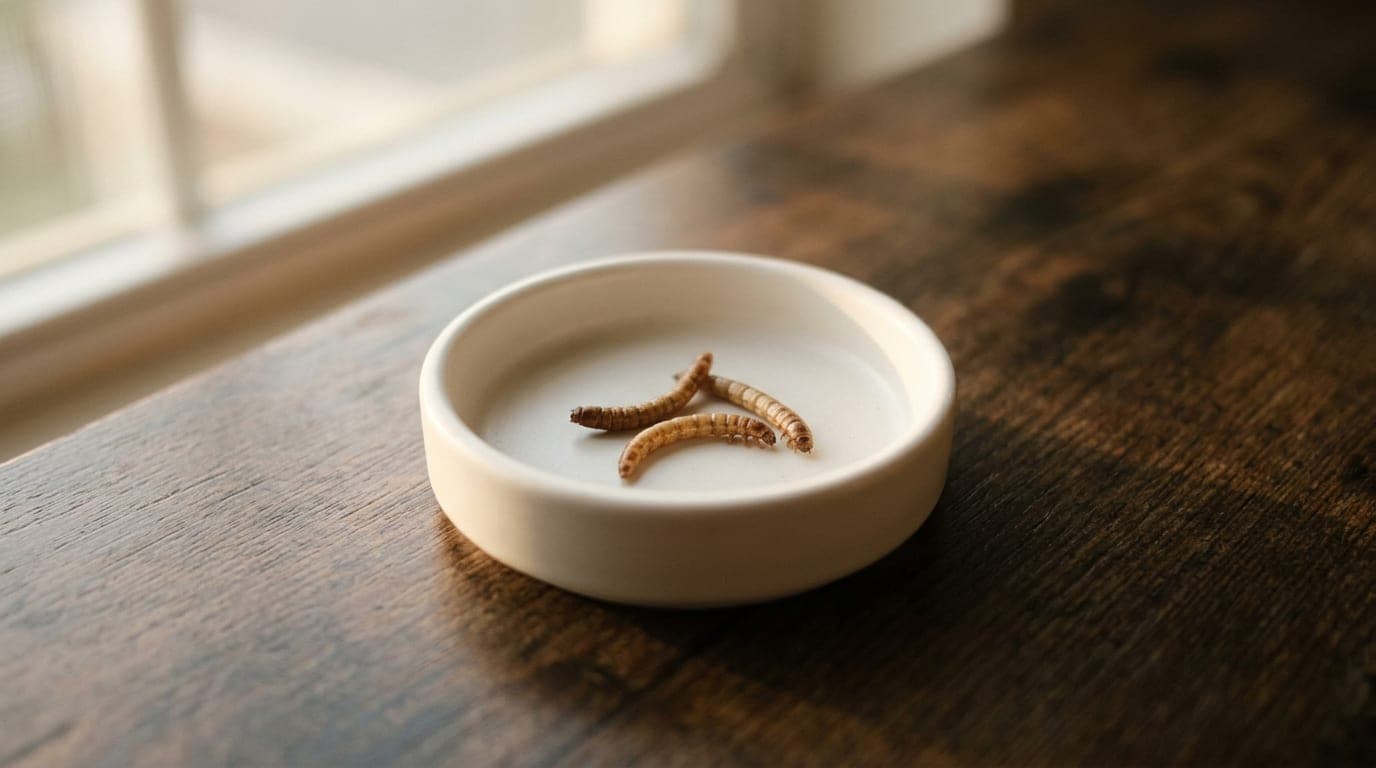
Three mealworms · twice a week · max
Mealworms are the most common feeder insect, the most overdone, and the leading cause of preventable health issues in pet hedgehogs. They're not toxic — they're a perfectly fine occasional treat. The problem is that hedgehogs find them disproportionately rewarding, and owners find them disproportionately easy to give.
Why
Mealworms are about 25% protein and 13% fat by weight — high-fat for an insect, energy-dense, and unusually palatable to hedgehogs. The combination is what makes them work as an occasional treat and what makes them dangerous as a staple.
We've helped multiple owners debug a hedgehog refusing kibble. The root cause is almost always the same: free-flowing mealworms at every feeding for months, training the hedgehog to wait for the better food. The fix is harsh but works — pull mealworms entirely for 2 weeks, resume on the strict twice-a-week schedule.
How to actually serve it
Three mealworms, twice a week. Live, dried (from the bird-feeding aisle), or freeze-dried — all are fine, with different tradeoffs. Live mealworms provide the most enrichment because the hedgehog has to catch them. Freeze-dried is the most convenient. Dried (cheap bird-food grade) is the lowest nutritional value but acceptable as a rare treat.
Serve in a small dish or scatter in a low-sided enrichment puzzle. If serving live, count them in front of the hedgehog and don't leave extras in the cage — they'll burrow into substrate and you'll lose track.
Three rules, no exceptions
- Three per session, twice a week, no exceptions
- Don't leave live mealworms unattended in the cage
- Better insects exist (dubia roaches, BSF larvae) — rotate when you can
Signs to watch for
Watch for kibble refusal — the most common sign you've trained a mealworm dependency. Watch for weight gain over weeks. Watch for the hedgehog standing alert and waiting at the cage opening when you approach (cute, but means the treat schedule is too predictable).
Compare to other insects
Common questions
Common questions
Can my hedgehog eat live mealworms?
Yes. Some hedgehogs strongly prefer live; the catching is enriching. Just count them and don't leave extras — live mealworms burrow and you'll lose track of how many are actually being eaten.
What's the difference between mealworms, superworms, and waxworms?
Mealworms (Tenebrio molitor larvae) are the standard. Superworms (Zophobas morio) are larger and slightly higher in fat — fine as an occasional treat, with the same twice-a-week limit. Waxworms are extremely fatty and addictive; reserve for medication assistance only, not as a regular treat.
Are dried mealworms (the bird-food kind) okay?
Acceptable for occasional use but lower nutritional value than freeze-dried or live. The drying process degrades some nutrients. If dried is what you have, use it sparingly; if you can get freeze-dried, prefer it.
Related on this site