
Diet & Nutrition · 2 min read
Can Hedgehogs Eat Crickets? (Yes)
Yes — crickets are one of the better staple insects for a captive hedgehog.
Verdict
Yes
Portion · Frequency
2–3 crickets per session · 1–2 times a week
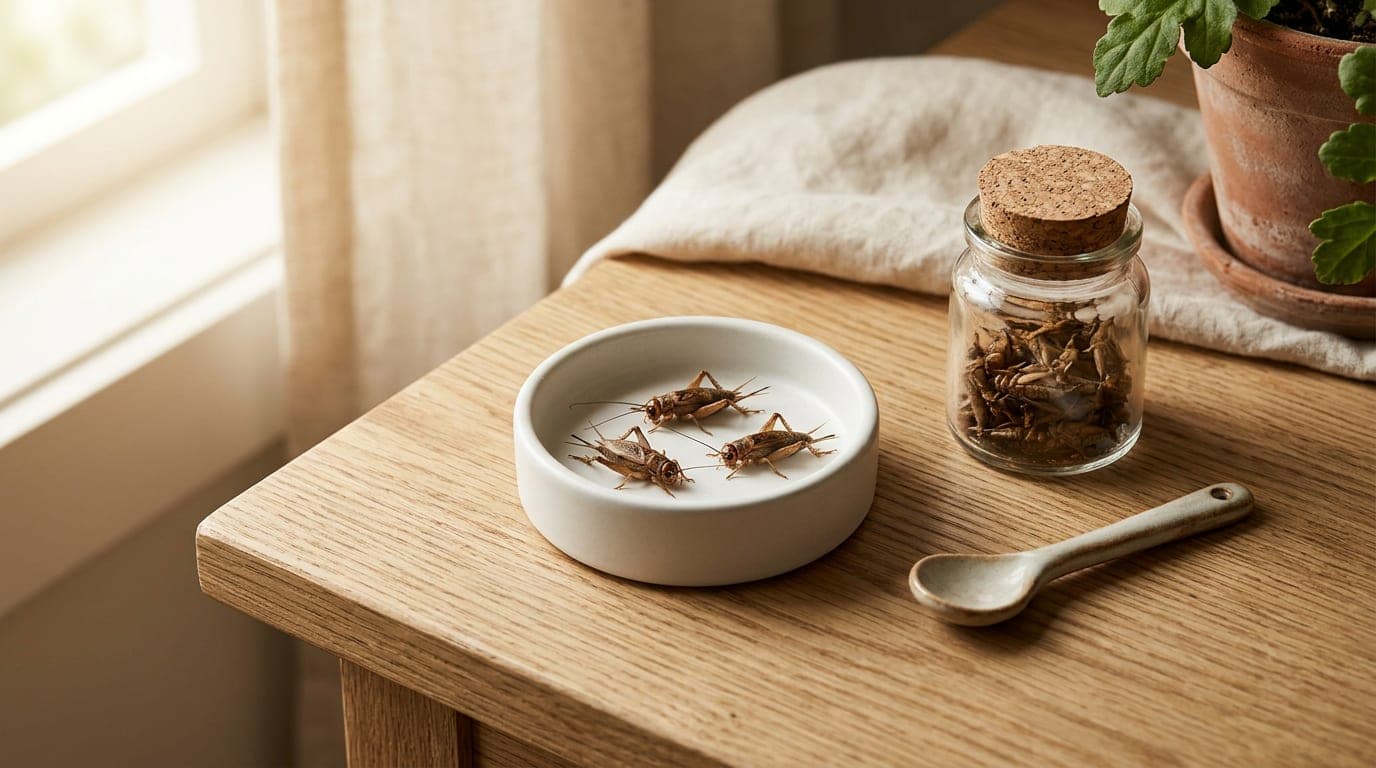
2–3 crickets · twice weekly · staple insect
Crickets are one of the closer matches to what a wild hedgehog would naturally eat. They're higher in protein than mealworms, lower in fat than waxworms, and have a more favorable calcium-to-phosphorus ratio than most other commonly-fed feeder insects. Live crickets that have been gut-loaded (fed nutrient-rich food before being offered to your hedgehog) are the gold standard. Freeze-dried and canned are practical alternatives that lose some of the nutritional benefit but are much easier to source and handle.
Why
Insects make up roughly 20% of an ideal captive hedgehog diet. Within that 20%, crickets are one of the best choices because their nutritional profile complements rather than duplicates the rest of the diet. A quality cat kibble already provides protein and fat in good ratio; crickets add the chitin, the trace minerals, and the natural variety that no kibble can replicate.
The practical case for live crickets is enrichment as much as nutrition. A hedgehog hunting a moving cricket gets exercise, mental stimulation, and an outlet for natural behavior that they don't get from kibble in a bowl. The downside of live crickets is the work — they need their own enclosure, food, and care, and they tend to escape.
How to actually serve it
Live: drop 2–3 gut-loaded crickets into a small enclosed area (a tub, a bathtub, an empty cage section) and let your hedgehog hunt them. Don't release crickets free in the main cage — they hide and ambush at 3am. Freeze-dried or canned: drop 2–3 directly into the food dish or hand-feed.
Three rules, no exceptions
- Buy from a reputable feeder source, not a fishing-bait supplier (different breeding standards)
- Live crickets should be gut-loaded for 24+ hours before feeding for full nutritional value
- Don't leave live crickets free in the main cage overnight
What it’s actually good for
Strong protein-to-fat ratio. Better calcium-to-phosphorus than mealworms. Closer to natural diet than mealworms or waxworms. Good enrichment if fed live. Most hedgehogs accept all three forms (live, freeze-dried, canned). Cheaper than dubia roaches.
What it’s not good for
Live crickets are work — they need their own care, they smell, they make noise, they escape. Freeze-dried loses some nutrition but is the most practical for most owners. The chirping in your house at 2am is a known cost.
Signs to watch for
Refused crickets after several positive sessions usually means too many other treats — review the rest of their food schedule. Severely ground-up cricket left in the dish suggests dental issues; check teeth at the next vet visit.
Compare to other insects
Common questions
Common questions
Live, freeze-dried, or canned — which is best?
Nutritionally, live and gut-loaded is best. Practically, freeze-dried is what most owners actually use because it's clean, doesn't require its own setup, and stores well. Canned is the worst nutritionally but acceptable as a backup.
Where should I buy crickets?
Pet stores or online feeder suppliers (Josh's Frogs, ABDragons, Rainbow Mealworms). Avoid bait shops — those crickets are bred for fishing, not pet feeding, and may have different microbial profiles.
Are crickets better than mealworms?
Nutritionally yes — better calcium-to-phosphorus ratio, lower fat, higher protein. Mealworms are fine in moderation (2–3, twice a week max), but crickets and dubia roaches are stronger staples.
Related on this site