
Diet & Nutrition · 2 min read
Can Hedgehogs Eat Spinach? (Rarely)
Rarely — spinach contains oxalates that can interfere with calcium absorption. Tiny amounts occasionally, not regular.
Verdict
Rarely
Portion · Frequency
A single small leaf, chopped · Twice a month at most
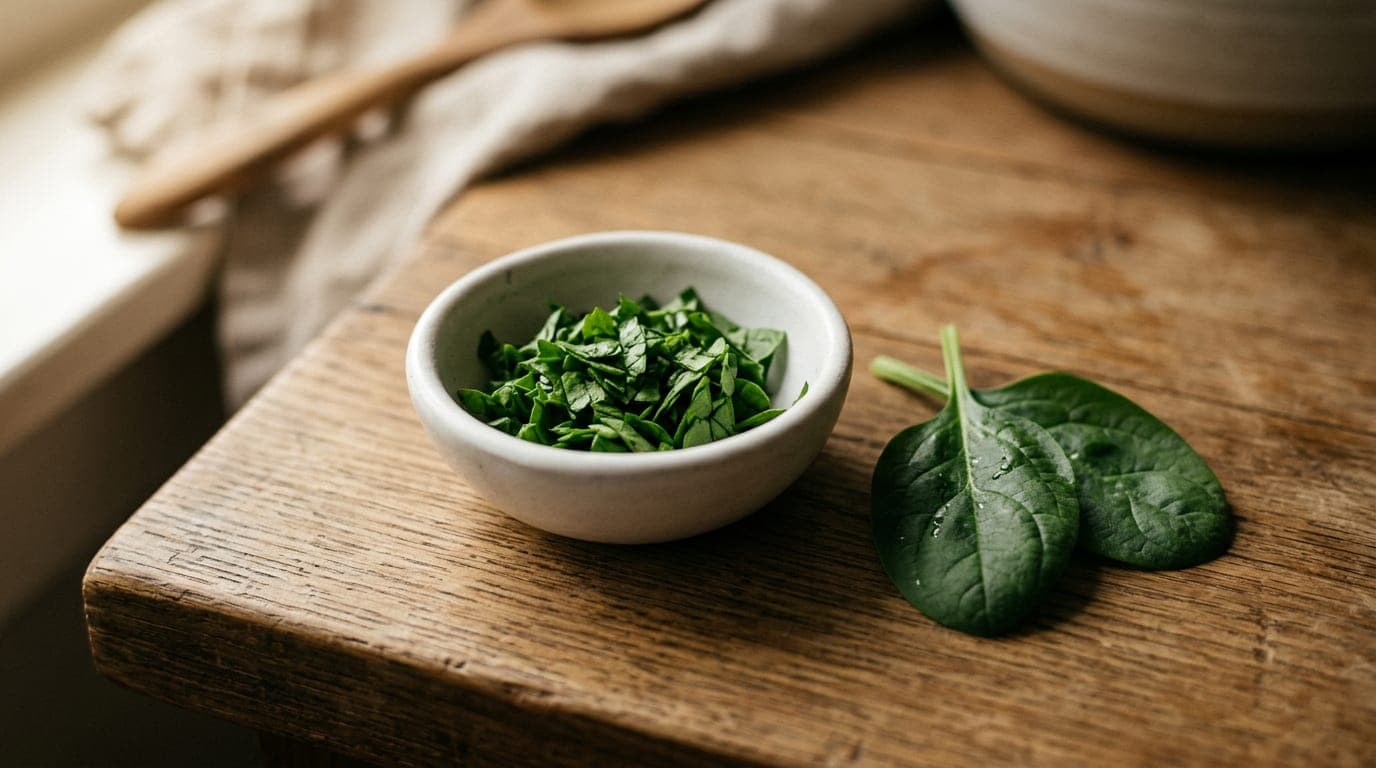
Single small leaf · twice a month max
Spinach isn't toxic to hedgehogs, but it's one of those foods where the answer is closer to "not really" than "yes." Spinach is high in oxalates — compounds that bind calcium and reduce how much your hedgehog actually absorbs from their kibble. At a tiny portion, occasionally, this doesn't matter. At regular feeding, it can contribute to calcium deficiency over time.
Why
Captive insectivores depend on a tightly-balanced calcium-to-phosphorus ratio in their diet to keep bones, teeth, and nerves working. Quality cat kibbles are formulated to deliver this balance. Foods high in oxalates — spinach, swiss chard, beet greens, parsley — interfere with calcium absorption from those balanced foods, which over months can contribute to nutritional secondary hyperparathyroidism (a fancy name for "slow calcium deficiency caused by something blocking absorption").
This isn't dangerous from one leaf. It becomes a problem if you make spinach a regular treat. The same nutrients people value spinach for in a human diet (iron, vitamin K, fiber) are already covered adequately by the rest of a hedgehog's diet, so there's no nutritional gap that justifies the oxalate trade-off.
How to actually serve it
If you do feed it: a single small leaf, washed, chopped fine. Raw is fine; lightly steamed is gentler on the stomach. Plain — no salt, butter, garlic, or oil. Twice a month at the most, and not in the same week as other oxalate-heavy greens.
Three rules, no exceptions
- Single small leaf, chopped fine — never a handful
- Twice a month maximum
- Don't pair with other oxalate-heavy greens (chard, beet greens, parsley) in the same week
What it’s actually good for
Some hedgehogs visibly enjoy leafy greens. The fiber is real. The vitamin K content is real. None of those are reasons to feed it specifically — but if your hedgehog refuses every other vegetable and you want some leafy variety in their treat slot, a tiny piece occasionally is acceptable.
What it’s not good for
Oxalate interference with calcium absorption is the main reason. There are also better leafy greens — romaine lettuce, escarole, dandelion greens — that deliver fiber and variety without the calcium issue. If you want leafy variety, those are the better choices.
Signs to watch for
Long-term: signs of calcium deficiency include weakness in the back legs, reluctance to climb, brittle quills, dental issues. These don't develop from occasional spinach but from regular high-oxalate feeding over months. Short-term: loose green stool from too much fresh greens at once.
Compare to other vegetables
Common questions
Common questions
What about baby spinach?
Same oxalate content as mature spinach. Same rules — single small leaf, occasionally only.
What's a better leafy green?
Romaine lettuce, escarole, dandelion greens (untreated, never from a roadside or fertilized lawn), and small amounts of arugula. All are lower in oxalates than spinach.
Can spinach actually hurt my hedgehog?
Not from one leaf. Regular feeding over months can contribute to calcium absorption issues. Most experienced owners we know skip spinach entirely rather than worry about the math.
Related on this site