
Diet & Nutrition · 2 min read
Can Hedgehogs Eat Tomatoes? (Yes, with care)
Yes — small amounts of ripe red tomato flesh are safe. Skip every leaf, stem, and green part.
Verdict
Yes, with care
Portion · Frequency
Pea-sized piece of ripe flesh · Once a week
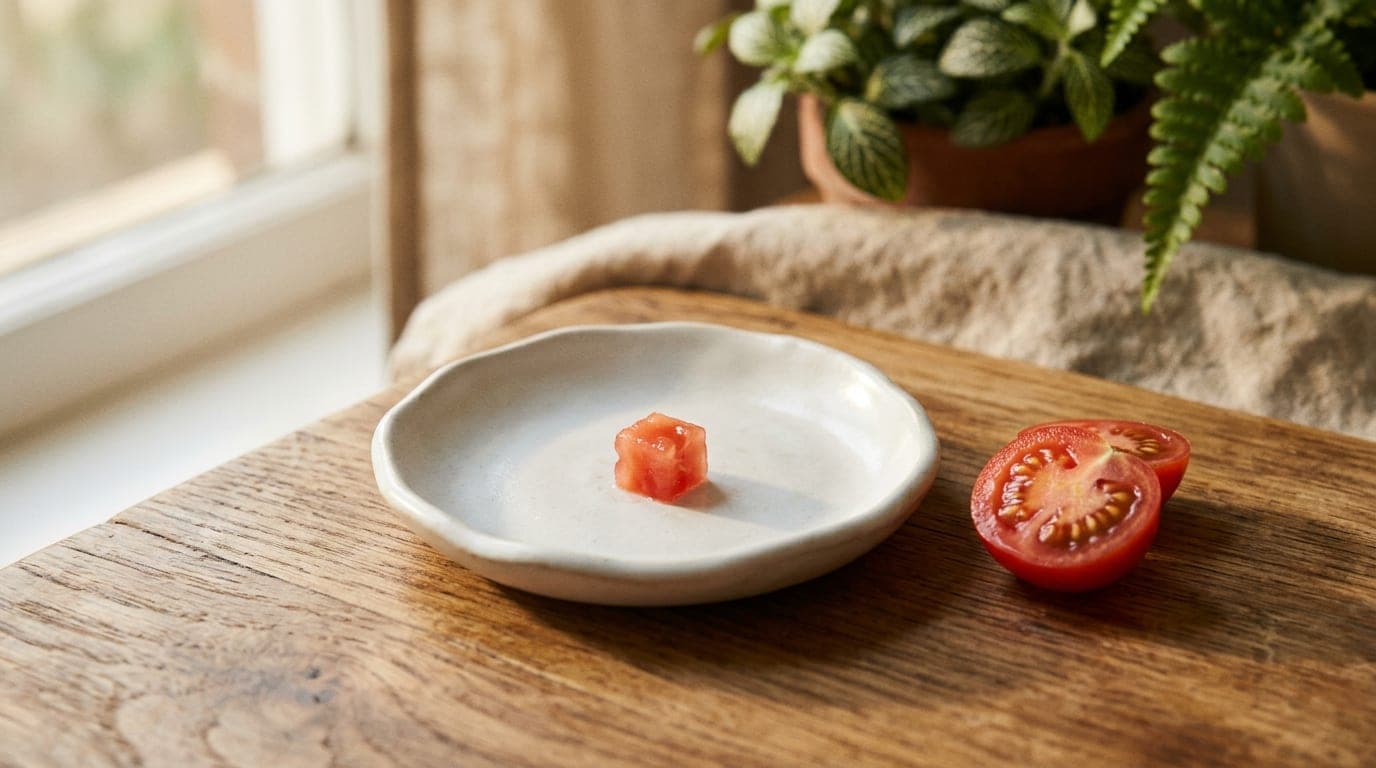
Ripe red flesh only · pea-sized · weekly
Ripe tomato flesh is fine for hedgehogs in tiny amounts. The catch: the rest of the tomato plant — leaves, stems, vines, and green unripe fruit — is toxic. Solanine, the same alkaloid that makes raw potato leaves poisonous, builds up in the green parts and breaks down only as the fruit fully ripens. So the rule is simple: red, ripe, flesh only, very small.
Why
A pea-sized cube of fully ripe tomato delivers a little vitamin C and lycopene without any meaningful sugar or protein. It falls into the 10% "everything else" slice of a hedgehog's diet alongside other fruit and veg.
What makes tomatoes worth flagging separately is solanine. The greenest parts of an unripe tomato can contain enough to cause vomiting, lethargy, and in extreme cases neurological symptoms. A small mammal at 350 to 700 grams body weight reaches a toxic dose much faster than a human. The flesh of a fully ripe red tomato has trace levels safe at small doses; the leaves and stems do not.
If you grow tomatoes, keep your hedgehog away from the plant entirely — both the foliage and any green tomatoes still on the vine.
How to actually serve it
Pick a tomato that's fully ripe. No yellow shoulders, no pale pink streaks, no green near the stem. Cut a piece smaller than a pea from the soft red flesh. Discard seeds where you can — they're not toxic but they're hard to digest. Skip the skin too if you can manage; it's tough for an animal this size. Serve at room temperature, never cold.
Three rules, no exceptions
- Only fully ripe red flesh — no leaves, stems, vines, or green parts
- Pea-sized maximum, seeds and skin removed where possible
- Room temperature, plain, no salt, no oil, no dressing
What it’s actually good for
Small dose of vitamin C and lycopene, plus the variety of texture and taste that keeps a captive insectivore engaged with food in general. A tiny piece can also help mask medication if your vet has prescribed something bitter, though plain pumpkin usually works better for that.
What it’s not good for
Tomatoes are acidic. Hedgehogs with sensitive stomachs sometimes react with loose stool the first time they try one. There's no nutritional gap that tomato fills better than something else they should already be eating. The toxicity risk from the rest of the plant means most experienced owners we know just skip tomatoes entirely rather than worry.
Signs to watch for
Loose stool 6–24 hours after a treat means too much, too acidic, or too cold. Cut back next time. Vomiting, severe lethargy, drooling, or neurological symptoms (twitching, lack of coordination) point at solanine exposure — emergency vet visit if you suspect they got into a leaf or green tomato.
Compare to other vegetables
Common questions
Common questions
Can hedgehogs eat tomato leaves or stems?
No. The leaves, stems, and any green unripe parts of a tomato plant contain solanine, which is toxic to small mammals. Keep your hedgehog completely away from tomato plants in the garden.
Are cherry tomatoes okay?
The same rules apply: only fully ripe red flesh, pea-sized portion, no skin or seeds where possible. Cherry tomatoes are easier to over-portion because they look small to a human — remember a whole cherry tomato is many times the safe serving size.
Can hedgehogs eat sun-dried or canned tomatoes?
Skip both. Sun-dried tomatoes are highly concentrated in sugar and usually salted. Canned tomatoes contain added salt, citric acid, and sometimes sugar — none of which a hedgehog should have.
What about tomato sauce or ketchup?
Never. Both contain salt, sugar, vinegar, onion, garlic, and other ingredients that range from useless to actively dangerous for hedgehogs.
Related on this site