
Diet & Nutrition · 2 min read
Can Hedgehogs Eat Pumpkin? (Yes, with care)
Yes — plain cooked or canned pumpkin is one of the more useful occasional foods.
Verdict
Yes, with care
Portion · Frequency
Half a teaspoon, room temperature · Once or twice a week, more if recommended by a vet
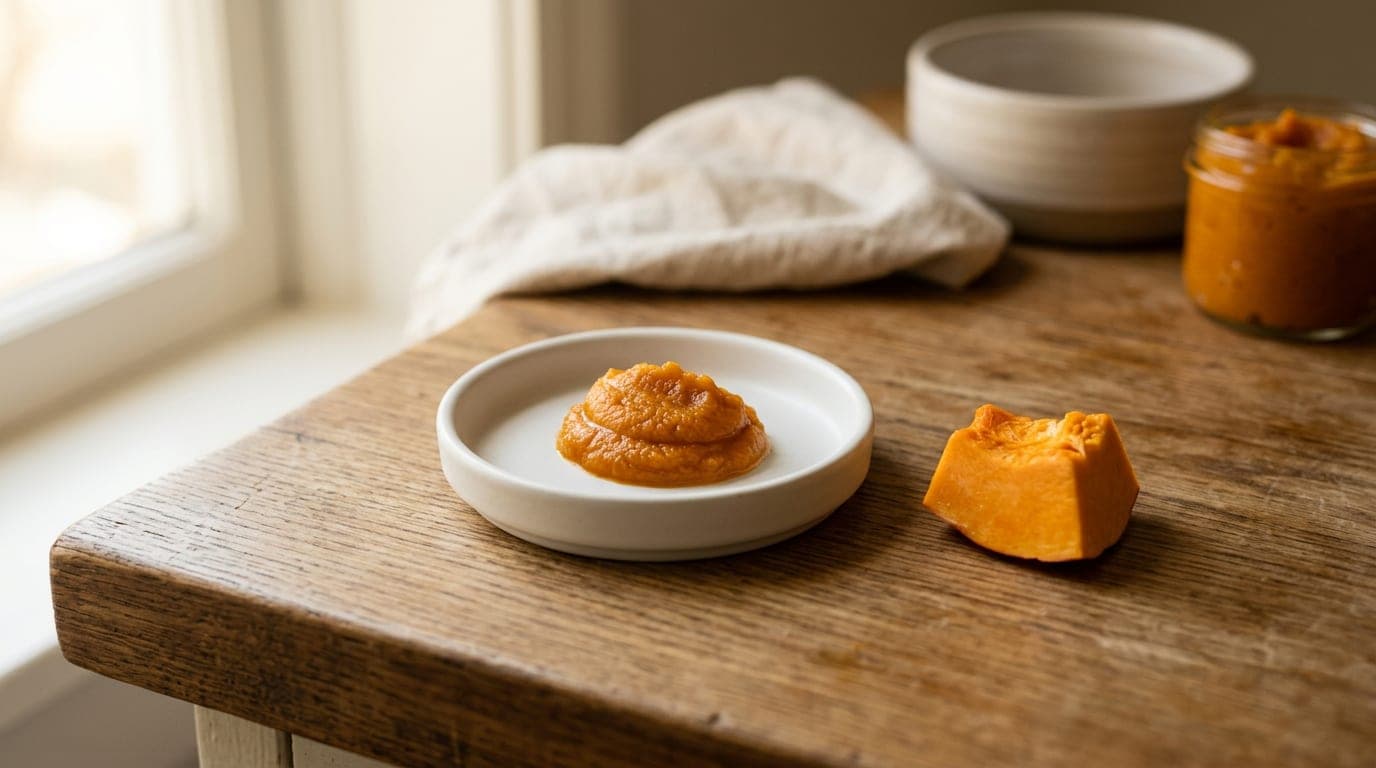
Pure pumpkin · half teaspoon · twice weekly
Pumpkin is one of the few foods that crosses from "treat" into "sometimes useful." Plain cooked pumpkin or pure canned pumpkin (the kind labeled just "pumpkin" with no other ingredients) is safe in small amounts and is sometimes recommended by exotic vets for mild constipation or to help mask medication. The food to avoid is pumpkin pie filling, which contains added sugar and spices that range from useless to harmful.
Why
A teaspoon of plain pumpkin delivers vitamin A, fiber, and a small amount of beta-carotene. The fiber is the most useful part — soluble fiber helps move things along in a small mammal's gut. Some hedgehogs go through brief bouts of mild constipation when their food or environment changes, and a small pumpkin treat is gentler than skipping a meal or rushing to a vet.
It's also one of the easier foods to mix bitter medication into. The sweetness and texture mask most pills and powders well enough that medicated pumpkin gets eaten when medicated kibble doesn't.
How to actually serve it
Either: cook a small piece of fresh pumpkin (no skin, no seeds) until soft, mash, cool to room temperature. Or: open a can of pure pumpkin (the label should say only "pumpkin" — not "pumpkin pie mix"). Refrigerate the rest in a sealed container for up to four days; it goes off quickly. Serve a half-teaspoon on its own or stirred into a small amount of softened kibble.
Three rules, no exceptions
- Pure pumpkin only — never "pumpkin pie filling" or anything with added sugar/spices
- Plain — no salt, butter, cinnamon, nutmeg, or sugar
- Refrigerated leftovers go off in 3–4 days; toss anything older
What it’s actually good for
Useful for masking medication. Useful for mild constipation. Most hedgehogs enjoy it. Lower in sugar than fruit treats. Fiber can help stool consistency. Cheap and easy to keep on hand if you buy canned.
What it’s not good for
Easy to over-feed because a teaspoon doesn't look like much to a human. The vitamin A content is real, and excess vitamin A is one of the few vitamins where overdose has documented harm in small mammals — at recommended portions this won't happen, but daily large servings could.
Signs to watch for
Loose orange stool 6–24 hours after a treat is normal first-time adjustment. The bright color is just the pigment passing through, not blood. If diarrhea lasts more than a day, skip pumpkin for two weeks. Refused food after several pumpkin servings might mean they're getting too much sugar elsewhere — review the rest of their treat schedule.
Compare to other vegetables
Common questions
Common questions
What's the difference between pumpkin and pumpkin pie filling?
Pure pumpkin is just cooked pumpkin in a can. Pumpkin pie filling adds sugar, salt, and spices like cinnamon and nutmeg. Read the ingredients — if it lists anything other than pumpkin (and maybe water), don't feed it.
Can pumpkin help with hedgehog constipation?
Mild cases, yes. The soluble fiber helps move stool through. If your hedgehog hasn't passed stool in 24 hours or seems uncomfortable, talk to a vet — pumpkin is supportive care, not a cure.
Are pumpkin seeds safe?
Skip the seeds. They're a choking hazard at hedgehog size, and the shells are hard to digest.
Can I feed pumpkin daily during the fall?
More often than once or twice a week is more vitamin A than they need. If you want pumpkin to be a regular small addition (a quarter-teaspoon a day mixed into kibble), check with an exotic vet for your specific hedgehog.
Related on this site