
Diet & Nutrition · 7 min read
Hedgehog Feeding Schedule: How Much, How Often, When
The realistic daily, weekly, and life-stage feeding routine. Adult kibble portions, insect rotation, treat frequency, and how to weigh-and-adjust each week.
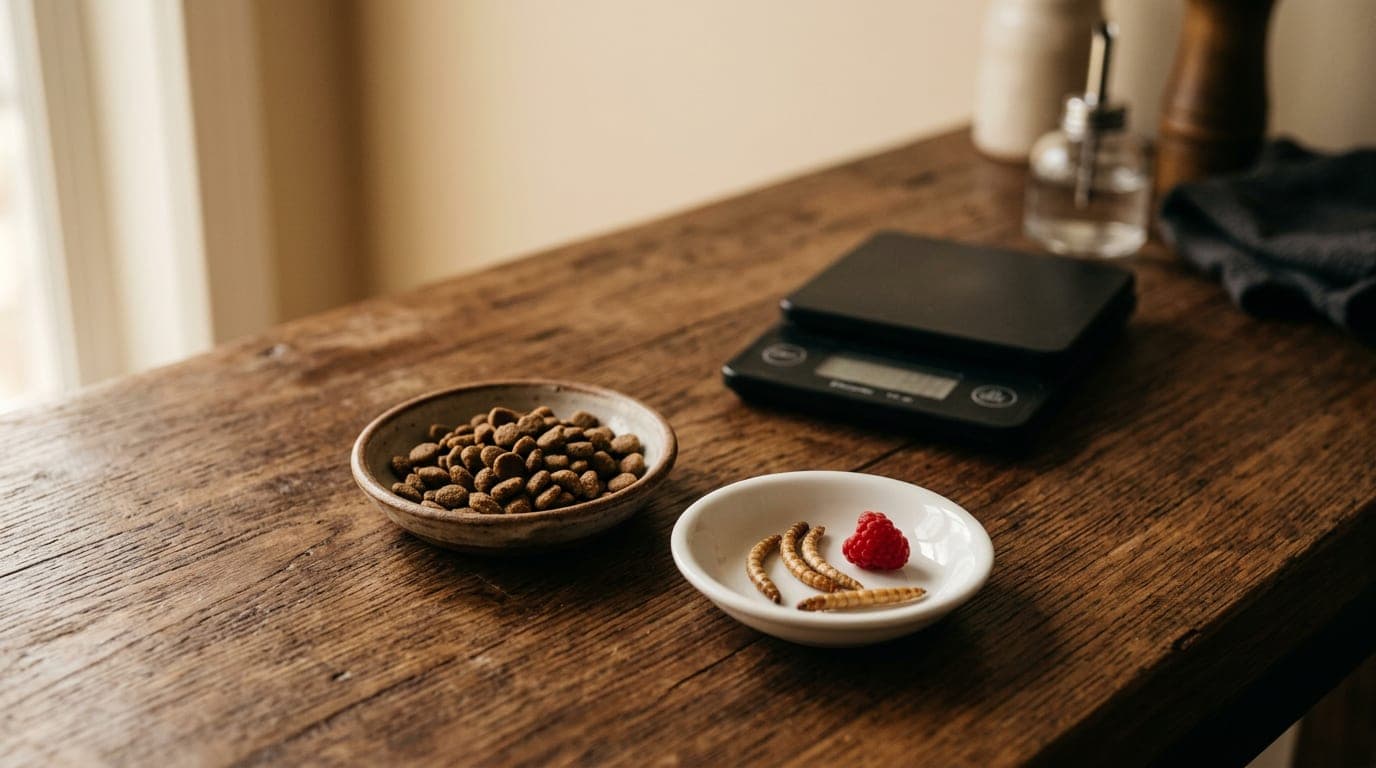
Evening setup · kibble + insects + treat · weight-checked weekly
A hedgehog eats once a day, in the evening, usually overnight while they're awake. The portion is small (1 to 2 tablespoons of kibble), the schedule is predictable, and the variation week to week is supposed to be minimal once you've found a routine that works for the specific animal. This guide is the realistic feeding schedule for adult hedgehogs, the variations for life stages, and how to use weight as the actual measuring stick.
The standard adult schedule
For a healthy adult African pygmy hedgehog at maintenance weight (300 to 600 grams), the standard schedule:
Daily
- Evening (7 to 10pm): refresh kibble in the food dish, refresh water, remove any uneaten fresh food from the previous day. This is also when handling happens in most households.
- Overnight (the hedgehog's active hours): they graze on the kibble, drink water, run on the wheel, eat any insects or treats offered earlier.
- Morning: scoop out any remaining unwanted kibble (usually a small amount). Refresh water if it's been knocked over or contaminated.
That's the daily routine. It takes about 5 minutes total.
Weekly insect rotation
Insects make up about 20% of the diet. A reasonable adult rotation:
- Monday: 3 crickets (live or freeze-dried)
- Wednesday: 4 to 6 black soldier fly larvae OR 3 dubia roaches
- Friday or Saturday: 2 to 3 mealworms (the once-a-week mealworm allowance) OR another cricket/dubia session
Skip days are the rest of the week. Kibble + water remains the daily staple. The full insect breakdown is in the insect feeder guide.
Weekly treats
Treats are pea-sized portions of fruit, vegetable, or cooked egg. Once or twice a week per food type, varied across the week. A standard pattern:
- Once a week: a small fruit treat (half a raspberry, a pea-sized cube of watermelon, etc.)
- Once a week: a small vegetable treat (pea-sized broccoli, sweet potato, bell pepper)
- Optional: a small piece of cooked plain egg or chicken once every 1 to 2 weeks
Treats should be offered separately from the kibble dish, ideally during evening handling so they associate the treat with you rather than with the food bowl.
Weekly weigh-in
The single most useful diagnostic in hedgehog care. Once a week:
- Weigh the hedgehog on a small kitchen scale (in grams)
- Note the weight in a phone note or simple log
- Compare to the previous 2 to 4 weeks' readings
What the readings tell you:
- Stable within ±5%: you're feeding right, no changes needed
- Trending up over weeks: reduce kibble portion by 1 teaspoon, cut insects by one session
- Trending down over weeks: increase kibble portion by 1 teaspoon, add an insect session, watch for any other illness signs
- Sudden drop or gain over 1 week: more attention needed, possibly a vet call
Weight is more reliable than counted portions because individual hedgehogs vary in metabolism, activity level, and what they actually eat versus what's offered. Trust the scale.
Why evening feeding
Hedgehogs are nocturnal. Their natural eating window is from sunset to sunrise. Feeding in the evening matches their biology and the food is fresh when they're hungry.
Mistakes to avoid:
- Morning feeding: fresh food sits in the cage during their sleep period, often goes off, and they wake up hungry but with stale food. Most owners who try this end up switching to evening within a week.
- Twice-daily feeding: doubles the work without nutritional benefit. They self-pace through the night.
- Ad-lib free-feeding without measurement: leads to obesity over months. Even though the food is "always available," the portion offered should be measured to keep weight stable.
The 5-minute evening routine becomes habit fast. Most experienced owners do it as part of unwinding for the night, often along with handling.
The portion that's actually right
A starting point for an adult African pygmy:
- 1 tablespoon of dry kibble nightly for a smaller adult (300 to 400g)
- 1.5 tablespoons for a mid-size adult (400 to 500g)
- 2 tablespoons for a larger adult (500 to 600g)
Adjust from there based on weight trends. If the kibble dish is empty by morning consistently, increase by half a tablespoon. If significant kibble is left consistently, decrease.
For insects: 3 to 5 per session is typical. Larger insects (dubia roaches) on the lower end of the count, smaller insects (BSF larvae, crickets) on the higher end.
For treats: pea-sized literally. The piece should be smaller than your fingernail. A whole strawberry is many times the safe portion; cut it down.
Variations by life stage
The standard schedule is for a healthy maintenance-weight adult. Other life stages have different needs.
Hoglets (under 6 months)
Growing hedgehogs need more food more frequently:
- Weeks 6 to 12 (early hoglet): kibble always available (free-choice), insects daily, no treats yet
- Months 3 to 6 (juvenile): kibble always available, insects 4 to 5 times a week, treats minimal
- Weight monitoring: weekly, expecting steady growth from 200 grams at weaning to 350 to 500 grams by 6 months
The growth phase is when nutrition matters most. Don't over-restrict food. Don't over-supplement either — let the kibble do most of the work.
Pregnant or lactating females
Substantially more food than maintenance:
- Pregnant: kibble always available, insects daily during the last 2 weeks of gestation, supplements per vet guidance
- Lactating: kibble always available, insects 1 to 2 times daily, fresh water always, sometimes a small amount of unsweetened plain yogurt for calcium (vet-approved only)
- Weight monitoring: weekly, expecting weight gain during pregnancy and gradual recovery during lactation
A lactating female may eat 2 to 3 times a maintenance adult's portion. This is normal. The full breeding nutrition picture is in the gestation pillar.
Senior hedgehogs (4+ years)
Slower metabolism, sometimes worn teeth:
- Kibble: sometimes softened with a small amount of warm water for 5 minutes before serving, especially if dental wear is visible
- Insects: soft options preferred (freeze-dried mealworms, soaked BSF larvae) over hard live insects
- Portion: slightly reduced from adult maintenance because activity tends to decline
- Weight monitoring: weekly, watching for unintended weight loss which can indicate dental disease, kidney issues, or other senior health changes
Seniors often benefit from smaller more frequent meals if their appetite has dropped. Talk to a vet about specific senior diet adjustments.
Recovering or sick hedgehogs
Vet-specific guidance, but generally:
- Soft food. Kibble soaked in warm water until mushy, plain meat baby food, or specialized recovery diet from the vet.
- Hand-feeding if they're refusing the dish.
- Frequent small meals rather than the once-a-day schedule.
- Fluid support if they're not drinking adequately.
If your hedgehog is sick enough to need feeding adjustment, they're sick enough for a vet to be guiding the protocol. Don't improvise.
When to adjust the schedule
Reasons to deviate from the standard schedule:
- Weight trending wrong — more or less food, or more or less frequent insects
- Picky eating — typically caused by too many treats or mealworms, fix by reducing those for 2 to 4 weeks
- Refusing kibble — try a different brand (sometimes a specific kibble doesn't suit a specific animal), check teeth at the next vet visit
- Stress eating — usually from environmental change (move, new pet, illness in household), settles within a few weeks
- Seasonal changes — some hedgehogs eat less in summer and more in winter naturally; adjust to match their actual intake
Reasons not to deviate:
- A new piece of advice from a forum. The standard schedule works for most adult hedgehogs. Major changes should come from a vet, not the internet.
- You "feel like" they should eat more. Trust the scale, not your impression.
- You're feeling guilty about portion control. Hedgehogs at maintenance weight live longer and healthier lives than overfed ones. The portion control is for them, not against them.
Common feeding-schedule mistakes
Patterns we see across new owners:
- Free-flowing mealworms or waxworms. Most reliable cause of obesity and pickiness. The 2-to-3 mealworms twice a week limit isn't a suggestion.
- Adding new foods too fast. Multiple new treats in the same week makes it impossible to identify what caused any tummy upset. Introduce one new food at a time, wait 24 hours.
- Feeding when stressed. New cage, new house, new owner. Stick to familiar food until they're settled. Now isn't the time to introduce variety.
- Not weighing weekly. The single biggest gap. A weekly weigh-in catches problems weeks before they become visible.
- Removing the food bowl after a set time. Hedgehogs graze through the night; the bowl should be present overnight.
- Cold food from the fridge. Always room temperature or slightly warmed. Cold treats upset their stomach.
- Feeding right before handling. They're full and uncomfortable. Wait 30 to 60 minutes after a meal before extended handling.
What a typical week looks like
A practical example for a healthy 450-gram adult:
| Day | Evening routine |
|---|---|
| Mon | 1.5 tbsp kibble, 3 crickets, fresh water |
| Tue | 1.5 tbsp kibble, fresh water |
| Wed | 1.5 tbsp kibble, 4 BSF larvae, fresh water |
| Thu | 1.5 tbsp kibble, fresh water, pea-sized fruit treat |
| Fri | 1.5 tbsp kibble, 3 mealworms, fresh water |
| Sat | 1.5 tbsp kibble, fresh water, pea-sized vegetable treat |
| Sun | 1.5 tbsp kibble, fresh water, weekly weigh-in |
Adjust kibble portion based on what's left in the morning over 3 to 4 days. Adjust insect frequency based on whether they're taking it eagerly or leaving most. Treats stay at twice a week regardless of demand.
That's a hedgehog week. Five minutes a day, one weigh-in. Less work than most people expect once you've settled into the rhythm.
Common questions
Common questions
How often should you feed a hedgehog?
Adult hedgehogs eat once a day in the evening, usually overnight. Kibble is left in the dish so they can graze through the night, then any uneaten portion is removed in the morning. Insects and treats are added 2 to 4 times a week as separate sessions, usually around the time you handle them in the evening.
What time of day should I feed my hedgehog?
Evening — anywhere from 7pm to 10pm depending on your schedule and theirs. Hedgehogs are nocturnal, so morning feeding goes mostly to waste and trains a habit that doesn't suit their natural rhythm. The evening refresh becomes part of the predictable cage routine they rely on.
How much do hedgehogs eat per day?
An adult African pygmy hedgehog typically eats 1 to 2 tablespoons of dry kibble per night, plus 3 to 5 insects two to four times a week, plus pea-sized treats once or twice a week. Total daily caloric intake is roughly 70 to 100 calories for most adults. Weight monitoring is the better metric than counted portions — adjust based on weekly weigh-ins.
Should hedgehogs have food available all the time?
Dry kibble: yes, they should have access overnight. Hedgehogs graze, and removing food after a fixed time creates anxiety eating. Insects and fresh treats: no — these are scheduled feedings, not free-choice. Water should always be available.
How often do baby hedgehogs eat?
Hoglets eat more frequently than adults, especially under 8 weeks. From weaning at 6 weeks through about 4 months, they may eat 3 to 5 times the adult portion daily because they're growing rapidly. Most breeders provide a feeding schedule for the first month after pickup. Generally: kibble always available, insects offered daily during growth, treats minimized to avoid pickiness.
Related on this site
Sources
Sources
- African pygmy hedgehog — feeding schedules and life-stage nutrition — LafeberVet
- Hedgehogs — dietary management and weight monitoring — VCA Animal Hospitals