
Breeding & Babies · 8 min read
Hedgehog Gestation Period: Breeding, Birth, and Why Most Owners Shouldn't
Gestation is 35 days. The full timeline, what goes wrong, pre-breeding screening, post-birth care — plus the honest case for why most pet owners shouldn't breed.
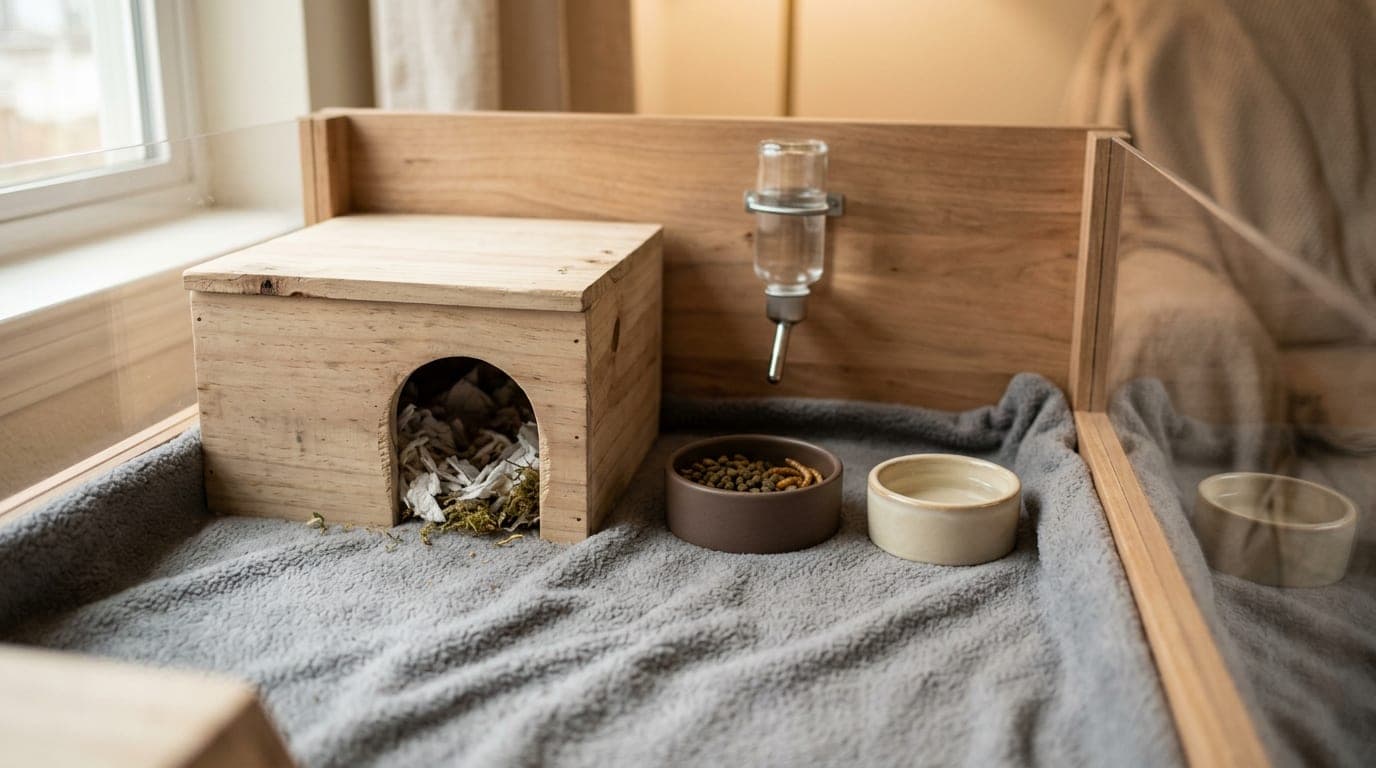
Nesting setup · 35-day gestation · quiet preparation
Hedgehog gestation is 35 days, give or take 3. That's the short answer to the search query. The longer answer is that most pet owners shouldn't be in the position of needing to know.
Hedgehog breeding done right is more demanding than most people expect. Genetic screening, careful nutrition during pregnancy, knowing what to do when birth goes wrong at 3am, finding homes for hoglets you can't keep. Done casually, it produces sick animals, surrendered litters, and accidentally-bred females who shouldn't have been. The honest editorial position before any practical breeding information: think hard about whether you should.
If you've done that thinking and you're still here: for actual breeders, for owners with an accidentally-pregnant female, or for the curious. This is the full reference.
The case against casual breeding
The reasons most pet owners shouldn't breed, in plain language.
The market is saturated
There are more pet hedgehogs being bred in the US than there are people who want them. The reputable breeders who sell consistently have established names, waiting lists, multi-year relationships with exotic-pet veterinarians, and color/lineage specializations. A new breeder competing in this market without those advantages typically ends up with hoglets they can't place.
The result, repeatedly: hoglets given away free on Craigslist, dumped at rescues, or kept by the breeder who didn't plan for them. None of those are good for the animals.
The genetic risks are real
Wobbly Hedgehog Syndrome (WHS) affects roughly 10% of pet hedgehogs over their lifetime. The condition is degenerative, currently incurable, and has a genetic component. Reputable breeders avoid breeding from WHS-affected family lines, but tracking lineage requires generations of records that casual breeders don't have.
A casual first-time breeder pairing two hedgehogs without WHS screening isn't doing the math on what they're passing forward. The result is often hoglets who develop WHS in years 2–4. Long after they've been sold to new owners.
Pregnancy and birth complications
Hedgehog pregnancy has meaningful risks:
- Eclampsia (pregnancy-related calcium imbalance): rare but serious
- Birth complications. First-time mothers sometimes struggle
- Maternal cannibalism: disturbed mothers sometimes eat their litter
- Hoglet mortality. Even healthy litters often lose 1–2 babies in the first week
- Female health post-birth. Uterine infections, mastitis, weight loss
A breeder without an exotic-animal vet on call is making bets they may not be equipped to handle.
Ethical reasoning
Most pet owners are doing this because they think it would be "fun" or "interesting" or "make money." Hedgehog breeding isn't a casual project. The animals deserve breeders who've committed to the work, not owners experimenting.
If you have a breeding female who got pregnant accidentally, that's a different situation. We'll cover that. If you're deliberately planning to breed, the answer to "should I" is almost always no.
If you're breeding anyway: pre-screening
For breeders who've thought this through and want to do it right, the pre-breeding work matters more than the breeding itself.
Genetic screening
- Document lineage of both parents as far back as records allow. If you can't trace at least 2–3 generations, you can't responsibly breed.
- Avoid pairing two hedgehogs from lines with documented WHS cases. Some risk is unavoidable; pairing two known-affected lines stacks it badly.
- Avoid extreme inbreeding. Sibling-to-sibling pairings concentrate any health issues in the lineage.
- Color/morph breeding is fine within reason but shouldn't take priority over health.
Health screening
Both parents should be:
- In healthy weight range. Typical adult African pygmy is 250–600g. Females at the low end may struggle with pregnancy demands; very heavy individuals have birth complications.
- Free of active health issues at the time of breeding. Recent vet check within 2–3 months ideal.
- Up-to-date on parasites: mites should be treated and cleared before breeding.
- Behaviorally stable. Aggressive or extremely stressed individuals shouldn't be bred.
Age requirements
- Females: 6 months minimum, 3 years maximum for first breeding. Younger than 6 months and they're not fully developed; older than 3 years and pregnancy complications increase significantly.
- Males: 4 months minimum. Maximum is less strict but consider that older males can have fertility issues.
A female who's been bred 2–3 times has typically reached the limit of what's healthy. Don't continue breeding into her later years.
The breeding process
How it actually works.
Introducing the pair
Introduce in neutral territory (not in either's home cage). Both animals should be calm and well-fed before introduction. The female determines whether breeding happens. Males approach, vocalize (squeaking), and circle. The female either accepts or actively rejects (huffing, balling, sometimes attacking).
Most breeders allow 4–7 days together before separating. Some breed continuously by housing the pair, but multi-day housing has risks. They're solitary animals and may fight.
Confirming pregnancy
Hedgehogs don't show externally pregnant the way many mammals do. The spines hide weight gain, and gestation is short enough that observable changes are subtle.
Signs by day 20–28:
- Increased nesting behavior. Gathering fleece, rearranging the hide
- Slight weight gain (10–20g over a 350–500g female; visible only on the scale)
- Sometimes slight nipple visibility on the belly
- Decreased activity, more time in the hide
By day 25–30:
- More obvious nesting
- Visible weight gain
- Some females isolate in their hide for hours at a time
Don't ultrasound unless absolutely necessary. The stress isn't usually worth what limited information you'd get; vets typically diagnose by behavioral signs and palpation.
Preparing for birth
In the week before expected birth (day 30 onward):
- Quiet environment. Reduce handling to bare-minimum food and water refresh.
- Stable temperature: same 72–80°F, no fluctuations.
- Nesting materials. Fleece scraps, a covered hide they can fully disappear into.
- Higher-calorie diet. Slight increase in kibble portion, more insects than usual. Pregnant females need ~20% more food.
- No new objects in the cage. Anything novel is stressful.
Birth
Usually happens at night. Most birthing is quiet. You may not even know it's happened until morning. Litters of 1–7 hoglets, averaging 3–4.
The most critical instruction: do not handle the hoglets or the mother for the first 5–7 days. Disturbed litters get abandoned. In worst cases, mom cannibalizes the litter. The hands-off period is non-negotiable.
What to do during the first week:
- Refresh food and water once a day, briefly, with minimal cage disruption
- Note the hoglet count if you can see without disturbing
- Watch for the mother's behavior. Is she eating, drinking, returning to the litter?
- Don't peek at the nest unless something seems wrong
By day 7–10, mom typically tolerates careful handling. Even then, brief and gentle.
What goes wrong
The complications to know about.
Maternal abandonment
The mother stops attending to the hoglets. They cry, fail to nurse, and die within 24–48 hours without intervention. Causes:
- First-time mother who's overwhelmed
- Disturbance during the critical first week
- Underlying maternal stress or illness
- Sometimes nothing identifiable
If you suspect abandonment (hoglets crying continuously, mom away from the nest for hours), call an exotic-animal vet immediately. Hand-rearing newborn hoglets is extremely difficult and survival rates are low even with experienced rehab care.
Maternal cannibalism
The most disturbing complication. Stressed or disturbed first-time mothers sometimes eat their hoglets. Partially or entirely. This is why the hands-off first week matters. By the time you notice, it's typically too late.
Prevention is the only effective response: quiet environment, no handling, no peeking, no novel stresses during week one.
Pregnancy complications
- Eclampsia (low calcium triggered by lactation demands): sudden weakness, seizures. Emergency vet call.
- Birth complications. Prolonged labor, stuck hoglets, retained placenta. Difficult to assess without veterinary support.
- Uterine infection post-birth: lethargy, fever, abnormal discharge.
- Mastitis. Inflamed mammary glands, refusal to nurse.
A vet relationship matters. Any of these is a vet visit, not a "wait and see."
Hoglet mortality
Even healthy litters often lose 1–2 hoglets in the first week. Causes:
- Failure to thrive (some hoglets are weaker)
- Maternal neglect of one specific hoglet
- Overcrowding in large litters
- Underlying genetic issues
This is normal but painful. Don't blame yourself for losses in the first week if you've otherwise done everything right.
Post-birth: weeks 1–8
Once the litter survives the first week:
Weeks 1–2
- Hoglets blind, deaf, with soft "milk quills" that don't harden until ~24 hours after birth
- Mom feeds them every few hours
- You do nothing except keep cage stocked and quiet
- Quill hardening complete by day 2–3
Weeks 2–4
- Eyes open around day 14
- Hoglets become mobile, exploring the cage
- They start sampling solid food at day 18–21
- Light handling acceptable from week 2 onward. Wash hands thoroughly, brief sessions
Weeks 4–6
- Weaning begins
- Hoglets eating solid food regularly
- Increasingly active, less dependent on mom
- Time to start daily handling for socialization
Weeks 6–8
- Fully weaned
- Personality emerging
- Can be separated from mom for short periods
- Earliest acceptable adoption age is 6 weeks; 8+ is better
Week 8+
- Ready for adoption
- Each hoglet should be eating independently, comfortable being handled, no major health concerns
- Pre-adoption vet check ideal but not always done
Selling and placement
If you've bred a litter, finding homes:
- Have homes lined up before breeding ideally. Reputable breeders typically have waiting lists.
- Screen buyers. Same questions you'd want asked of you when buying. Their setup, vet access, knowledge, commitment.
- Care packets. Provide written care info, a sample of the food they've been eating, your contact info for questions.
- Return policy. Many reputable breeders accept returns at any point in the animal's life. Don't ship hoglets to homes who can't keep them.
- Pricing. $150–300 typical. Pricing dramatically lower attracts buyers who haven't researched the costs.
Hoglets you can't place: contact local hedgehog rescues, post in regional hedgehog Facebook groups, talk to your exotic-animal vet for referrals. Don't release outdoors (illegal in some states, fatal in any North American climate).
When breeding goes well. And goes well repeatedly
Breeders who do this well share a few traits:
- They've been at it for years before producing many litters
- They have strong relationships with exotic vets and other breeders
- They specialize (color lines, lineage focus) rather than breeding generically
- They prioritize health over color or quantity
- They take animals back across the lifetime
- They turn down buyers who aren't ready
This is a profession, not a hobby. The casual version of it produces the surrendered hedgehogs we see in rescues.
If you're considering it, the realistic timeline to "good breeder" is 3–5 years of learning before producing any litters at all. Most people don't have that runway. That's not a criticism; it's the reason most pet hedgehogs come from a small number of established breeders.
A note for accidental pregnancies
If you discovered your female is pregnant unexpectedly (incorrect sexing at sale, escaped male, etc.):
- Confirm with a vet. Don't assume; verify.
- Prepare the cage for nesting (see above).
- Plan for the hoglets. Call rescues, hedgehog community groups, your vet's network. Start now, not at week 6.
- Don't panic. Accidental pregnancies happen and most resolve without major complications when the female is healthy.
- Get the male away from the female once you know. They shouldn't be housed together; separation prevents another pregnancy immediately.
The hoglets will need homes. Start the work of finding them while the female is still pregnant; you'll have 2–3 months of runway from confirmation to weaning.
Common questions
Common questions
How long is a hedgehog pregnant?
About 35 days from successful mating to birth, give or take 3 days in either direction. Hedgehogs don't show externally pregnant the way some animals do — the spines hide weight gain. Most breeders confirm pregnancy by behavior change (increased nesting, decreased activity) around days 20–28, not by visible body changes.
Should I breed my hedgehog?
Almost certainly not, unless you've done years of research, have a relationship with an exotic-animal vet, are prepared for hoglets you can't sell, and understand the genetics enough to avoid Wobbly Hedgehog Syndrome lines. The pet hedgehog market is small. Most accidental breeders end up with hoglets they can't place. The ethical and practical case against casual breeding is real.
How many hoglets does a hedgehog have?
Litters range from 1 to 7, averaging 3–4. First litters tend to be smaller (2–3). Larger litters often have higher hoglet mortality — mom can only feed so many at once. Singleton litters are common but slightly more concerning because the lone hoglet doesn't have littermate competition that builds normal feeding strength.
When can baby hedgehogs leave their mother?
6–8 weeks minimum. Hoglets are weaned around 4–6 weeks but should stay with mom and littermates for socialization until 6–8 weeks. Some breeders hold until 8–10 weeks. Selling hoglets at 4–5 weeks is too early — they often have feeding and socialization issues that show up in their new homes.
Can I handle newborn hoglets?
Not for the first 5–7 days. Disturbed hoglet litters get abandoned by their mother, and in worst cases mom may cannibalize the litter. After day 7, handling can begin slowly, but only with the mother's known tolerance and with hands washed in unscented soap (smell of unfamiliar things on the hoglets is what triggers maternal rejection).
Is hedgehog breeding profitable?
For most breeders, no. By the time you account for vet care, food, cage space for multiple animals, the cost of hoglets you can't sell, and the value of your time, hedgehog breeding rarely produces meaningful income. The reputable breeders who do make money have established names, waiting lists, and operate at a scale most casual breeders can't match. If you're getting into breeding because it sounds lucrative, the realistic answer is it isn't.
Related on this site
Every guide in Breeding & Babies
Sources
Sources
- Reproductive biology of African pygmy hedgehogs — Veterinary Clinics of North America: Exotic Animal Practice