
Breeding & Babies · 8 min read
African Pygmy Hedgehog Lifespan: How Long They Live (and What Shortens It)
3–5 years on average, 6–8 with excellent care. What shortens the lifespan (obesity, WHS, cancer, poor husbandry), what extends it, and the end-of-life conversation.
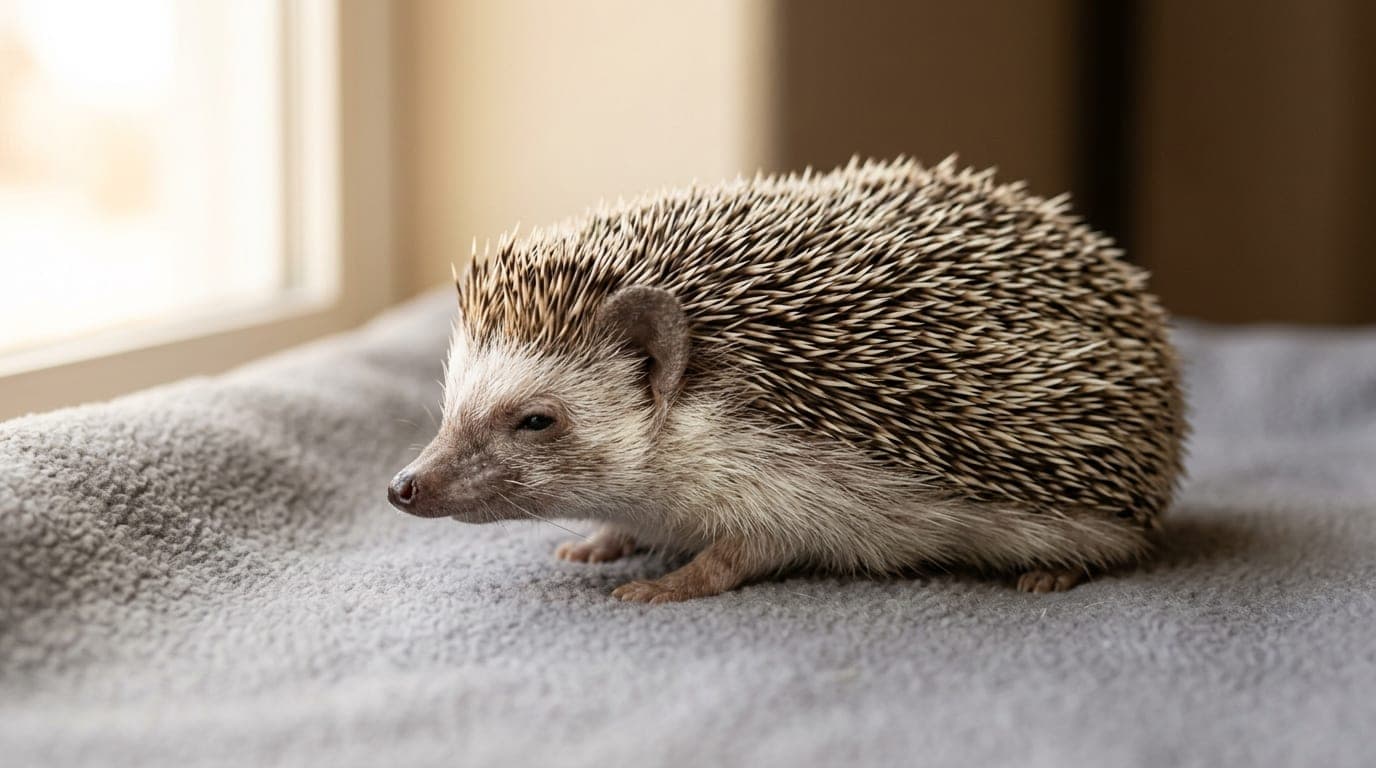
Older hedgehog · 4–5 years · the senior chapter
African pygmy hedgehogs live 3–5 years on average in captivity. Some live longer. Well-cared-for individuals routinely reach 6 or 7 years, and the documented record sits around 10. Others live shorter. Poor husbandry, genetic conditions, or bad luck can cut the time meaningfully.
That's the headline answer. The longer version is worth reading because lifespan in hedgehogs is unusually variable, and the factors you control as an owner matter more than the genetics you can't.
The average and the range
Captive African pygmy hedgehog lifespan:
- Average: 3–5 years
- Good care: 5–7 years
- Excellent care + good genetics: 7–9 years
- Documented outliers: 9–10 years
Wild African pygmy hedgehog lifespan:
- Average: 2–3 years
- Predation, parasites, seasonal stress, and food scarcity all cut wild lifespans
Captive hedgehogs significantly outlive their wild counterparts when husbandry is right. The reason: no predators, consistent food, consistent temperature, vet care available. Wild lifespan is the floor; captive lifespan is much higher, but only when the care matches what the animal needs.
For context across species:
| Species | Average captive lifespan |
|---|---|
| African pygmy hedgehog | 3–5 years |
| Algerian hedgehog | 3–5 years |
| European hedgehog (rescue/rehab) | 3–7 years |
| Long-eared hedgehog | 6–8 years |
| Hamster (Syrian) | 2–3 years |
| Rat | 2–3 years |
| Guinea pig | 5–8 years |
| Rabbit | 8–12 years |
| Ferret | 6–10 years |
African pygmy hedgehogs sit in the lower-middle of small-mammal pets. The closest comparison by lifespan is small rodents. Though hedgehogs have a much wider range based on care quality.
Why captive hedgehogs sometimes live shorter than they should
If you're aiming for the 5–7 year range, the things that pull lifespan down:
1. Obesity
The most common preventable cause of early death. A hedgehog who's overweight develops:
- Fatty liver disease (hepatic lipidosis): degenerative, sometimes fatal
- Heart strain. Early cardiac issues
- Joint problems: mobility decreases, activity drops further, weight increases more (vicious cycle)
- Reduced immune function. They recover from illness more slowly
- Anesthesia risk. Overweight hedgehogs are higher risk for routine surgical procedures
Cause: Almost always diet. Too many mealworms, too many treats, too rich a kibble (kitten food instead of adult cat food).
Prevention: Weigh weekly. The 250–600g healthy range varies by individual; what matters is stability. A hedgehog trending up consistently needs diet adjustment.
2. Wobbly Hedgehog Syndrome (WHS)
Affects roughly 10% of pet African pygmies over their lifetime. Progressive neurological degeneration; currently no cure.
Cause: Genetic component (runs in family lines), possibly with environmental triggers we don't fully understand.
Impact on lifespan: WHS typically emerges between years 1–3. From onset to euthanasia is usually 6 months to 2 years. A hedgehog who develops WHS will likely live 1–3 years total instead of 4–7.
Prevention: Buy from a reputable breeder who tracks WHS lineage. Beyond that, you can't prevent it once present.
See our WHS deep dive for the full picture.
3. Cancer
Particularly common in older hedgehogs (year 3+) and especially in females (mammary and uterine tumors are well-documented).
Cause: Partially the small founder population of the US pet line (limited genetic diversity), partially just the price of being a small mammal.
Impact on lifespan: Cancer in older hedgehogs can be:
- Caught early and surgically removed (sometimes years of additional life)
- Caught late or unremovable (months of decline)
Prevention: Annual wellness vet visits become important from year 2 onward. Regular handling lets you spot new lumps early.
4. Dental disease
Increasingly common from year 2. Broken teeth, gum infections, oral abscesses, sometimes oral tumors.
Cause: Diet quality (low-protein kibble), inadequate chew variety, genetic predisposition, age-related deterioration.
Impact on lifespan: Dental disease itself isn't usually fatal, but it causes weight loss (hedgehog can't eat well) which compounds other issues.
Prevention: Quality kibble, regular vet checks that include dental exam, prompt action on any signs (drooling, refusing food, dropping food).
5. Cold-induced hibernation attempts
The most acutely fatal preventable issue. A hedgehog whose cage drops below 70°F may attempt to hibernate. Captive African pygmies often don't survive the attempt.
Cause: Inadequate heat setup. Most commonly: a heat lamp without a thermostat, or a heating pad without ambient heat.
Impact on lifespan: Can be sudden death in a previously-healthy animal. We've heard from too many owners whose hedgehog seemed fine on Sunday and was gone by Wednesday because the bedroom got too cold overnight.
Prevention: See our heat lamp guide. Non-negotiable component of hedgehog care.
6. Respiratory infections
Often heat-related (cold cage, drafts) or stress-related. Bacterial pneumonia is the most common form.
Cause: Poor environmental conditions, sometimes secondary to other illness.
Impact on lifespan: Treatable when caught early with antibiotics. Untreated, often fatal within days.
Prevention: Proper husbandry (temperature, ventilation), prompt vet response to signs of respiratory distress.
7. Mites and secondary skin issues
Common in pet-store hedgehogs at purchase. Mites themselves don't kill, but secondary bacterial infections from constant scratching can compound.
Cause: Caught from contact with other hedgehogs, sometimes from environments (mites can survive briefly in bedding).
Impact on lifespan: Treatable with revolution (selamectin). Doesn't significantly shorten lifespan when treated promptly.
Prevention: Vet check within 2 weeks of acquisition.
What extends hedgehog lifespan
The factors that pull the average upward toward the 6–8 year range:
1. Genetics
Some breeder lines produce consistently longer-lived animals than others. WHS-free lines, healthy parental records, no early cancers in family history. These correlate with hoglets that live longer.
What to do: Buy from a reputable breeder who tracks lineage. Ask about parents' and grandparents' health history.
2. Weight management
A hedgehog kept at a stable, healthy weight throughout life is at significantly lower risk for the obesity-driven complications above.
What to do: Weigh weekly. Maintain in the 300–500g range (depending on the individual's frame). Avoid free-flowing mealworms and treats.
3. Proper diet
Quality grain-inclusive adult cat kibble (30%+ protein), insects in moderation, occasional treats. See our diet pillar for specifics.
What to do: Read kibble labels. Skip the dedicated "hedgehog food" from chain pet stores.
4. Consistent temperature
72–80°F constant, year-round. The single most important husbandry variable.
What to do: Ceramic heat emitter + clamp lamp + thermostat. Verify with a separate thermometer.
5. Established vet relationship
Hedgehogs decline faster than most pets when sick. An established relationship with an exotic-animal vet: first visit within 2 weeks of acquisition, annual wellness visits after. Means problems get caught earlier.
What to do: Find a vet before you need one. See our vet-finding guide.
6. Adequate enrichment
Hedgehogs with proper wheel use, cage exploration, and occasional novelty are less prone to stress-related illness.
What to do: 12-inch silent wheel, 4+ sq ft cage, occasional enrichment. See supplies pillar.
7. Low stress
Quiet environment, consistent schedule, gentle handling, no other predator animals in the same room. Chronic stress reduces lifespan in measurable ways.
What to do: Cage in a calm location. No other animals in the room (especially cats). Predictable feeding and handling routines.
Aging timeline. What to expect by year
Year 1: Adolescence to early adult. Growth phase complete by month 6. Most active period. Strongest wheel use, most exploration, most defensive behavior. Quilling cycles still happen.
Year 2: Mature adult. Settled personality. Peak years for bonding with owners. Vet wellness visits become annual habit. Watch for first signs of dental wear.
Year 3: Mid-life. Slight slowdown. Less wheel use, more napping. Some weight stability issues emerge. First WHS cases (if going to develop) typically appear in years 2–3. Annual vet visits more important.
Year 4: Senior territory. Dental issues common. Tumors (especially in females) more frequent. Slower recovery from minor stresses. Watch for behavioral changes.
Year 5: Late senior. Significant slowdown. Reduced appetite sometimes. Joint stiffness noticeable. Comfort care becomes a focus.
Year 6+: Elderly. Each additional year is a gift. Health management becomes daily attention rather than weekly check-in. Quality-of-life evaluations more relevant.
Year 8+: Outlier territory. Few hedgehogs reach this. Those who do typically have excellent genetics, excellent care, and have already navigated past the major life-shorteners.
The end-of-life conversation
A hard topic but worth covering since this is the lifespan article.
At some point: usually year 4–7 in most hedgehogs, sometimes earlier. Quality of life starts to decline. The signals:
- Significant weight loss that doesn't respond to diet adjustment
- Persistent appetite reduction
- Mobility loss. Unable to use the wheel, struggling to walk
- Inability to ball up or to right themselves
- Apparent distress. Increased vocalization, signs of pain
- Refusal to eat or drink reliably
When two or more of these become persistent, the conversation shifts from "treating the next illness" to "managing comfort for the time remaining."
This isn't a sudden decision. Most owners have weeks or months of gradual decline before the hardest call. During that time:
- Adapt the cage for limited mobility (low hide, shallow water, accessible food)
- Soft food if eating becomes difficult (soaked kibble, soft canned food)
- Maintain temperature carefully: older hedgehogs are more cold-sensitive
- More vet contact. Sometimes weekly check-ins rather than annual
Eventually, euthanasia performed by an exotic-animal vet is the kind option. The procedure is brief and painless. Most owners we've talked to report wishing they'd made the call a few weeks earlier than they did. The hedgehog was "okay sometimes" and they kept hoping for improvement that wasn't coming.
There's no wrong way to handle this part. The question is just what feels honest.
Comparing your hedgehog's age
A rough age-equivalence chart (approximate, since species comparisons are imperfect):
| Hedgehog age | Approximate human-life-stage equivalent |
|---|---|
| 6 months | Late teen / young adult |
| 1 year | Mid-20s |
| 2 years | Mid-30s |
| 3 years | Mid-40s |
| 4 years | Mid-50s |
| 5 years | Early 60s |
| 6 years | Late 60s |
| 7 years | 70s |
| 8 years | 80s |
| 9–10 years | Elderly |
This isn't scientific. It's a rough mapping to help owners think about life stages. The point: by year 3, your hedgehog is middle-aged. By year 5, they're meaningfully senior. Care expectations should shift accordingly.
Final note for prospective owners
If you're reading this before getting a hedgehog: 3–5 years is the realistic commitment. Maybe shorter. Maybe longer. The lifespan isn't long enough to compete with a dog or cat, but it's not short either. It's a real chapter of life with this animal.
Owners who do this well treat each year as the chapter it is. Year 1 is the bonding chapter. Year 2 is the comfortable-routine chapter. Year 3 is the noticing-they're-not-young-anymore chapter. Year 4+ is the cherish-this-time chapter.
Hedgehogs don't live long. The owners who get the most out of them lean into that. Not as a sad thing, but as a reason to pay attention while they're here.
Common questions
Common questions
How long do African pygmy hedgehogs live?
Captive African pygmies live 3–5 years on average. With excellent care, 6–8 is achievable. The oldest documented captive African pygmies have reached 9–10 years. Wild African pygmies typically live 2–3 years — predation, parasites, and seasonal stresses cut wild lifespans short. A well-kept captive hedgehog has the advantage.
What's the longest a hedgehog has lived?
The oldest documented African pygmy hedgehog reached about 10 years. That's the outlier — most hedgehogs don't approach this. The combination of factors needed is rare: good genetics, excellent diet, ideal husbandry, no major health events, and luck.
Why do hedgehogs have such short lifespans?
Small mammals generally have shorter lifespans than large ones, but African pygmies are short-lived even by small-mammal standards. Several factors: the species evolved for a high-mortality environment (sub-Saharan grasslands), the captive pet line traces back to a small founder population (inbreeding effects), and they're prone to specific diseases (Wobbly Hedgehog Syndrome, certain cancers) that didn't get selected against in pet breeding.
Do European hedgehogs live longer than African pygmies?
Slightly, in captivity (wildlife rehabilitation centers report some European hedgehogs reaching 7+ years). In the wild, the species are similar — both around 2–3 years on average. European hedgehogs hibernate, which complicates the comparison. Long-eared hedgehogs (a different species, not commonly kept as pets) routinely live 7+ years.
How can I tell my hedgehog is getting old?
Signs of aging start around year 3: slightly slower wheel use, more sleeping, increased grumpiness, possible weight changes. By year 4+, more visible: dental issues become common, weight loss without diet change, possible tumors (especially females), reduced grip strength, occasional ataxia from joint stiffness (not the same as WHS). Annual wellness vet visits become more important in years 3+.
Related on this site
Sources
Sources
- Husbandry and Nutrition of Insectivorous Mammals — Veterinary Clinics of North America: Exotic Animal Practice