
Supplies & Gear · 8 min read
Hedgehog Supplies: What's Worth Buying (And What's a Waste)
The complete supplies guide. What you actually need, the brands experienced owners use, what to skip from the pet-store starter shelf, and the honest budget.
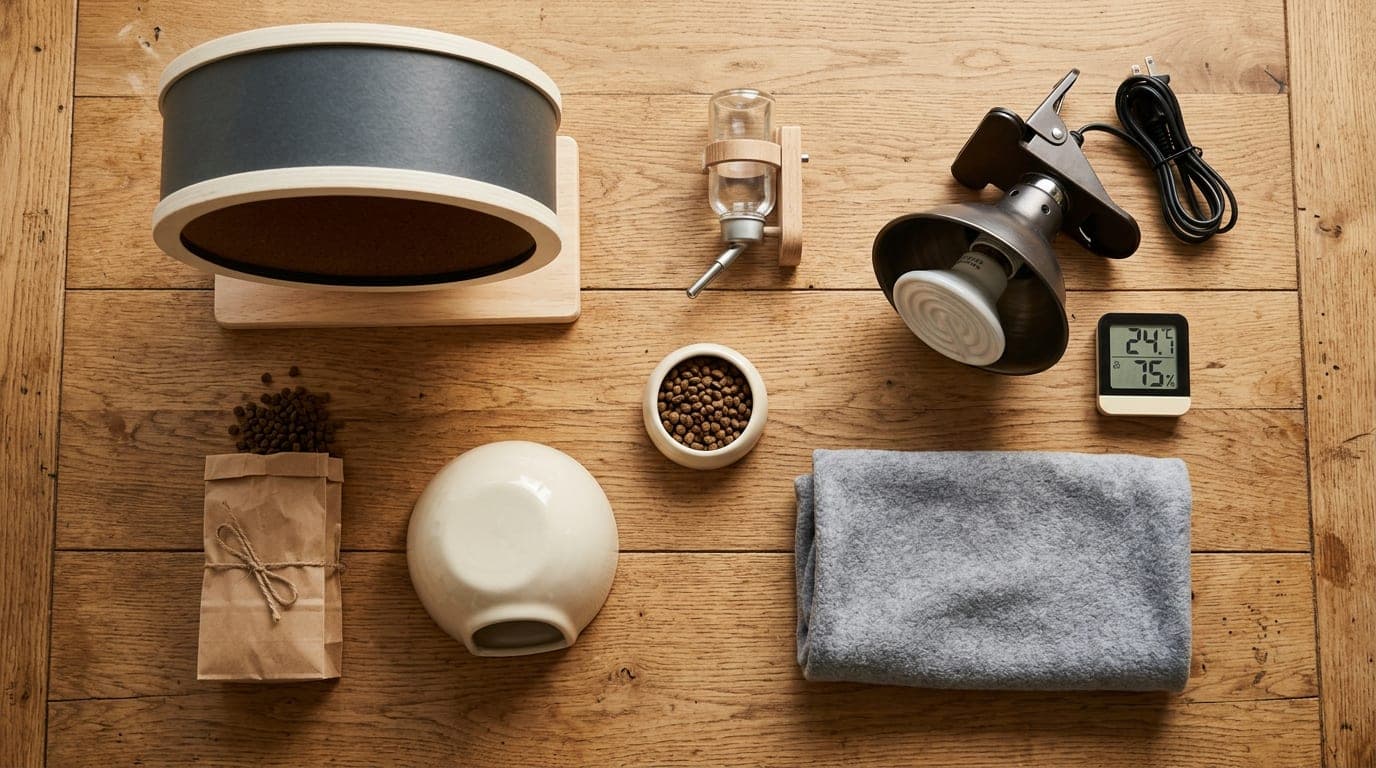
The essential supplies · everything in one frame
The supplies aisle at most pet stores is set up to sell you the wrong things. The "hedgehog starter kit" is too small, the wheel is wire-rung (unsafe), the substrate is often cedar (toxic), and the bag of "hedgehog food" is mostly corn filler. We'd rather you skip the aisle entirely and buy each component deliberately.
This is the complete supplies guide. What you actually need, the brands experienced owners settle on, what to skip, and the budget math. Total: $220–395 for the right setup. Plan to do the setup right once rather than fix it three times.
The non-negotiables. The three things you can't compromise on
These are the components where the cheap version creates real problems for the animal.
1. The cage. Minimum 4 sq ft floor space, single level
Pet-store cages marketed for hedgehogs are usually 2–3 sq ft. That's under-sized for an adult African pygmy and produces the predictable consequences: pacing, weight gain, stereotypic behaviors, shorter lifespan. The fix is to start with the right size.
Recommended options:
- C&C grids + coroplast ($60–120). The owner-built option. Wire grids from a home-organization store, plus a corrugated-plastic floor sheet. Fully customizable size, easy to expand, excellent ventilation. Most experienced owners settle here.
- Midwest Guinea Habitat ($100–150). Pre-made, ~8 sq ft floor, soft fabric sides, removable bottom for cleaning. The buy-once option if you don't want to build.
Skip: anything labeled "hedgehog cage" at a chain pet store (almost always too small), glass aquariums (poor ventilation), wire-bottom cages (toes get caught), multi-level cages (fall hazard).
Full cage spec is in our housing pillar.
2. The heat setup. CHE + clamp lamp + thermostat
This is the section that prevents the most preventable deaths. African pygmy hedgehogs need 72–80°F constant ambient temperature. Below 70°F they may attempt hibernation and often don't survive it. Three components:
- Ceramic heat emitter (CHE) bulb, 60W or 100W. Heat without visible light. The two reliable brands are Fluker's and Zoo Med. $15–25.
- Clamp lamp with porcelain socket. Plastic sockets melt at CHE temperatures. Get the version specifically rated for ceramic bulbs. $15–25.
- Thermostat controller. Inkbird ITC-308. Plug the lamp into the thermostat, place the probe in the cage. Lamp cycles on/off based on actual cage temperature. $35–50. The component beginners skip and shouldn't.
Skip: dimmer-style thermostats (shorten bulb life), heating pads as primary heat (can't warm ambient air reliably), incandescent "basking bulbs" (visible light disrupts sleep cycle), space heaters in the cage area (fire risk).
Full heat-setup spec is in our heat lamp deep dive.
3. The wheel. 12-inch solid runner
Wild hedgehogs cover several kilometers a night foraging. A captive hedgehog without a wheel will gain weight, become depressed, and shorten their lifespan. The wheel is non-negotiable.
Recommended brands:
- Carolina Storm Wheel ($45). 12-inch solid running surface, near-silent, easy to clean. The standard recommendation.
- Bucket Wheel (~$30). Build-your-own from a 5-gallon bucket and a stand. Cheaper, slightly louder, equally functional. Available from specialty hedgehog suppliers.
Skip: any wire-rung wheel (feet get stuck), any wheel under 11 inches (back arches too steeply, spinal stress), exercise balls (hedgehogs aren't built for them).
Detailed wheel guide in our hedgehog-wheel cluster.
The supporting essentials
Less critical individually but each one matters.
Hide
A small enclosed shelter where the hedgehog can fully disappear. Most prefer a covered top with one small entrance.
- Ceramic igloo ($10–20). Easy to clean (dishwasher-safe), heavy enough not to tip.
- Wooden hut ($15–25). Better insulator, slightly less hygienic over time.
- Sturdy cardboard box ($0). Surprisingly popular with hedgehogs; replace when soiled.
One per cage. Some owners offer two for variety.
Food and water dishes
Small ceramic, heavy enough not to tip. Plastic dishes get pushed around the cage; lightweight metal develops scratches that harbor bacteria.
- Two small ceramic ramekins ($5–10 at any home goods store) work fine
- Pet-marketed ceramic dishes ($10–20). Same product with a hedgehog photo on the box
For water, offer both a bowl and a small-animal bottle initially. The hedgehog will pick one. ~$10 each.
Substrate
What goes on the cage floor. Three acceptable options:
- Fleece liners ($15–25 for a few cuts; reusable for years). What most experienced owners use. Buy fleece by the yard from a fabric store and cut yourself, or buy pre-cut from a hedgehog supplier.
- Aspen shavings ($10–20/bag, replaced every 1–2 weeks). The only safe wood option. Allows digging.
- Paper-pulp bedding ($15–25/bag) like Carefresh. Middle ground between fleece and aspen.
Skip: cedar shavings (toxic), pine shavings (questionable. Kiln-dried is safer but still not ideal), cat litter (dusty, dangerous if ingested), corn cob (can mold), towels (loops snag toenails).
Full substrate comparison in our hedgehog bedding cluster.
Kibble
The 70% of the diet. Most experienced owners use a quality grain-inclusive adult cat kibble.
- Spec to look for: 30%+ crude protein, ≤15% fat, named meat as first ingredient (chicken, turkey, lamb), grain-inclusive, kibble pieces small enough for hedgehog teeth.
- Brands that meet the criteria: Purina Pro Plan Adult Cat (chicken or salmon formulas), Iams Proactive Health Adult Cat, Wellness Complete Health Adult Cat. ~$10–25 per 7-lb bag, lasts 3–4 months.
Skip: dedicated "hedgehog food" from chain pet stores (usually mediocre), kitten food (too rich, causes weight gain), grain-free formulas (heart concerns), prescription diets (vet-only).
Insects
The 20% of the diet. Variety matters; avoid relying on mealworms alone.
- Mealworms. Most common, most overdone. Safe at three twice a week, max. Freeze-dried is the convenient option; live is the most enrichment.
- Dubia roaches. Best nutritional profile of common feeders. Don't escape (don't climb glass), don't bite, don't smell. Order from a feeder-insect supplier.
- Black soldier fly larvae (BSF, sold as "calci-worms"). High calcium, low fat. Available freeze-dried.
- Crickets. Natural-prey closest to wild diet. Live = enrichment, freeze-dried = practical.
Skip: wax worms as a regular treat (too fatty), wild-caught insects (pesticide and parasite risk), bird-food-grade dried mealworms as a primary source (lowest nutritional value).
Thermometer / hygrometer
Don't trust the thermostat alone. A separate digital thermometer/hygrometer ($10–15) hung in a different spot in the cage gives you a verification reading. Catches thermostat probe issues, dead bulbs, and uneven heat distribution.
Carrier
For vet visits and the trip home from purchase. A small soft-sided pet carrier ($15–25) with a fleece liner inside. Don't bother with hard plastic. Overkill for an animal this small.
Kitchen scale
A digital scale that reads in grams. $10–15 at any home goods store. The cheapest health diagnostic an owner has. Weekly weighing catches most early problems.
What to skip. Common bad gear
The supplies marketed for hedgehogs that experienced owners specifically warn against:
- Exercise balls. Hedgehog feet slip through air slits, they overheat fast in the enclosed space, no way to communicate distress. Don't.
- Leashes and harnesses. Hedgehogs don't walk on a leash. The harnesses don't fit the body shape. Solving a problem hedgehogs don't have.
- Multi-hedgehog cages. Hedgehogs are solitary. One animal per cage, no exceptions.
- Cedar shavings, pine shavings (non-kiln-dried), corn cob bedding. Toxic or hazardous.
- Anything scented. "Fresh garden Carefresh," cedar-scented pine, deodorizing additives. Fragrance ingredients cause respiratory issues.
- Hedgehog-specific shampoo with "hedgehog scent" added. Plain unscented oatmeal-based animal shampoo is what you want.
- Cute plastic accessories with detachable parts. Hedgehogs chew. Detachable parts are choking hazards.
- Mineral or salt blocks. Designed for rabbits; not appropriate for insectivores.
- "Pet-store starter kits" sold next to the hedgehogs. Cage too small, wheel wrong, substrate often cedar.
The honest budget
For a complete first-time setup, single hedgehog:
| Component | Cost |
|---|---|
| Cage (C&C build) | $60–120 |
| Heat: CHE bulb | $15–25 |
| Heat: Clamp lamp | $15–25 |
| Heat: Thermostat | $35–50 |
| Wheel (Carolina Storm) | $30–45 |
| Hide (ceramic igloo) | $10–20 |
| Food + water dishes | $10–20 |
| Fleece liners (3–4 cuts) | $15–25 |
| Thermometer/hygrometer | $10–15 |
| First bag of kibble | $10–25 |
| Initial insect supply | $10–20 |
| Carrier | $15–25 |
| Kitchen scale | $10–15 |
| Total | $245–430 |
Plus the hedgehog itself ($0–300 depending on source), and the first vet visit ($80–200). Total first-month outlay: $325–930.
The full cost analysis lives in our hedgehog-price piece.
Where to buy what
Different sources for different categories:
- Cage components (C&C grids, coroplast): Home goods stores (Target, Container Store, Bed Bath & Beyond) and home-improvement stores. Cheaper than pet stores for the same items.
- Heat lamp + CHE bulb: Hardware stores or pet stores. About the same price either way; selection slightly better at pet stores.
- Thermostat: Amazon. Inkbird is widely available.
- Wheel: Direct from the maker (Carolina Storm Wheel from their own website is often cheaper than Amazon) or specialty hedgehog supply shops.
- Kibble + standard pet supplies: Any decent pet store, or Amazon if you want delivery.
- Insects: Local feeder-insect breeders for live (cheaper, fresher), online suppliers like Josh's Frogs or Top Hat Cricket for variety, Amazon for freeze-dried.
- Fleece: Fabric stores by the yard ($10/yard, makes 4–6 cage liners), or pre-cut from a hedgehog supplier ($25 for 4 cuts) if you don't want to measure and cut yourself.
A note on affiliate links: throughout this guide and our other supply recommendations, links to specific products are typically affiliate links. We earn a small commission at no cost to you when you buy through them. We pick the right product first and add the affiliate link second; if a better product doesn't have an affiliate program, we link to it anyway. Full disclosure on our affiliate disclosure page.
What to add later (not in month one)
Once the hedgehog is settled and you know what they like, optional additions:
- Digging box. Small plastic container with shredded fleece or organic soil. $0–15. Some hedgehogs love digging; others ignore it.
- Snuffle mat or foraging puzzle: $15–30 for the commercial version, free if you DIY. Enrichment that gets old fast.
- Second hide. $10–25. For variety. Many hedgehogs use one and ignore the other.
- Toilet paper rolls ($0). Surprisingly popular as enrichment. Cut a slit lengthwise so the hedgehog can't get stuck.
- Small stuffed dog toy ($5–15). Some hedgehogs adopt them as cage companions. See our play cluster.
- Hedgehog-safe shampoo for occasional baths. Plain oatmeal-based animal shampoo ($8–15). Most healthy hedgehogs need baths only occasionally.
A note on "the right way" vs "the cheap way"
We've been deliberate about distinguishing supplies you can save money on (fleece by the yard, C&C cage, kitchen scale you already own) from ones you can't (the thermostat, the wheel, the cage size). The cheap-way mistakes that cost owners more in the long run:
- A pet-store starter kit at $80 → upgrade cage at $100 + new wheel at $45 + replace cedar shavings = $200 to fix a $80 mistake
- Heat lamp without thermostat at $50 → emergency vet visit when the cage overheats or freezes = $150–400+
- Wire-rung wheel at $20 → vet visit for caught toenail = $80–200
A few hundred dollars upfront is cheap insurance against four-digit vet emergencies that often trace back to a setup decision made on price alone.
Common questions
Common questions
How much do hedgehog supplies cost in total?
$220–395 for the complete first-time setup, depending on cage type and accessory choices. The full breakdown is in our hedgehog-price piece. Most of the cost is in three line items: cage ($60–150), heat setup ($65–100 for bulb + lamp + thermostat), and wheel ($30–45). Everything else is incremental.
Can I just buy a hedgehog starter kit from Petco?
We'd skip it. The cages in pet-store starter kits are typically 2–3 square feet (under-sized for an adult African pygmy), the included wheels are usually wire-rung (unsafe — feet get stuck) or too small, and the substrate is often cedar shavings (toxic). By the time you've upgraded each problematic component, you've spent more than building right from scratch.
What's the one thing I shouldn't cheap out on?
The thermostat. It's the part beginners skip ($35–50 for an Inkbird ITC-308) and the part that prevents both overheating and the cold-induced hibernation attempts that kill hedgehogs. A heat lamp without a thermostat is either too hot, not hot enough, or right by accident — none of those is safe long-term.
Do I need separate hedgehog food, or is cat food fine?
Cat food is what most experienced owners use. Specifically: a quality grain-inclusive adult cat kibble, 30%+ crude protein, ≤15% fat. The dedicated 'hedgehog food' sold at most pet stores is usually mediocre to bad — too much filler, too little protein. See our diet pillar for label-reading.
Where should I buy hedgehog supplies?
Mix of sources. Cage components (C&C grids, coroplast) are usually cheapest at home goods or hardware stores. Heat lamp + CHE bulb at any pet store or hardware section. Wheels (Carolina Storm, Bucket) order direct from the maker or a specialist hedgehog supply shop. Kibble at any decent pet store. Insects from local feeder breeders or online suppliers.
Related on this site
Every guide in Supplies & Gear
Sources
Sources
- Hedgehog housing — supplies, substrates, and enrichment items — VCA Animal Hospitals
- African pygmy hedgehog — recommended supplies and enrichment — LafeberVet