
Supplies & Gear · 7 min read
Hedgehog Wheel: How to Pick the Right One
12-inch silent runner, solid surface. The wheel is non-negotiable and the wrong one causes injury. Brand comparison, what to skip, what to do when they refuse it.
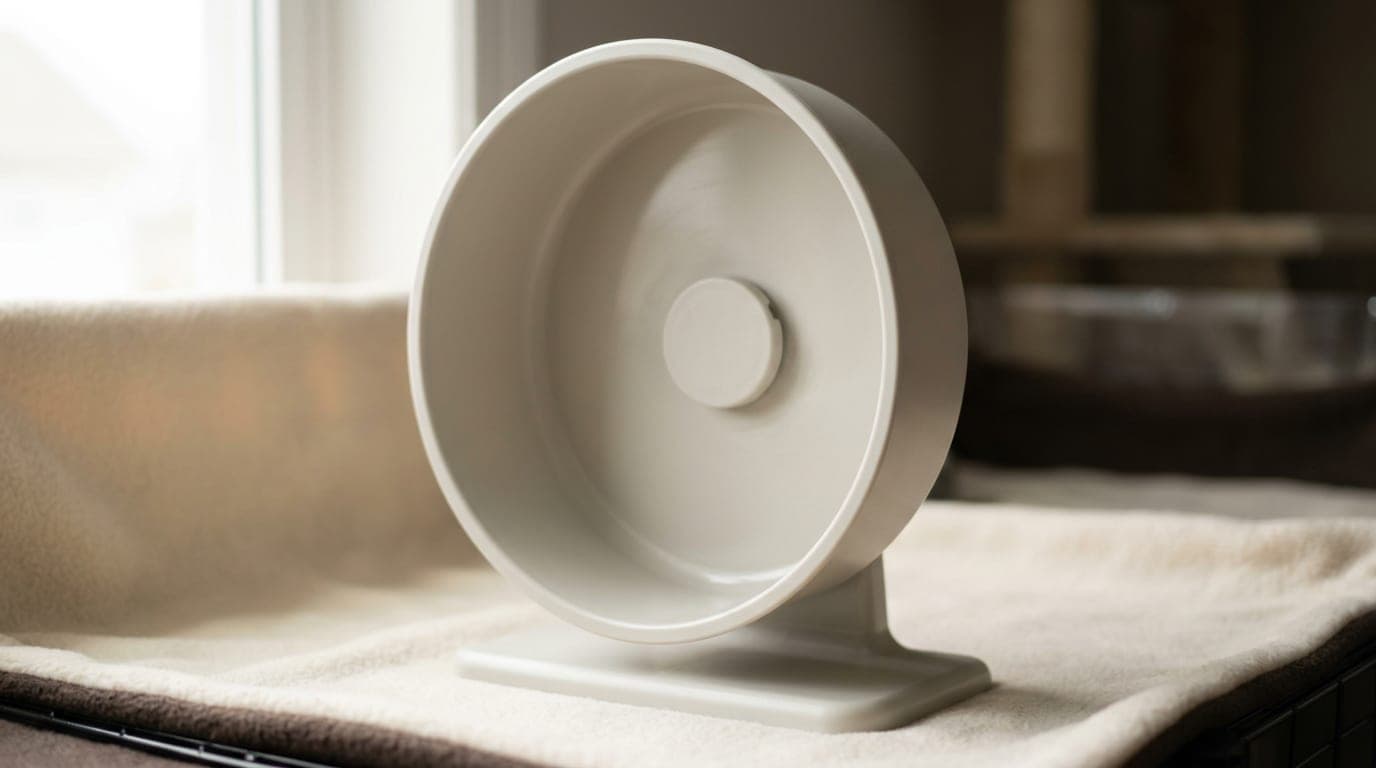
12-inch solid runner · the single most important purchase
The wheel is the single most important supply purchase. Get it right and your hedgehog runs hours every night, stays at a healthy weight, and lives a more enriched life. Get it wrong and you've either bought something dangerous (wire-rung) or something the animal won't use (too small).
There are two reliable brands, three honest tradeoffs, and a clear list of what to skip. Here's what experienced owners actually buy.
What "the wheel" does for a hedgehog
In the wild, an African pygmy covers several kilometers a night foraging. Captive hedgehogs need a way to replicate that activity, and the wheel is it. Without one:
- Weight gain: the calories from kibble and insects don't get burned off
- Stereotypic behaviors. Pacing the cage, repetitive turning, cage-bar climbing
- Stress: under-stimulated animals are stressed animals; stress shortens lifespan
- Shorter lifespan overall. Captive hedgehogs without adequate exercise consistently live shorter lives
This isn't optional. If you can't accommodate a 12-inch wheel inside the cage, the cage is too small.
What to look for
Four non-negotiable specifications.
1. 12-inch diameter minimum
Anything smaller and the hedgehog's back arches too steeply during running. The spine isn't built for tight curvature; over weeks of use, hedgehogs on small wheels develop back issues and often stop using the wheel.
Some unusually large hedgehogs (especially heavier males) do better on 14-inch wheels. Most adult African pygmies are fine on 12.
2. Solid running surface
The single most important spec. Wire-rung wheels, mesh wheels, and any open-design wheel will catch hedgehog feet. Toenails get stuck, toes can be injured or torn off, and hedgehogs sometimes refuse to use wheels after a single bad experience.
Always solid surface. Plastic, plastic-with-rubber-mat, or smooth fabric-covered surface. Never wire. Never mesh.
3. Free-standing or securely-mounted
Wall-mounted wheels (which clip to the side of a cage) tend to wobble more as the hedgehog runs. Free-standing wheels with a heavy base are more stable, quieter, and easier to clean. Both can work; standing is the safer default.
4. Quiet bearings
Hedgehogs run on wheels for hours overnight, often in the same room you sleep in. A squeaky wheel becomes both a sleep disruptor for you and a stress signal for the hedgehog (loud bearings catch their attention and reduce running time).
Both major brands market themselves as "silent." Both are actually quiet. A faint whoosh of the running surface, no squeaks. Anything that squeaks audibly needs WD-40 or replacement.
The two reliable brands
Carolina Storm Wheel (~$45)
The polished commercial option. Available on Amazon or direct from the maker's website.
Pros:
- 12-inch diameter standard, 14-inch optional
- Heavy molded plastic base. Doesn't wobble, doesn't tip
- Smooth interior running surface
- Easy to clean (dishwasher-safe components)
- Genuinely quiet bearings
- Built specifically for hedgehogs (versus repurposed from another species)
Cons:
- Most expensive option (~$45)
- Single-color, utilitarian look (not that hedgehogs care, but some owners do)
- Occasional shipping delays direct from the maker
Best for: First-time owners who want a one-and-done purchase. The default recommendation in most hedgehog communities.
Bucket Wheel (~$30)
The DIY-style option built from a modified 5-gallon bucket on a stand. Available from specialty hedgehog suppliers and small Etsy makers.
Pros:
- Cheaper (~$30)
- Larger interior diameter (14+ inches typical)
- Robust. Buckets are nearly indestructible
- Easy to clean
- Wide stable base
Cons:
- Slightly louder than Carolina Storm (faint plastic-on-plastic rolling sound)
- Less polished aesthetically. Looks like what it is (a bucket on a stand)
- Quality varies by individual maker
Best for: Owners who don't mind slightly more noise in exchange for $15 saved. Also a good choice for unusually large hedgehogs since the diameter is generous.
Side-by-side comparison
| Feature | Carolina Storm Wheel | Bucket Wheel |
|---|---|---|
| Diameter | 12 inches (14 available) | 14+ inches typical |
| Price | ~$45 | ~$30 |
| Noise | Very quiet | Slightly louder |
| Surface | Smooth molded plastic | Painted bucket interior |
| Stand | Built-in heavy base | Welded metal or wood stand |
| Cleaning | Dishwasher-safe parts | Hand-wash |
| Availability | Amazon + maker direct | Specialty suppliers, Etsy |
Both produce the same outcome for the hedgehog. Pick on whatever criteria matter to you.
What to skip
The wheels we'd actively recommend against.
❌ Wire-rung wheels (any brand)
The bars that make up a wire wheel's running surface catch hedgehog feet. We've seen cases of caught toenails, torn webbing between toes, and even broken legs from wire wheels. The vet costs to fix these are higher than the cost of a good wheel many times over.
Skip every wire wheel. No exceptions, regardless of brand or price.
❌ Wheels under 11 inches
The hedgehog's back arches too steeply on small wheels. Even if the animal uses it, the long-term spinal stress causes problems. Some pet stores sell 8-inch and 10-inch wheels marketed for "small mammals". They're for hamsters, not hedgehogs.
❌ Exercise balls (hedgehog versions or otherwise)
Pet stores still sell plastic exercise balls marketed for hedgehogs. The marketing is wrong. The problems:
- Hedgehog feet slip through the air slits
- The closed space overheats fast (hedgehogs can't pant or sweat efficiently)
- No way for the hedgehog to signal distress
- Hard plastic floor doesn't match the wheel's running curve
Don't use them. The wheel goes inside the cage; the hedgehog gets out-of-cage time in an open enclosed area instead.
❌ Repurposed "for any small animal" plastic wheels
Generic plastic small-animal wheels (the kind sold for guinea pigs, chinchillas, or rats) sometimes work but often have issues: wrong diameter, wire bottom, loud bearings, unstable bases. The two hedgehog-specific brands above are designed for this animal; generic alternatives usually aren't worth the savings.
Setup. Placement and adjustments
Once you have the right wheel, a few placement decisions:
Where in the cage: Opposite corner from the food and water. Hedgehogs poop while running on the wheel. You don't want that landing in the food dish.
Distance from walls: The wheel should spin freely without the running surface contacting any cage wall. A few inches of clearance.
Substrate underneath: A fleece scrap under the wheel catches the inevitable poop and is easier to swap out than scrubbing the cage floor.
Height: Wheel base should sit on the cage floor; running surface at ground level. Don't elevate.
The cleaning routine
Hedgehogs poop on the wheel. Constantly. The cleaning routine is non-negotiable.
Daily: Wipe the running surface with a paper towel or baby wipe (unscented). Quick. 30 seconds during the evening kibble refresh.
Weekly: Full scrub. Disconnect the wheel from any stand, take it to the sink, scrub with mild dish soap and warm water. Rinse thoroughly (residue is irritating). Let dry. Most owners do this during the weekly cage clean.
Monthly: Inspect for damage. A wheel with a cracked running surface or worn bearings is a problem in waiting. Replace as needed.
Carolina Storm Wheel components are top-rack dishwasher-safe, which makes the weekly clean meaningfully easier. Bucket wheels are hand-wash only.
When the hedgehog won't use the wheel
Common scenarios and what to check:
New hedgehog (first 1–2 weeks): Normal. They're adjusting. Most start using the wheel within 7–14 days of arrival. Patience.
Hedgehog who used the wheel and stopped: Verify cage temperature first (cold suppresses activity), then look for signs of illness (weight change, appetite change, lethargy). A previously-active hedgehog who quits the wheel is sometimes the earliest sign of WHS or other neurological issues. See our WHS deep dive.
Wheel is too small: Check diameter. Under 11 inches and even a healthy hedgehog may refuse. Replace with a larger wheel.
Wheel is too noisy: Squeaky bearings stress hedgehogs more than humans realize. Try lubricating the bearings with a non-toxic oil (food-grade mineral oil, not WD-40 inside the running compartment) or replace.
Wheel is in a bad spot: A wheel directly under a light, near a heat source, or in a high-traffic location may be avoided. Move it.
Hedgehog is genuinely sedentary: Some individual hedgehogs are less active than average. As long as weight is stable and behavior is otherwise normal, slightly less wheel use isn't a crisis. Continued weight gain or visible behavioral issues are signals to escalate.
DIY options (if budget is tight)
If you really can't afford either commercial wheel, the DIY versions:
Saucer wheels (controversial. Most owners skip)
Flying-saucer-style wheels exist but spin the animal in a slight tilt that's stressful over time. We'd skip.
Build your own bucket wheel
The original Bucket Wheel design is publicly documented. A 5-gallon plastic bucket with the inside surface smoothed, mounted on a welded metal stand or scrap wood base. Cost: $15–25 in materials.
The catch: the bearings have to be done right. A wobbly DIY wheel is worse than a small commercial wheel. If you're not handy with light fabrication, just buy the Bucket Wheel from a maker.
What doesn't work as DIY
- Bicycle wheels (too small, wrong proportions, dangerous spokes)
- Plastic salad bowls (wrong angle, no proper bearing)
- Wooden disk mounted on a dowel (no bearing, friction stops the spin)
A bad DIY wheel is worse than no wheel. If the budget can't stretch to a Bucket Wheel, the better call is to wait until it can.
A note on affiliate links
Many product links in this guide are affiliate links. We earn a small commission at no cost to you when you buy through them. We pick the right wheel first and add the affiliate link second; if a better wheel didn't have an affiliate program, we'd link to it anyway. Full disclosure on our affiliate disclosure page.
The wheel is the place where this matters most. Of all the affiliate links on the site, the wheel is one we'd recommend with or without commission. Getting this one right means everything else in the supply list works better.
Common questions
Common questions
What size wheel does a hedgehog need?
12-inch diameter minimum. Some owners use 14-inch for unusually large hedgehogs. Smaller than 11 inches forces the hedgehog's back to arch too steeply during running — over time this causes spinal stress and they often stop using the wheel.
Are wire wheels safe for hedgehogs?
No. The bars or rungs in wire wheels catch hedgehog feet and toenails, sometimes causing injuries serious enough to need vet attention. The animal's foot anatomy isn't compatible with wire surfaces. Always solid-surface only.
Carolina Storm Wheel vs Bucket Wheel — which is better?
Both work well. Carolina Storm Wheel ($45) is the polished commercial option — quiet, well-finished, easy to mount. Bucket Wheel (~$30) is the DIY option built from a 5-gallon bucket — slightly louder, equally functional, cheaper. Most experienced owners settle on one or the other based on whether they prefer convenience or savings.
How often should I clean the hedgehog wheel?
Spot-clean daily (wipe off poop, which there will be plenty of), full scrub weekly. Hedgehogs poop on the wheel almost every night — it's a constant cleaning chore. Make peace with it or find another hedgehog.
My hedgehog won't use the wheel — what now?
Common reasons: wheel too small (under 11 inches), wheel too noisy (squeaky bearings stress them), cage too cold (under 72°F suppresses activity), hedgehog is sick or stressed. Verify each. Newly arrived hedgehogs sometimes take 1–2 weeks to start using the wheel — be patient. Persistent refusal after a month is a vet conversation.
Related on this site
Sources
Sources
- Hedgehog enrichment and exercise — wheel safety considerations — Hedgehog Welfare Society
- African pygmy hedgehog — exercise needs and wheel selection — LafeberVet