
Hedgehogs 101 · 7 min read
African Pygmy Hedgehog: Which Species Is the Pet?
Of 17 hedgehog species, only the African pygmy hedgehog is legally kept as a pet across most of North America. Why the species matters before you buy.
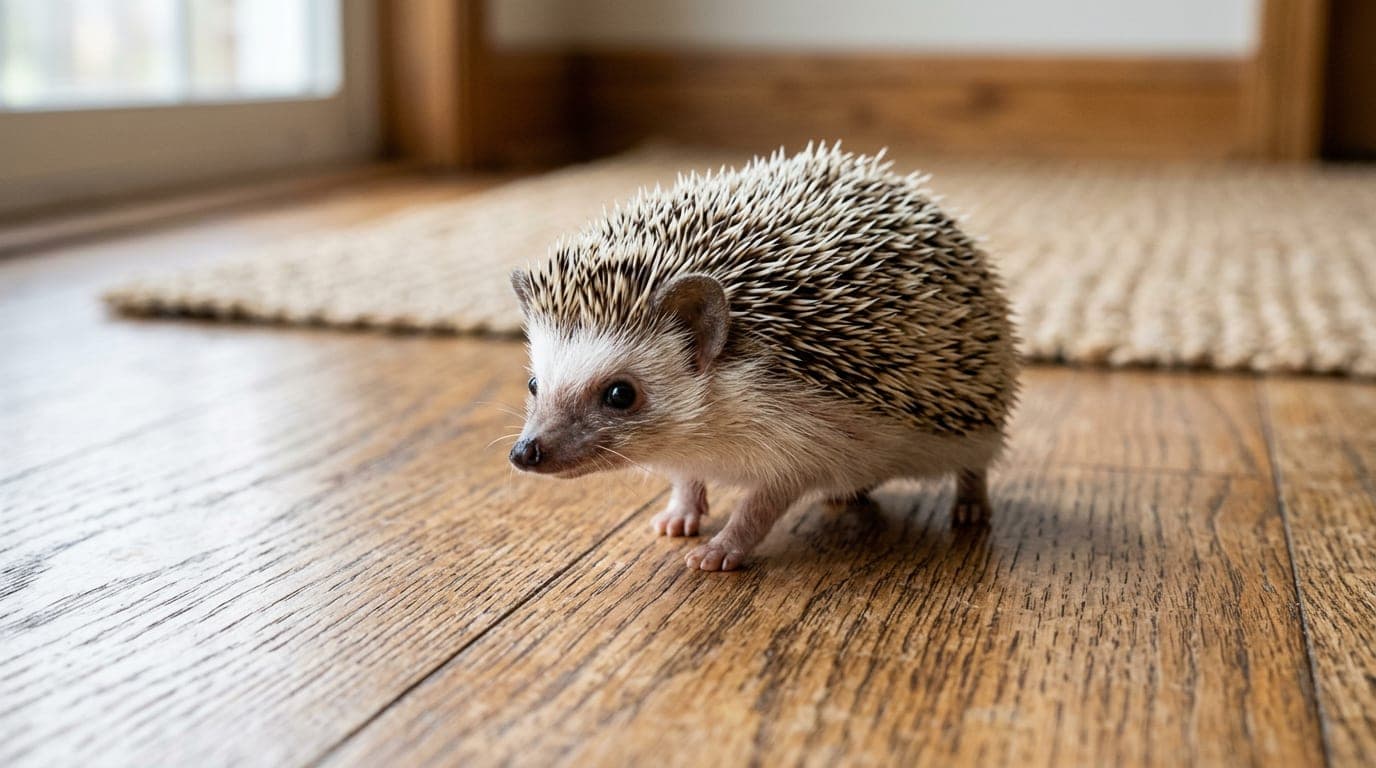
Atelerix albiventris — the African pygmy, the only species sold as a pet
There are 17 species of hedgehog in the world. They live across Europe, Africa, Asia, and the Middle East, in habitats from coastal heath to semi-desert. Most people will never knowingly meet a hedgehog of any species. The one in your house: or the one you're thinking of buying. Is almost certainly the African pygmy hedgehog, Atelerix albiventris, sometimes hybridized with its close cousin Atelerix algirus. Almost every other species is either protected wildlife you can't legally own, or rare enough that you won't find them outside specialist zoos.
Knowing which species you have, or will have, matters for three practical reasons: legality (different species are illegal in different places), care (the African pygmy needs warmer temperatures than European hedgehogs and won't survive a real winter), and lifespan (varies meaningfully across the family).
Which species is the pet hedgehog?
In North America, virtually all pet hedgehogs are descended from a small founder population of African pygmies and Algerian hedgehogs imported to the US in the 1980s and 1990s. The two species hybridize freely, and most modern pet hedgehogs are mixed-ancestry hybrids. Which is why a single litter can show variation in foot anatomy, ear shape, and coat color even between siblings.
The pet trade calls them all "African pygmy hedgehogs" or just "pygmy hedgehogs," sometimes "African hedgehog," sometimes simply "hedgehog." The science calls them Atelerix albiventris / A. algirus hybrids. They're the same animal in practice. A small (250–600g adult), nocturnal, solitary insectivore from sub-Saharan grasslands.
If you bought a hedgehog from a US breeder, a UK breeder, or a pet store anywhere in North America, this is what you have. If you're researching a hedgehog purchase, this is what you'll be researching the care of. Almost every other species is irrelevant to a pet owner.
Why "species" matters
The species question feels academic. It isn't. Three concrete consequences:
Legality. It's illegal in some US states (California, Hawaii, Pennsylvania, Georgia, plus New York City) to own any hedgehog. The pet you're considering may be perfectly legal in your friend's state and a misdemeanor in yours. The illegality applies regardless of species: Atelerix or Erinaceus, doesn't matter. But knowing the species also matters because the wildlife laws around European hedgehogs (Erinaceus europaeus) are completely different from the pet-trade rules around African pygmies. Keeping a European hedgehog you "rescued" is illegal in most of Europe even if your local pet-store sells African pygmies.
Care needs. African pygmies need 72–80°F year-round. They didn't evolve to hibernate; in captivity, attempts to hibernate (triggered by cold) often kill them. European hedgehogs, by contrast, hibernate normally and tolerate temperatures into the low 30s°F. Treating one like the other is dangerous in either direction.
Lifespan. African pygmies in captivity typically live 3–5 years; well-cared-for individuals occasionally reach 8. European hedgehogs in the wild average 2–3 years; some captive ones in wildlife rehabilitation centers exceed 7. Long-eared hedgehogs (Hemiechinus auritus) can live 7+ years. The "expected lifespan" advice you'll find online assumes the species you're keeping. If it doesn't, it's wrong.
The African pygmy hedgehog in detail
Since this is the species you almost certainly have or will have, here's the quick reference.
Scientific name. Atelerix albiventris (the four-toed hedgehog), with hybrid ancestry from A. algirus (the North African hedgehog) in the modern pet line.
Native range. Sub-Saharan grasslands, scrub, and semi-arid regions across central Africa. Their wild distribution stretches from Senegal across to Ethiopia and down through parts of East Africa.
Adult size. 250–600g (about 9–21 oz) and 5–8 inches in body length. Females tend to be slightly larger than males. Anything smaller as an adult is underweight or underdeveloped.
Lifespan. 3–5 years in captivity is average. 6–8 with excellent care is achievable. The leading killers of pet hedgehogs are dental disease, cancers (particularly in older females), Wobbly Hedgehog Syndrome (a degenerative neurological condition), and obesity-driven complications.
Temperament. Nocturnal, solitary, defensive when startled. They roll into a ball when scared, huff and click when annoyed, and most never become "cuddly" the way a cat or dog might. The owners who love them tend to be people who enjoy quietly observing an animal do its thing.
Diet. Insectivore. See the full diet guide.
Climate need. 72–80°F constant ambient temperature, year-round. Below 70°F they may attempt to hibernate, which captive African pygmies cannot complete safely. This is the single most important husbandry fact about the species.
The other species you might hear about
Most pet owners will never need to deal with these. They show up in three contexts: rehabilitation cases (wildlife hedgehogs that someone "found"), online confusion (someone asking about pet care while owning a wild species), and breeder marketing (claims of "rare" or "exotic" lineages that don't actually exist in the pet trade).
European hedgehog (Erinaceus europaeus)
The most famous hedgehog. The one in children's books, in Beatrix Potter, in British gardens. Native to most of Europe and parts of Asia. Larger than African pygmies (600–1200g adult), darker coloration, hibernates naturally.
You cannot legally keep one as a pet in any country in their native range. They're protected wildlife under the UK Wildlife and Countryside Act, the EU Habitats Directive, and equivalent national laws. If you find an injured or orphaned European hedgehog, the legal action is to take it to a licensed wildlife rehabilitator, not to keep it.
European hedgehogs are also genuinely difficult to care for in captivity even when legal. They hibernate, they're not adapted to consistently warm indoor temperatures, and they don't tame to human handling.
Long-eared hedgehog (Hemiechinus auritus)
A different genus entirely. Native to dry parts of Asia and the Middle East. Distinctive long ears (which are exactly what they sound like). Can live 7+ years. Occasionally kept as pets in some parts of Europe and the Middle East where local wildlife laws permit; effectively never legal or available in North America.
If you're seeing one for sale in a US pet shop, something is wrong with the listing.
Algerian hedgehog (Atelerix algirus)
The African pygmy's close cousin and the other half of the modern pet hedgehog's ancestry. Native to North Africa and parts of southern Europe. Slightly larger and lankier than the African pygmy.
You won't typically find a "pure" Algerian hedgehog for sale in North America. The pet trade hybridized them with African pygmies decades ago, and the line has been mixed for so many generations that calling any individual "pure A. albiventris" or "pure A. algirus" is mostly aspirational.
The other 14
Indian long-eared hedgehog, Daurian hedgehog, Northern white-breasted, Southern African, Somali, Ethiopian. These all exist, all live in their respective ranges, and none are pet animals. We mention them because the search results sometimes pretend otherwise. They're not.
Hybrids and "designer" hedgehogs
This is the part of the pet hedgehog world that has the most marketing and the least substance. A non-exhaustive list of terms you'll see and what they actually mean:
- "Pinto," "snowflake," "salt and pepper," "algerian black," "cinnamon". Coat color variations within the African pygmy / Algerian hybrid line. These are genuine variations, all the same animal, no health implications.
- "Mini" or "micro" or "teacup" hedgehogs. Marketing. There is no smaller subspecies. An adult African pygmy is what an adult African pygmy is. Sellers using these terms are either selling juveniles too young (which is illegal in some states) or just inventing categories.
- "Designer hybrid" or "F1 hybrid". Vague enough to mean almost anything. Sometimes refers to a deliberate cross between specific breeder lines; sometimes just means "we don't really know the parentage." Treat as a yellow flag and ask for documented lineage.
- "Wild-caught" or "exotic origin". Illegal under CITES and most national wildlife laws to import hedgehogs from the wild for the pet trade. Anyone advertising wild-caught animals is operating outside the law and you should not buy from them.
The honest version: the modern pet hedgehog is a mixed-ancestry African pygmy / Algerian hybrid. The differences between bloodlines are mostly cosmetic. A reputable breeder will tell you this plainly.
What if I find a hedgehog in the wild?
This question comes up enough to be worth a section. The answer depends entirely on where you are.
In Europe, the UK, parts of Asia, parts of Africa. You've probably found a wild European, long-eared, or African native hedgehog. Don't try to keep it. If it's healthy, leave it. If it's injured, dehydrated, or out during the day (which is unusual and often a sign of distress), take it to a licensed wildlife rehabilitator. Local rescues and the RSPCA / equivalent in other countries can usually help find one.
In North America. You almost certainly haven't found a wild hedgehog, because hedgehogs aren't native to North America. What you've probably found is either:
- An escaped pet African pygmy (rare; they don't survive long outdoors in most North American climates)
- A young or small mammal that isn't a hedgehog at all. Most likely a juvenile opossum, a young porcupine (very different animal), or a small rodent
If you're sure you've found an escaped pet hedgehog, the legal and ethical move is to bring it indoors immediately (they freeze fast outside their thermal range), contact local exotic-animal rescues to check for missing-pet reports, and post in regional hedgehog owner groups online.
Sources beyond the citations
We update this page when species classifications change (which happens occasionally. Atelerix species were re-described in the 2010s). The current best references for hedgehog taxonomy are the IUCN Red List entries linked above and the Mammal Species of the World database. For care and husbandry specifics on the African pygmy, the British Hedgehog Preservation Society and the International Hedgehog Association maintain good owner resources.
Common questions
Common questions
What species is the pet hedgehog?
Almost always the African pygmy hedgehog (Atelerix albiventris), sometimes hybridized with the closely related Algerian hedgehog (Atelerix algirus). If you bought a 'hedgehog' from a US breeder or pet store, it's effectively this species.
Can I keep a European hedgehog as a pet?
No. European hedgehogs (Erinaceus europaeus) are protected wildlife under most national wildlife laws across their range. Keeping one as a pet without a license is illegal in the UK, the EU, and elsewhere. They also don't domesticate well and have very different care needs from the African pygmy.
Are 'pygmy hedgehogs' a different species from 'African pygmy hedgehogs'?
No — they're the same animal. 'Pygmy hedgehog' is the common UK nickname; 'African pygmy hedgehog' is the more complete name. Both refer to Atelerix albiventris (sometimes hybridized with Atelerix algirus). Pet-store labels are inconsistent.
What about 'micro' or 'teacup' hedgehogs?
Marketing, not species. There's no smaller subspecies of pet hedgehog. Adult African pygmies all top out around 250–600g. Anything sold as 'micro' or 'teacup' is either an underweight juvenile (illegal in some states) or a normal hedgehog with a marketing label that should make you walk away.
What's the difference between Atelerix albiventris and Atelerix algirus?
Both are small African hedgehogs with similar care needs. A. albiventris is the species most pet hedgehogs trace back to; A. algirus (the Algerian or North African hedgehog) is closely related and was hybridized into the pet line decades ago. Most US pet hedgehogs today are mixed-ancestry hybrids of the two, which is why you'll sometimes see 'four-toed' (albiventris trait) and other variations within a single litter.
Are hedgehogs related to porcupines?
No, not closely. Hedgehogs are insectivores in the family Erinaceidae. Porcupines are rodents. Both have spines, but the spines evolved independently — convergent evolution, not common ancestry. Hedgehogs are actually more closely related to shrews and moles than to porcupines.
Related on this site
Every guide in Hedgehogs 101
- Hedgehog Care Sheet: The One-Page Quick Reference
- Are Hedgehogs Good Pets for Kids? The Honest Parent's Answer
- Hedgehog Care: The Honest Owner's Guide
- Are Hedgehogs Nice Pets? An Honest Answer
- Hedgehogs and Cats: Can They Live in the Same House?
- Where Do Hedgehogs Live? (Native Range and What It Means for Care)
Sources
Sources
- Erinaceidae — Mammal Diversity Database — American Society of Mammalogists
- Atelerix albiventris — IUCN Red List assessment — IUCN