
Hedgehogs 101 · 6 min read
Are Hedgehogs Nice Pets? An Honest Answer
Hedgehogs are good pets for the right person, a small disaster for the wrong one. Not affectionate like a cat. Who they're for — and who should pick a different animal.
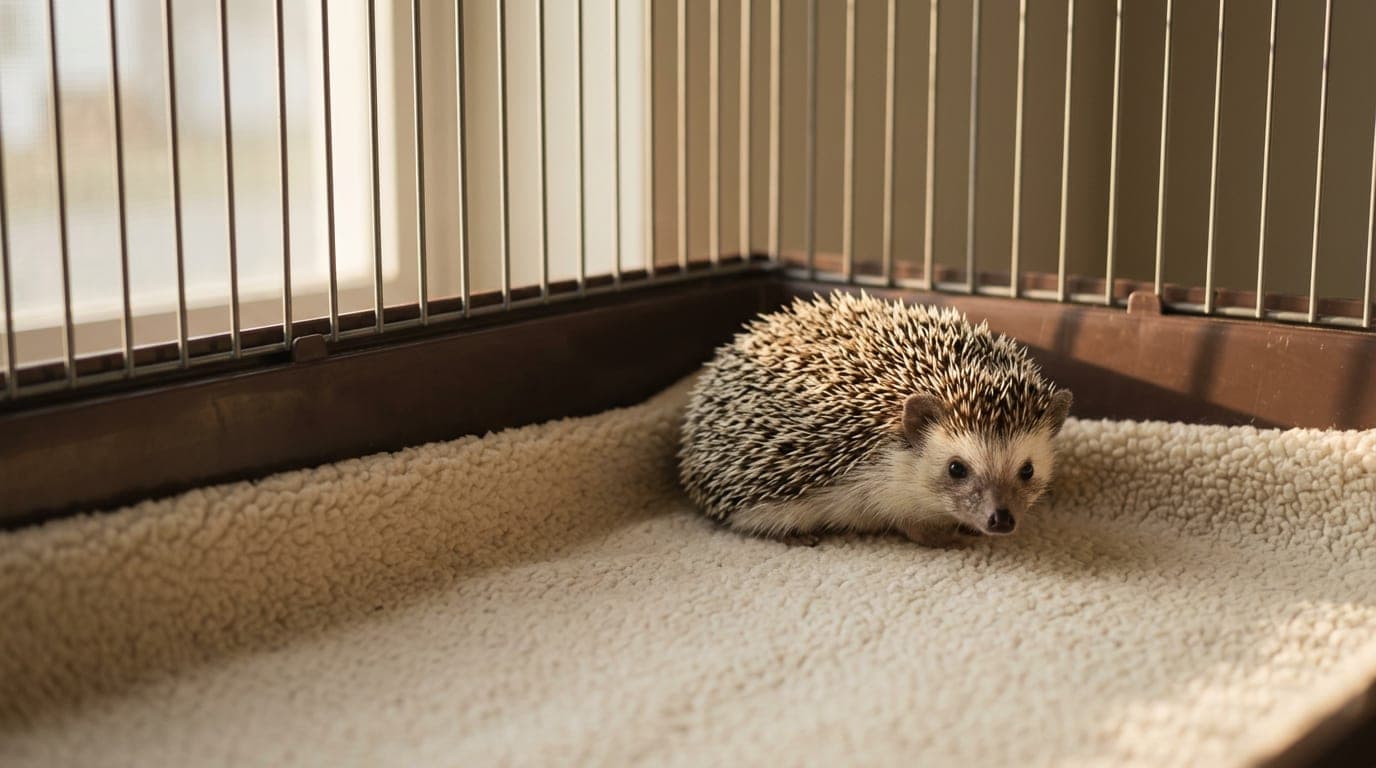
The everyday pose — alert, calm, mostly minding its own business
Hedgehogs are good pets for the right person, and a small disaster for the wrong one. They're nocturnal, which means they're loudest at 2am. They're not affectionate the way a cat is. Most won't snuggle, and many will huff at you for the first month. The owners who love them tend to be people who enjoy quietly observing an animal do its thing. If that's you, keep reading. If you wanted a pet that greets you at the door, get a dog.
That's the honest summary. The longer version is worth reading because almost every "I returned my hedgehog" story we've heard started with a wrong-fit purchase that someone could have predicted.
Who hedgehogs are actually good for
The owner profile that consistently does well:
- Adults, usually 25+. Old enough to enjoy a low-interaction pet
- Lives in a stable indoor environment with consistent heating
- Has researched for at least a few weeks before buying
- Comfortable with the night schedule (or has a flexible enough schedule that the hedgehog's 9pm–4am activity window works for them)
- Looking for a low-key animal companion, not a substitute friend or a status object
- Willing to handle a small animal that may roll into a ball, huff, and occasionally poop on them
- Has access to an exotic-animal vet within reasonable distance (this is the one most beginners forget)
The owners who report the most satisfaction also tend to share a quieter quality: they like watching a hedgehog be a hedgehog. They find the small behaviors: the sniff-and-explore at the start of every night, the scratchy wheel run at 1am, the absurd quill-anointing ritual. Genuinely interesting. If "interesting to watch" doesn't feel like enough payoff, the math probably doesn't work.
Who hedgehogs are not good for
The reverse is also worth being direct about:
- Children under 12. The reasons compound: nocturnal schedule means kids never see them during their waking hours, the spines hurt small hands, and a startled hedgehog's huff-and-ball behavior reads to a kid as "the toy is broken" rather than "the animal is scared."
- Gift recipients. Almost every "rescue hedgehog" we've heard about started as a gift to someone who hadn't asked for one. Hedgehogs are too specific a commitment to give.
- People who work from home and want a desk pet. Your hedgehog will be asleep when you're working. Visible activity comes after you've gone to bed.
- People in apartments where temperature isn't controllable year-round. A hedgehog needs 72–80°F constant. If your landlord turns the heat down to 65°F at night, that's a real problem.
- Anyone who wants a "low-maintenance" pet. Hedgehogs are low-interaction. That's not the same as low-maintenance. They need daily food and water refresh, weekly cage cleaning, weekly weighing, and access to specialized vet care. The maintenance is real; it's just spread out.
- People who can't commit to 4–6 years. A captive African pygmy lives 3–5 years on average, sometimes longer. That's not a long commitment by dog standards but it's a real one.
- People in states where hedgehogs are illegal. California, Hawaii, Pennsylvania, Georgia, and New York City are off the list entirely; some other states require permits.
What "nice" actually means in this context
A lot of the confusion about whether hedgehogs are "nice pets" comes from comparing them to the wrong reference point. They're not cats. They're not rabbits. They're not even guinea pigs. The closest behavioral comparison is probably a slightly more interactive turtle.
That sounds like a downgrade until you know what you're signing up for. The owners who enjoy hedgehogs most rarely use the word "nice." They use words like "weird," "interesting," "satisfying to watch." They appreciate that their hedgehog has a personality without expecting that personality to perform for them.
A few specific things hedgehogs are genuinely good at being:
- Quiet. Compared to almost any other pocket pet. Wheel noise at night is the main exception.
- Self-contained. Doesn't need walks, doesn't need playtime in the conventional sense, doesn't need entertainment from you.
- Visually interesting. They look like a small mythological creature. The novelty doesn't really wear off.
- Compatible with introvert lifestyles. A hedgehog is a roommate that doesn't need to talk to you to be a good roommate.
What hedgehogs are not good at, despite frequent claims:
- Being affectionate. Most never get there. Manage expectations.
- Being predictable. Even calm hedgehogs have nights where they huff at you for no reason you can identify.
- Being beginner-friendly. Their care needs are specific. Heat, diet, vet access. None of these are forgiving of guesswork.
What daily life with a hedgehog actually looks like
A typical week:
Daily (5–10 minutes). Refresh kibble. Refresh water. Spot-clean any obvious mess. Look at the hedgehog briefly to confirm they look healthy.
Most evenings (15–30 minutes if you want). Take the hedgehog out for handling time. They might walk on your bed, sit in your hands, sniff around a contained area. Some nights they'll be social. Some nights they'll ball up the whole time. Both are normal.
Weekly (45–60 minutes). Deep cage clean. Wash the fleece liner, scrub the wheel, refresh hides, weigh the hedgehog and log it.
Monthly (15 minutes). Do a body check. Look at feet, eyes, teeth (briefly), spines. Note anything off.
Annually (vet visit, $80–200). Wellness check with an exotic-animal vet. Worth doing even when the hedgehog seems fine. It establishes baseline records and a vet relationship for when something does go wrong.
Total weekly time commitment: ~3–4 hours. Less than a dog. More than a fish. About the same time as a well-maintained reptile or a houseplant collection.
The "they look lonely" trap
A surprisingly common mistake from new owners: looking at a solo hedgehog and concluding it must be lonely, then either getting a second one or worrying.
Hedgehogs are solitary animals. In the wild, an African pygmy meets another hedgehog twice a year. To mate, then to leave. The rest of the time, they're alone in their burrow or out foraging by themselves. That's not a sad existence; that's the species' baseline.
Two hedgehogs in the same cage almost never goes well. Best case: one tolerates the other while showing chronic stress signs (weight loss, hiding more). Worst case: one attacks the other, sometimes fatally. There's no benefit to either animal that compensates for the risk.
The same instinct sometimes leads owners to try to "play with" their hedgehog more to combat assumed loneliness. The hedgehog isn't lonely. They're nocturnal and solitary. Forcing more interaction doesn't help them; it stresses them.
A simple test for whether a hedgehog is right for you
Before buying, watch a few hours of unedited hedgehog footage on YouTube. Not the cute-clip compilations, but the long, boring videos people post of their hedgehog just existing. The 2am wheel runs. The unsuccessful attempts to handle a balled-up animal. The hours of nothing happening because the hedgehog is in its hide.
If those videos make you want to keep watching, you'll probably enjoy a hedgehog.
If they make you wonder why the videos are so boring, the answer is that hedgehogs are quiet animals that mostly mind their own business, and you might want a different pet.
Common questions
Common questions
Will my hedgehog love me?
They'll learn to tolerate you and recognize your scent. Some warm to handling enough to relax in your hands. 'Love' isn't the right frame — they're not pack animals or social mammals. The owners who enjoy them most adjust their definition of a good relationship from 'they greet me at the door' to 'they're calm when I'm near them.'
Are hedgehogs good pets for kids?
Generally no, with a narrow exception. They're nocturnal so kids never see them during waking hours. They have spines that hurt small hands. They huff and ball up when startled, which kids tend to interpret as a game and escalate. The exception: a calm 12+ year old who's done genuine reading and has parental backup is sometimes a fine owner. A hedgehog as a 'kid's pet' for an under-12 is almost always the wrong call.
Are hedgehogs cuddly?
No. Most never become cuddly. A small percentage learn to relax in cupped hands or sleep on your lap. The vast majority will tolerate handling without becoming affectionate. If 'cuddly' is your priority, get a different animal.
Are hedgehogs lonely?
No. African pygmy hedgehogs are solitary in the wild and stay solitary in captivity. They don't need a companion. Two hedgehogs in the same cage usually means one is tolerating the other or, worse, attacking. The 'they look lonely' instinct is a human projection.
How much time does a hedgehog need from me daily?
Roughly 30–45 minutes — feeding, water refresh, brief handling, weekly cage spot-clean. Add 1–2 hours weekly for a deeper cage clean. Less time than a dog needs. About the same as a fish tank, with more emotional payoff.
Related on this site
Sources
Sources
- Owning a hedgehog as a pet — temperament, lifespan, suitability — VCA Animal Hospitals
- African pygmy hedgehog — general information for prospective owners — LafeberVet