
Housing & Cage Setup · 9 min read
How to Clean a Hedgehog Cage (Daily, Weekly, and Monthly)
The realistic cleaning routine: daily spot-cleans, weekly fleece swaps, monthly deep cleans. What products are safe, what's toxic, and the wheel problem.
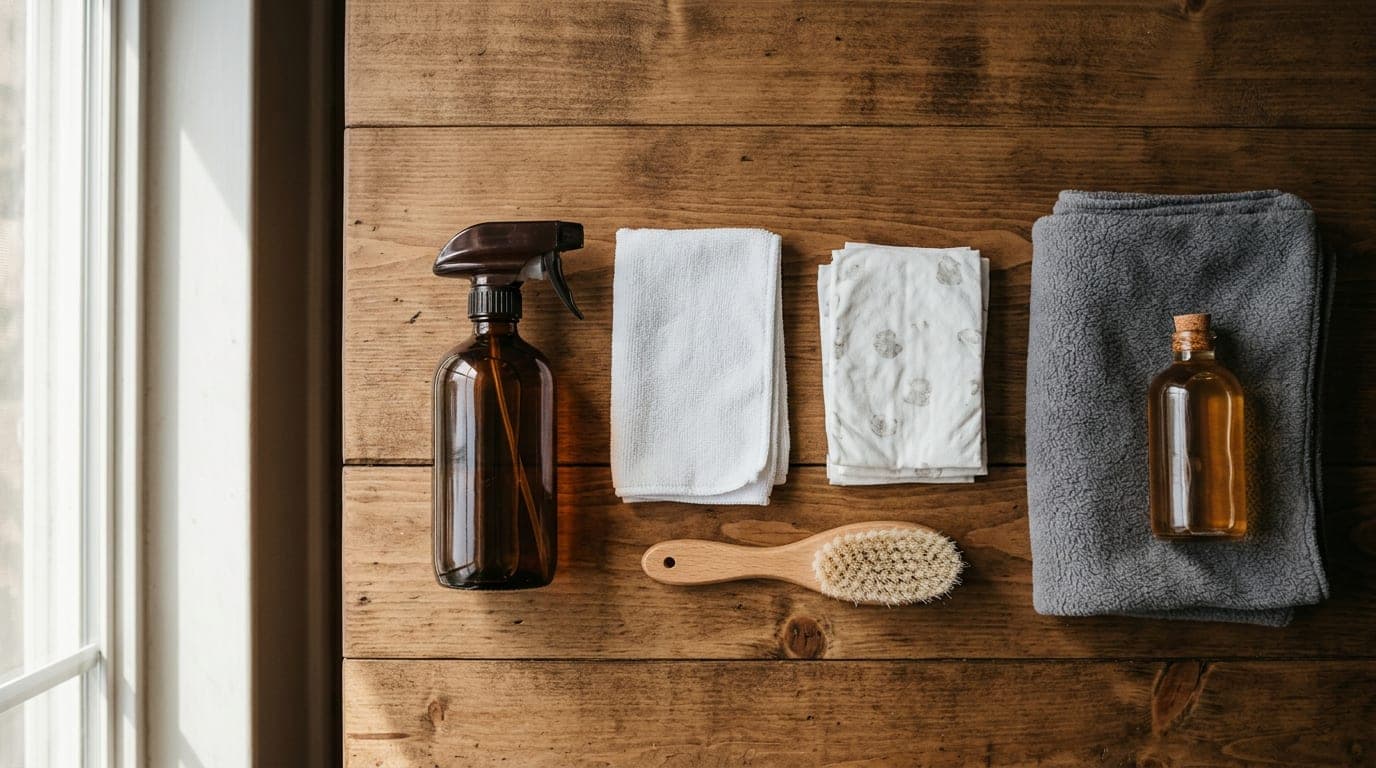
The cleaning kit · vinegar-water · unscented · everything safe
A hedgehog cage takes about 5 minutes a day, 25 minutes a week, and 45 minutes a month to keep clean. That's roughly 4 hours a month of total cleaning time. Skip the daily five minutes and you'll spend it back twice over in deep cleans and odor control. This guide is what experienced owners actually do, in the order we do it, with the products that work and the ones that will hurt your animal.
The three-tier cleaning schedule
Hedgehog cage cleaning isn't one job; it's three jobs at three different cadences. Doing the daily one religiously is what makes the weekly and monthly ones manageable.
Daily routine, about 5 minutes
Every evening (or whenever you check on them), do this short routine:
- Refresh water. Empty the dish or bottle, rinse, refill with fresh room-temperature tap water. Skip distilled water; it lacks trace minerals.
- Refresh kibble. Scoop out any uneaten or dust-fragmented kibble. Refill with the night's portion.
- Scoop visible poop. Use a small dustpan, plastic spoon, or pet-store litter scoop. Pull out anything visible on the cage floor or in the corners.
- Clean the wheel. This is non-negotiable. They will run on it, they will poop on it, and the surface needs a quick wipe most nights. A baby wipe (unscented), a paper towel and a quick vinegar-water spray, or a damp microfiber cloth all work. Aim for 30 seconds to 2 minutes.
- Quick visual. Look at the hedgehog while you're at it. Active and alert? Eyes clear? Anything weird in the cage? This 10-second check catches health issues early.
What you do not do daily: change the entire liner, deep-scrub anything, use cleaning chemicals beyond a quick vinegar-water spray on the wheel.
Weekly routine, about 20 to 30 minutes
Once a week, pick a calm evening (when you have time and the hedgehog has been out for an evening session). The order:
- Move the hedgehog out. Place them in a temporary holding bin (a tall plastic tub with a fleece blanket and their hide is fine for 30 minutes). Never deep-clean with the animal in the cage.
- Strip the cage. Remove all liners, bedding, food and water dishes, toys, hide, wheel.
- Wipe down all surfaces. A spray bottle of 1:3 vinegar-water solution, a microfiber cloth, and elbow grease. Walls, floor, corners. Pay attention to corners where urine concentrates.
- Wash the wheel thoroughly. Hot soapy water, vinegar-water rinse, dry. The wheel sees the most use and gets the dirtiest.
- Wash the food and water dishes. Hot soapy water (a small amount of unscented dish soap is fine if rinsed well), or run through the dishwasher.
- Replace the liner or substrate. For fleece: swap in a freshly washed liner. For loose substrate (aspen shavings, paper bedding): scoop out the old, refill with fresh.
- Replace the hide and toys. Wipe down the hide with vinegar-water. Wash any toys that have gotten dirty.
- Reassemble and return the hedgehog. Put everything back as it was so they can re-orient quickly.
The whole process takes 20 to 30 minutes once you're practiced. The first time will take 45.
Monthly routine, about 45 minutes
Once a month, do everything in the weekly clean plus a deeper sanitation pass:
- Empty and disassemble the cage completely. Including any shelves, ramps, or attached fixtures.
- Move the cage to a tub or outdoors if possible. This part is messier than weekly cleaning.
- Wash the entire cage with hot soapy water. Bathtub, large utility sink, or hose outdoors. Pay attention to seams, joints, and any wire grids if your cage has them.
- Vinegar-water sanitation pass. After soap and rinse, spray everything with the vinegar-water solution and let it sit for 5 minutes before wiping down. Vinegar kills most bacteria and breaks down urine residue that soap doesn't fully address.
- Rinse and dry completely. Cage parts shouldn't go back together damp; bacteria and mold love damp surfaces.
- Wash all soft items. Fleece liners, hides, soft toys all go through a wash cycle on hot with unscented detergent. No fabric softener (it leaves residue that can irritate hedgehog skin).
- Replace anything that's worn out. A wheel that's developed cracks, a hide that's permanently stained, a fleece liner that's gone stiff — replace rather than just clean.
- Reassemble, refill substrate, return hedgehog.
Monthly takes about 45 minutes for most setups. It's the cleaning that catches the slow drift of "this is fine" into "this is actually pretty gross."
What to clean with — and what to never use
This matters more than people realize. Some common household cleaning products are actively dangerous to small mammals.
Safe
- Diluted white vinegar (1:3 with water). The standard for hedgehog cage cleaning. Cuts urine smell, kills most bacteria, no toxic residue.
- Hot water and unscented dish soap. For dishes, hard surfaces, the wheel.
- Unscented baby wipes. Quick spot-cleans of the wheel and surfaces. Make sure they're unscented and alcohol-free.
- Plain water rinse. After any cleaner, always rinse with plain water and dry.
- Unscented laundry detergent. For washing fleece liners and soft items.
Never use
- Bleach. Even diluted, bleach fumes are dangerous to small mammal respiratory systems. The residue, even after rinsing, can irritate skin.
- Ammonia-based cleaners. Same respiratory and skin concerns as bleach.
- Pine-Sol, Lysol, or any scented disinfectant. Strong fragrances, often containing phenols that are specifically toxic to small mammals.
- Most "pet cage cleaners" from pet stores. Many contain compounds not tested on hedgehogs. The marketing as "pet-safe" usually means tested on dogs and cats, not exotics.
- Essential oils. Tea tree, lavender, eucalyptus, citrus oils — all have documented toxicity in small mammals. Never apply, never diffuse near the cage.
- Fabric softener. Residue on liners can irritate hedgehog skin.
- Scented baby wipes or wipes with lotion. Skin irritation risk.
- Steam cleaners. Heat and pressure can warp plastic cage parts; the residue water can carry detergents back into the cage.
The rule of thumb: if you can smell the cleaner from across the room after using it, it's too strong for a small mammal living in the space full-time.
The wheel problem
This deserves its own section because it's the single biggest ongoing cleaning task and the most common place new owners cut corners.
Hedgehogs evolved to defecate while moving. Wild hedgehogs covered miles a night, so this strategy made sense — drop waste behind you as you go. In captivity, that "moving" is almost entirely the wheel. Result: the wheel collects most of the night's waste. Every night.
If you don't clean the wheel:
- Within 24 hours: visible streaks and smell
- Within 3 days: the hedgehog tracks waste across the cage on their feet
- Within a week: the cage smells distinctly of hedgehog regardless of how often you change the substrate
- Within two weeks: foot infections become a real risk
The fix is the daily wheel clean. Five minutes max. We've watched hundreds of new owners try to skip this and end up with much bigger problems within a month.
The practical workflow:
- Keep a spray bottle of vinegar-water and a stack of paper towels (or unscented baby wipes) next to the cage
- Once a day in the evening, take the wheel out, give it a quick spray and wipe, return it
- Once a week during the deep clean, hot soapy water + vinegar rinse for a full sanitation pass
If your wheel design makes daily cleaning impossible (some have non-removable parts, some are hard to access), that's a wheel design problem. Replace it with one you can actually clean. The Carolina Storm Wheel and similar solid-running designs are easy to take out, wipe down, and put back.
How frequency varies by setup
Different cage configurations have different cleaning intensity:
Fleece liner setup
- Daily: spot-clean visible poop, refresh water/food, clean wheel
- Weekly: pull the liner, shake out outdoors or over a trash bag, swap in a fresh liner, throw the dirty one in the wash
- Monthly: deep-clean the whole cage as described above
Pro: fast weekly turnover, no dust, no mess to scoop. Con: requires having multiple liners on rotation (3 to 4 minimum so you always have a clean one).
Loose substrate (aspen shavings)
- Daily: spot-clean visible poop, refresh water/food, clean wheel
- Every 1 to 2 weeks: full substrate replacement (scoop everything out, wipe cage, refill with fresh)
- Monthly: deep-clean as above
Pro: cheap, easy to find, hedgehogs can dig in it. Con: dust can affect respiratory health, mess gets tracked, weekly partial clean isn't as effective as fleece swap.
Loose substrate (paper bedding like Carefresh)
- Same schedule as aspen, but paper bedding holds odor better. You can sometimes stretch the full substrate replacement to 2 weeks if the cage has been spot-cleaned diligently.
Pro: less dust than aspen, holds odor reasonably. Con: more expensive than aspen, can clump when wet.
The full substrate comparison is in the bedding guide.
Smell management
If your cage smells, the cleaning isn't working. The order of likely culprits:
- The wheel. 80% of cage smell comes from a dirty wheel. Daily cleaning fixes this.
- Urine concentration in corners. Hedgehogs tend to use one corner as their preferred bathroom. Vinegar-water on that corner during weekly cleans, more often if needed.
- Old or wet substrate. Fleece that's been on too long, shavings that have absorbed too much. Time to swap.
- Food bowl residue. Old kibble crumbs in the dish ferment. Daily refresh prevents this.
- The hide. If the hedgehog uses the hide as a bathroom (some do), it needs more frequent cleaning than the rest of the cage.
A clean cage with a healthy hedgehog has a faint earthy smell, like a clean rabbit cage or a wood shop. If you walk into the room and immediately smell hedgehog, something needs attention. The full discussion of what's normal and what's not is in the smell article.
Bathing the hedgehog
Cage cleaning is usually enough to keep the hedgehog clean. Direct bathing is for occasional use only — once a month at most, or when they're visibly dirty.
When to bathe:
- They've gotten poop or food stuck in their quills that won't come off with normal grooming
- They've been exposed to something they shouldn't have walked through (spilled cleaner, unfamiliar substance)
- They smell badly even after a thorough cage clean
The bath:
- Lukewarm water in a small container — about 1 inch deep, never enough to submerge them
- A small amount of unscented baby shampoo or hedgehog-specific shampoo. No human soap, no dish soap.
- Brief, 5 to 10 minutes maximum
- Towel-dry thoroughly, then return to a warm cage. A wet hedgehog in a normal-temperature room can develop chill problems fast.
Bathing is more stressful for hedgehogs than most other pets. The cage-cleaning routine is what actually keeps them clean. The occasional bath is a backup for specific situations.
When to escalate cleaning frequency
Some situations call for more aggressive cleaning than the standard schedule:
- Sick hedgehog with diarrhea or respiratory symptoms. Twice-daily liner changes or substrate refreshes until cleared.
- Hedgehog recovering from surgery. Vet-specified protocols, usually involving more frequent cleaning of any wound area.
- Mite or skin infection treatment. Daily liner changes during treatment to avoid re-infection from substrate.
- New hedgehog in the first week. Slightly more frequent cleaning to make a good first impression on their gut microbiome.
Otherwise, the standard schedule (daily/weekly/monthly) is what works long-term. Over-cleaning isn't actually better — it's just more work for you and more disruption for the hedgehog.
The relationship most owners develop with cage cleaning is the same as with any small daily habit: it feels like a chore for the first month, becomes automatic by month three, and eventually feels weirder to skip than to do.
Common questions
Common questions
How often do you clean a hedgehog cage?
Daily spot-clean (5 minutes: water refresh, poop scoop, wheel clean), weekly liner or substrate change (20–30 minutes), monthly full deep clean (45 minutes). Loose substrate setups (aspen shavings, paper bedding) need full substrate replacement every 1–2 weeks rather than weekly partial; fleece liners should be washed and swapped weekly.
What's safe to clean a hedgehog cage with?
Diluted white vinegar (1 part vinegar, 3 parts water) is the standard. It cuts urine smell, kills most bacteria, and rinses clean with no toxic residue. Skip bleach (fumes are dangerous to small mammals), ammonia-based cleaners, scented sprays, essential oils, and most commercial "pet cage cleaners" — many contain compounds that aren't tested on hedgehogs.
Why does my hedgehog poop on the wheel?
It's unavoidable. Hedgehogs evolved to defecate while moving, which made sense for covering ground in the wild but means they will poop on the wheel almost every night. Clean the wheel daily — five minutes with a baby wipe or paper towel and a vinegar-water spray. If you can't commit to nightly wheel cleaning, you'll end up with poop tracked across the cage and on their feet.
Can I bathe my hedgehog while cleaning the cage?
Hedgehogs need bathing only occasionally — about once a month at most, or when they're visibly dirty. A full bath is stressful for them. Most maintenance is just keeping the cage clean enough that they don't get filthy in the first place. When you do bathe, use lukewarm shallow water, no soap or only a tiny amount of unscented baby shampoo, and dry them thoroughly before returning to the cage.
How do I clean a hedgehog cage if my hedgehog is in it?
Spot-cleaning is fine with the hedgehog in the cage — they'll just go to their hide. For weekly liner changes or deep cleans, move them to a temporary holding container (a tall plastic bin, a bathtub with a fleece blanket, or a separate small enclosure). Never deep-clean with the hedgehog in the cage. The smells, movement, and disruption stress them.
Related on this site
Sources
Sources
- Hedgehog housing — substrate, sanitation, and routine cleaning — VCA Animal Hospitals
- African pygmy hedgehog — basic husbandry and environmental hygiene — LafeberVet