
Health & Vet Care · 7 min read
Do Hedgehogs Smell? (And What It Means If Yours Does)
Healthy hedgehogs in clean cages have only a faint warm-animal smell. Strong odors usually mean a hygiene problem or a health issue — what each one means.
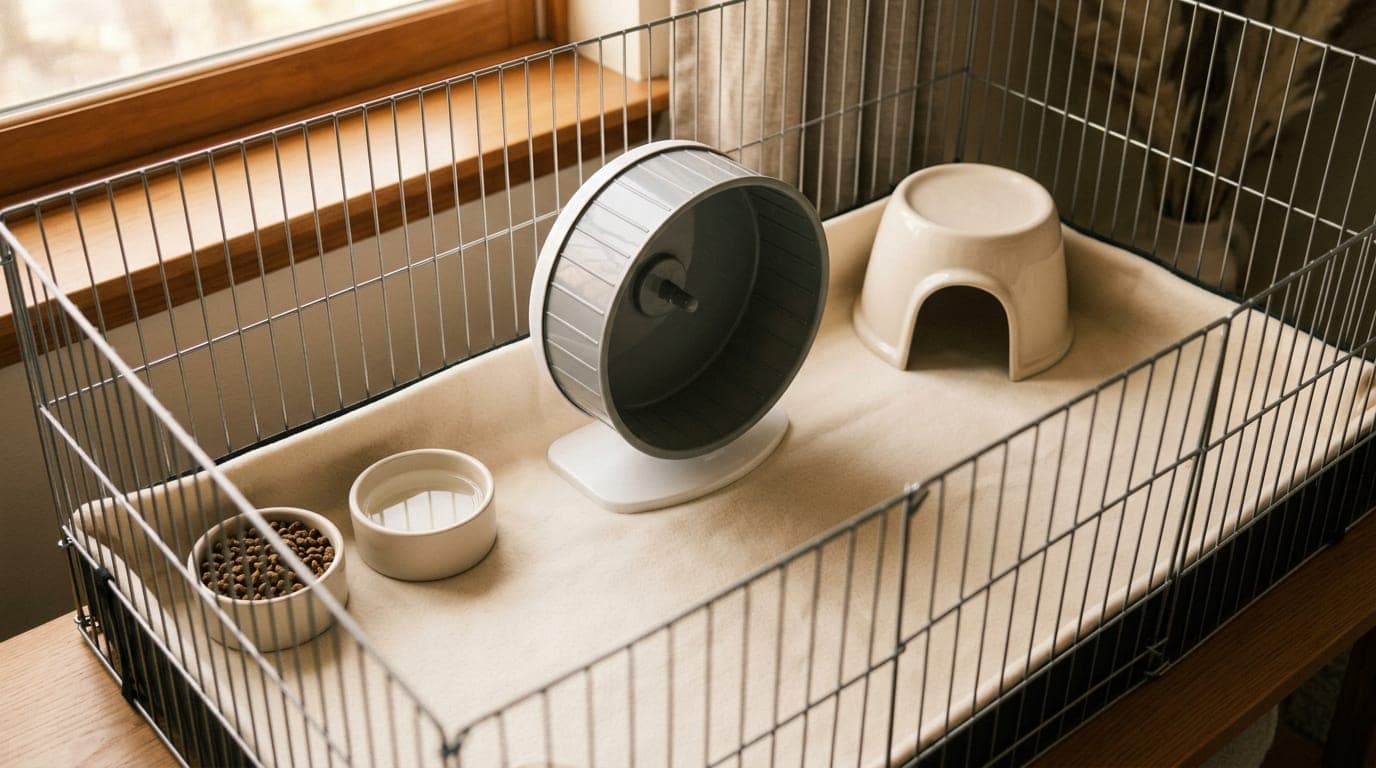
Clean cage · the baseline that doesn't smell
No, healthy hedgehogs don't really smell. A well-maintained hedgehog cage has a faint warm-animal smell that's noticeable up close and undetectable from across the room. If you can smell the cage from the doorway, something is off. Usually overdue cleaning, sometimes a health issue.
This is the realistic answer. The folk wisdom that "hedgehogs are smelly" comes mostly from cages that haven't been cleaned in too long, fed wrong, or housed something that needed a vet visit a week ago. Done right, hedgehogs are one of the cleaner small pets you can keep. They self-groom thoroughly, they tend to use one corner of the cage as a bathroom, and the volume of waste at this body size is small.
What "normal cage smell" actually is
A hedgehog cage that's been maintained on schedule has a low-grade scent that you'd describe as: warm, slightly sweet, vaguely like a guinea pig cage but milder. It's most noticeable right after the hedgehog has been moving around (waking up, running on the wheel) when their body has been generating heat. It's least noticeable in the morning when the cage has been still for hours.
This smell is normal. It comes from:
- The hedgehog's own body. Every animal has some scent
- The fleece liner or substrate, which absorbs ambient body oils over a week
- Trace amounts of food residue and dust
- Faint urine and stool scent that hasn't been spot-cleaned yet that day
You should be able to put your face inches from the cage and find it not unpleasant. If the smell is strong even at arm's length, something needs attention.
When the cage smells strong. The hygiene reasons
In order of likelihood:
Substrate or liner is overdue for replacement
Fleece liners washed less than weekly, or aspen/paper bedding kept past the 2-week mark, accumulate enough urine and oil to start smelling clearly. The fix: clean on schedule, not on impression. Some owners swap in a fresh fleece liner mid-week if they notice anything; the laundry trade-off is worth it.
The wheel hasn't been cleaned
Hedgehogs poop on the wheel. They run through it. The wheel becomes the smelliest single object in the cage, often within 24 hours of the last clean.
The fix: a quick wheel rinse + paper towel wipe-down should be a daily or every-other-day habit. A full wheel scrub goes with the weekly deep clean.
Food bowl has wet food residue
If you offer fresh food (insects, fruit pieces, cooked egg) and don't remove the bowl after the hedgehog eats, the residue ferments. Particularly noticeable in warm weather.
The fix: remove fresh-food dishes within 30 minutes of offering. Wash daily. Kibble dishes can stay longer (dry food doesn't ferment) but should still be wiped weekly.
Urinary corner soaked in
Hedgehogs tend to pee in one or two specific spots. Often the corner opposite the food, sometimes the wheel, sometimes the hide. If that corner has been pee'd in repeatedly without spot-cleaning, the substrate underneath the liner gets soaked, and the cage floor itself starts to smell.
The fix: identify the urination zones and spot-clean them daily. Some owners put a small puppy training pad or extra fleece scrap in the urination corner specifically. Easier to swap.
The cage is too small for the amount of waste
A 2 sq ft starter cage with an adult hedgehog accumulates waste density faster than the cleaning schedule can keep up with. The same hedgehog in a 6 sq ft cage produces the same waste, but spread over more surface area, lower concentration, easier to manage.
The fix: see the cage pillar. Minimum 4 sq ft, ideally 6+.
When the smell is a health signal
A sudden new smell from a hedgehog that didn't smell before is more important than a chronic mild smell from inadequate cleaning. The chronic problem is fixable with a routine; the sudden change is often a vet visit.
GI issues. Loose stool, fermenting
Soft or watery stool smells significantly stronger than firm stool, and dries onto the wheel and substrate before you notice it. If the cage has gotten suddenly worse despite normal cleaning, check the litter pan first. Has the stool changed?
Common causes: A new treat that didn't agree, a kibble switch, parasites, early infection.
What to do: Pull all treats and new foods. If stool doesn't return to normal within 48 hours, vet visit.
Urinary tract issues. Sweet, strong, or ammonia smell
Hedgehog urine has a mild scent normally. Strongly sweet (sometimes described as "fruity"), unusually strong, or ammonia-like urine can indicate a urinary tract infection, kidney issue, or diabetes (rare in hedgehogs but documented).
What to do: Vet visit. Diagnostic testing usually involves a urine sample (sometimes obtained by encouraging the hedgehog to walk on a clean tile briefly) and bloodwork.
Abscess or skin infection
A sour or foul smell from one specific area on the hedgehog (a foot, a side, behind an ear) can indicate an abscess or local infection. Sometimes visible as a swelling or wet patch in the fur.
What to do: Vet visit, often within 24 hours. Abscesses in hedgehogs can rupture and become significantly worse without intervention.
Dental issue. Bad breath
A noticeably bad smell from the hedgehog's mouth is usually a dental problem: a broken tooth that's getting infected, food impacted in the gums, an oral abscess, or in older hedgehogs sometimes oral tumors.
What to do: Vet visit. Hedgehog dental work requires anesthesia and should be done by an exotic-animal vet. See our vet-finder guide.
Mites with secondary skin infection
Severe mite infestations sometimes lead to secondary bacterial skin infections that smell. Visible signs: dry flaky skin around face and ears, quill loss in patches, intense itching, a slightly sour smell from the hedgehog's body.
What to do: Vet visit. Mites are treated with revolution (selamectin) and the secondary infection separately if needed.
The hygiene routine that prevents smell
Daily and weekly. Total time: about 15 minutes per week.
Daily (5 minutes during evening kibble refresh)
- Spot-clean obvious mess. Poop on the wheel, in the wrong corner, on the food dish. Paper towel and a brief rinse for the wheel; fresh wipe of the spot for the cage floor.
- Refresh water. Even if the bottle/bowl looks clean, the water gets dust and substrate in it.
- Quick visual. Anything wet that shouldn't be? Anything in the food dish that shouldn't be there?
Weekly (10 minutes during deep clean)
- Wash the fleece liner in unscented detergent, no fabric softener (residue irritates skin).
- Full wheel scrub with mild dish soap and warm water.
- Sanitize food and water dishes. Dish soap, hot water, full rinse.
- Wipe the cage floor under the liner with a vinegar-water solution (1:4) or mild pet-safe cleaner.
- Refresh any hides (some can be washed; ceramic igloos go in the dishwasher's top rack).
- Take out the trash from the cage area. Accumulated dust + bedding scraps in the bin near the cage smell more than the cage itself sometimes.
Monthly (5 minutes)
- Deeper substrate replacement if you use loose substrate (aspen, paper). Most owners change every 1–2 weeks; monthly is the outer limit.
- Check cage components for damage (broken grids, cracked dishes, worn-out fleece) and replace.
Bathing. When, how, and how rarely
Most healthy hedgehogs don't need baths regularly. Hedgehogs self-groom thoroughly, and over-bathing dries their skin. A monthly bath is fine if you enjoy it; weekly is too much.
When to bathe
- After a poop-on-the-wheel run that left their feet covered. Foot bath only. Soak the feet in shallow warm water for a few minutes, gentle wipe-down.
- Sticky food residue from a treat that ended up on their face or feet.
- Vet-recommended for specific conditions (mites, certain skin issues).
- Once every 4–8 weeks as a general routine if you want to. Optional.
How to bathe
- Warm water only: wrist-test temperature, lukewarm not hot.
- Shallow water. A few inches in the sink or a small tub. Don't submerge the head.
- Plain water for foot baths. A small amount of unscented oatmeal-based animal shampoo for full baths. Avoid human shampoo, scented anything, "tearless" baby shampoo.
- Soft toothbrush for cleaning quill bases gently if there's residue.
- Towel-dry thoroughly. Hedgehogs chill fast when wet. Once dry, return to a warm cage immediately.
What to skip
- Wet wipes / baby wipes for general grooming. Designed for human skin pH; not appropriate for hedgehog skin.
- Anything scented or "deodorizing." Fragrance ingredients are common skin irritants for small animals.
- Bathing more than once a week. Strips skin oils, causes dry-skin issues, increases mite susceptibility.
When the answer to "why does my hedgehog smell?" is "actually, it's the cage area"
A few owner mistakes that get blamed on the hedgehog:
- Litter scoop or trash bag near the cage. Spot-cleaning bags accumulate. Empty daily, not weekly.
- Wet substrate spilled outside the cage. When you swap fleece liners, the under-liner dust often spreads. Vacuum during deep clean.
- Cat litter box in the same room. If you have a cat, that smell can blend with the hedgehog cage smell and get blamed on the hedgehog. Test by closing the cat litter elsewhere for a day.
- Food storage nearby. Dry kibble and dried insects have their own smell that intensifies in a closed plastic bin. Store outside the room if possible.
- Standing water in a bowl that hasn't been refreshed. Slightly sweet-musty smell that accumulates without you noticing. Fresh water daily.
A hedgehog who genuinely smells bad: confirmed by handling them away from the cage and finding the smell follows. Is almost always a vet visit, not a hygiene problem. Trust the change-from-baseline more than the absolute smell level.
Common questions
Common questions
How often should I clean a hedgehog's cage?
Spot-clean daily (poop on the wheel, anywhere obvious). Full cage clean weekly: wash the fleece liner, scrub the wheel, sanitize food and water dishes, refresh hides. Most owners settle into a Sunday or whatever-day-works routine.
Why does my hedgehog suddenly smell?
A sudden smell change in a hedgehog that didn't smell before is a health signal, not a hygiene problem. Common causes: GI issue (loose stool fermenting in the cage), urinary tract infection (sweet or strong urine smell), abscess or skin infection (sometimes a sour/foul smell from one specific area), dental issue (bad breath from infection or rotting food in mouth). All warrant a vet visit.
Do hedgehogs need baths?
Most don't, most of the time. A monthly bath is fine if you want to do it; weekly is too much and dries the skin. Bath when needed: dirty feet from a poop-on-the-wheel run, sticky residue from a treat, vet-recommended for skin issues. Use plain warm water and a small amount of unscented animal shampoo (oatmeal-based is gentle).
What about hedgehog poop smell?
Healthy hedgehog stool has a noticeable but not overpowering smell — earthy, slightly sweet, similar to cat droppings. A sharply unusual smell (sour, sweet beyond normal, ammonia-like) suggests a GI issue. Daily spot-cleaning keeps it from accumulating into a strong cage smell.
Do male hedgehogs smell more than females?
Slightly. Intact male hedgehogs produce more musk-like body odor, especially during the breeding behaviors that males do regardless of whether a female is present. The difference is small and well within the range of normal cage hygiene.
Related on this site
Sources
Sources
- Hedgehogs — general care, husbandry, and odor management — VCA Animal Hospitals
- Hedgehogs — common medical and husbandry conditions — Merck Veterinary Manual