
Health & Vet Care · 4 min read
Hedgehog Emergency Care: First Aid for Wounds and Skin
Hedgehog emergency care: bleeding and wounds, skin injuries, the cold-and-floppy hypothermia emergency, and when to get to a vet. Vet-reviewed.
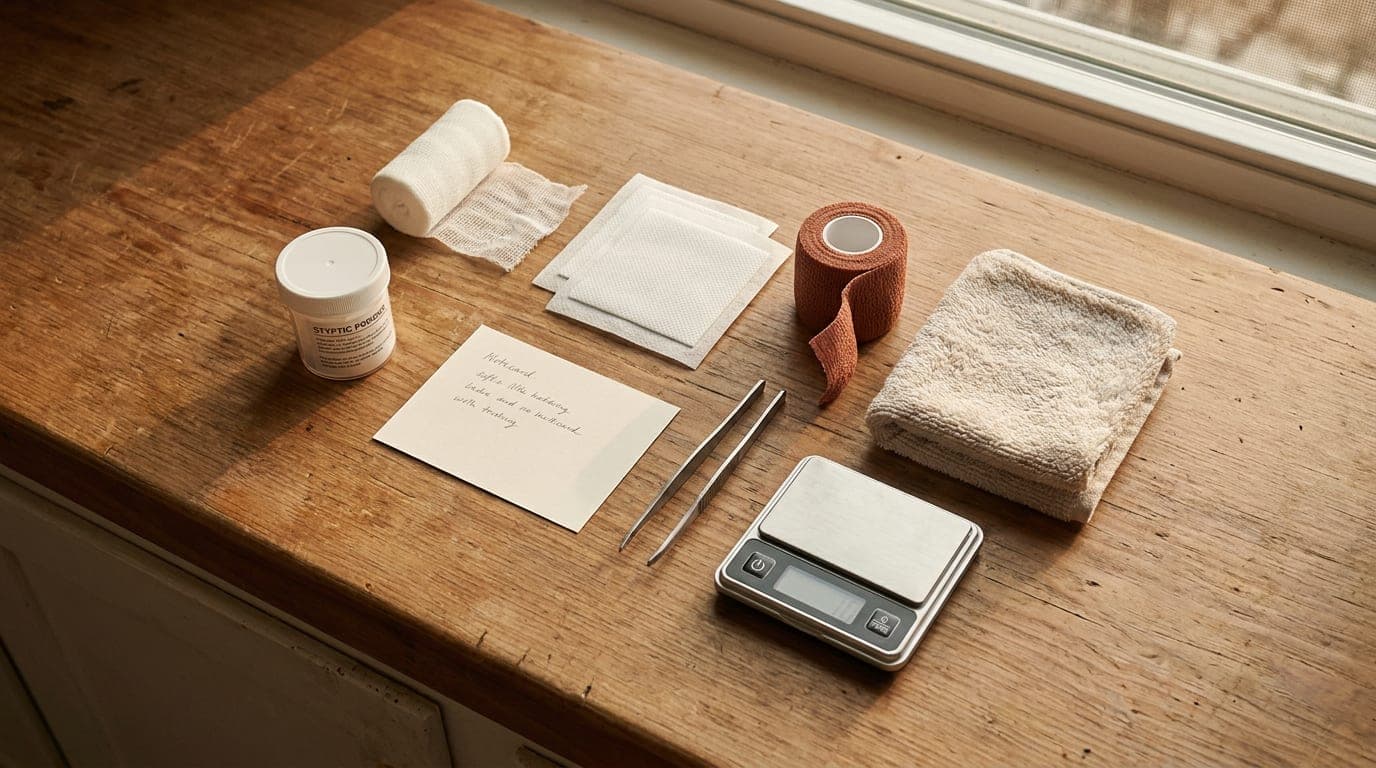
The kit, assembled before the emergency · vet's number on the card · calm beats fast
Hedgehog emergency care comes down to three fast judgment calls: stop any active bleeding, keep the animal warm, and decide whether this needs a vet tonight or can wait until morning. Most general-practice vets cannot safely treat a hedgehog, so if something looks serious, the first move is to call an exotic vet, not to keep searching. This is the triage version: what to do in the first ten minutes, and what not to do.
When it is a vet emergency, not a first-aid one
Some situations are not yours to manage at home. Stop reading and call your exotic vet or the nearest emergency exotic service now if you see:
- Bleeding that does not slow after a few minutes of gentle pressure
- A wound that is deep, gaping, or from another animal's bite
- A cold, limp, or unresponsive body
- Labored breathing, or pale or bluish gums
- Inability to stand or walk, a head tilt, circling, or a seizure
- A limb or swelling that looks broken
- Anything involving the eyes
Find your nearest exotic vet here. The number you want is the one you already have when this happens.
Hedgehog wound care: the first ten minutes
For a minor cut or scrape on an otherwise bright, active hedgehog:
- Wash your hands. Work on a clean towel.
- Apply gentle pressure with clean gauze to slow the bleeding.
- Rinse with sterile saline or clean lukewarm water. No hydrogen peroxide and no alcohol. Both damage tissue and hurt.
- Do not apply human antibiotic ointments unless your vet tells you to. Hedgehogs groom, and some ingredients are not safe to ingest.
- Keep the hedgehog warm and quiet, and call the vet for anything beyond a shallow scrape.
Hedgehogs hide pain well, and their wounds abscess quickly. A wound that looks minor on Monday can be a swollen, infected problem by Wednesday. When you are unsure how serious it is, it is a vet case.
The bleeding nail
A nail caught on a wheel or a cage corner is the single most common hedgehog injury, and it looks far worse than it is. Press the nail tip into styptic powder, or into cornstarch or plain flour if that is what you have. Hold gentle pressure with gauze and keep the hedgehog calm. Bleeding usually stops within a few minutes. If it is still going after roughly 10 to 15 minutes of steady pressure, or it keeps reopening, call the vet. Routine nail trims prevent nearly all of these, and the care guide covers the trimming schedule.
Hedgehog skin care: when it is first aid, when it is not
Split skin problems into sudden and gradual.
Sudden is first aid: a fresh raw patch, a bite wound, or a burn. Burns happen on direct-contact heat sources. Cool the area gently with lukewarm, never iced, water and call the vet the same day.
Gradual is not an emergency, but it is still a vet visit: flaking, quill loss, scabbing, or constant scratching is almost always mites or a fungal infection. Neither is fixed by a pet-store spray, and self-treating delays the real diagnosis. The mites guide explains why store treatments fail and what actually works.
The cold, floppy hedgehog
This is the emergency most owners eventually meet, and the one where the right first move matters most. A hedgehog that feels cold and goes limp is usually trying to hibernate because the room dropped below about 70°F, and a pet hedgehog's body cannot complete that safely.
What to do:
- Warm it gradually with your own body heat. Hold it against your bare skin under a shirt.
- If you cannot, use a warm, not hot, water bottle wrapped in a towel.
- Do not apply direct heat and do not submerge the hedgehog.
- Warm the room toward 75°F.
- Call an exotic vet even if it revives. Hypothermia can have delayed effects, and a near-miss usually means the heat setup needs fixing.
The hibernation guide covers how to tell a hibernation attempt from illness, and how to prevent the next one.
What to keep in a hedgehog first-aid kit
Assemble this before you need it, not during:
- Styptic powder
- Sterile saline and clean gauze and non-stick pads
- Vet wrap and tweezers
- A digital kitchen scale
- A small, secure carrier
- A safe heat source: a wrapped hot water bottle or hand warmers
- Your exotic vet's regular and after-hours numbers, written down
What not to do
- No hydrogen peroxide or alcohol on wounds
- No human painkillers. Ibuprofen and acetaminophen are toxic to hedgehogs.
- No waiting it out with bleeding that will not stop, breathing trouble, or a cold limp body
- No pet-store mite sprays in place of a diagnosis
- No food or water forced into an unresponsive animal
The best emergency-care decision happens before the emergency: knowing exactly which vet to call. If you have not already, find an exotic vet and save the number now.
Common questions
Common questions
How do I stop a hedgehog's nail from bleeding?
A nail snagged on a wheel is the most common hedgehog injury. Press the bleeding nail tip into a small pile of styptic powder if you have it, or cornstarch or plain flour if you don't, then hold gentle pressure with clean gauze. Keep the hedgehog calm and warm. If the bleeding hasn't stopped after about 10 to 15 minutes of pressure, or it keeps reopening, call your exotic vet. Regular nail trims prevent almost all of these.
Is a hedgehog skin problem an emergency?
Usually not an emergency, but almost always a vet visit. A sudden raw patch, a burn, or a bite wound is first aid plus a same-day vet call. Gradual flaking, quill loss, scabbing, or constant scratching is not urgent, but it is almost always mites or a fungal infection, and both need a vet diagnosis rather than a pet-store spray. The exception is a burn from a direct-contact heat source: cool it gently with lukewarm water and call the vet.
Can I treat a hedgehog injury at home or do I need a vet?
Superficial scrapes and a briefly bleeding nail can be managed at home if the bleeding stops quickly and the hedgehog is otherwise bright and active. Anything deeper, gaping, from another animal's bite, still bleeding after a few minutes of pressure, or paired with lethargy, breathing trouble, or not eating needs a vet. Hedgehogs mask pain, and small wounds abscess quickly, so when you are unsure, treat it as a vet case.
My hedgehog feels cold and won't move. What do I do?
Treat this as an emergency. A hedgehog that is cold and limp is likely attempting hibernation because the room dropped too cool, and that can be fatal. Warm it gradually with your own body heat by holding it against your skin under a shirt, or use a warm (not hot) water bottle wrapped in a towel. Do not use direct heat and do not submerge it. Warm the room. Call an exotic vet even if it perks up, because hypothermia can have delayed effects.
What should be in a hedgehog first-aid kit?
Styptic powder, sterile saline, clean gauze and non-stick pads, vet wrap, tweezers, a digital kitchen scale, a small secure carrier, a safe heat source (a wrapped hot water bottle or hand warmers), and your exotic vet's regular and after-hours phone numbers written down. The kit is only useful if the vet's number is in it before the emergency.
Related on this site
- Health & Vet Care — pillar guide
- Hedgehog vet near me — find an exotic vet before you need one
- Hedgehog health problems — the broader warning-signs guide
- Do hedgehogs hibernate — the cold-body emergency explained
- Hedgehog mites — the usual cause of chronic skin issues
- Hedgehog care sheet — the warning signs on one printable page
Sources
Sources
- Hedgehogs — clinical conditions, trauma, and emergency considerations — Merck Veterinary Manual
- African pygmy hedgehog — basic information and clinical considerations — LafeberVet
- Hedgehogs — owning as pets, husbandry, and general care — VCA Animal Hospitals