
Health & Vet Care · 7 min read
Hedgehog Mites: Symptoms, Treatment, and When to Call a Vet
Mites cause most hedgehog skin issues. The signs, the treatment options, why pet-store sprays don't work, and how to prevent reinfection. Vet-reviewed.
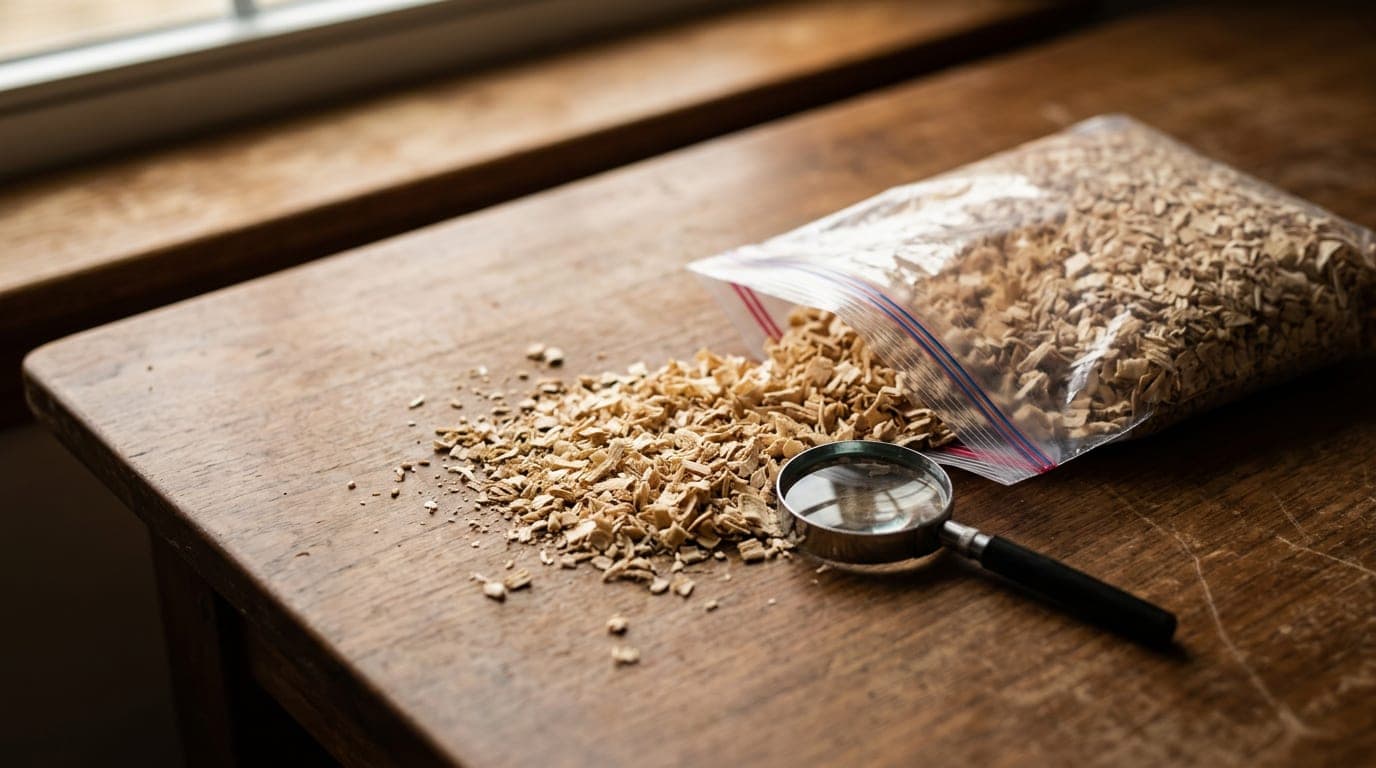
The bedding connection · freeze new bags 48 hours · prevention is mechanical
Mites cause most hedgehog skin issues we see. They're tiny parasitic arthropods that live in the skin and quills, and they cause flaking, quill loss, scabbing, and visible discomfort. They're treatable with the right prescription from an exotic vet. They're not treatable with anything sold at a pet store. This guide is what experienced owners and vets actually do, in the order it usually happens.
How to recognize mites
The signs build up gradually, which is why a lot of new owners don't catch them until the hedgehog is visibly uncomfortable. The order they typically appear:
- Slight flaking on the skin. Looks like dandruff, especially around the head and along the back. Some flaking is normal during quilling (when juvenile quills are replaced); persistent flaking after the expected quilling window is not.
- Quill loss in patches. Not the gradual quilling of a young animal, but adult quills that come out easily when gently lifted, often leaving bare or thinning patches.
- Scratching or restlessness. More active at night than usual, scratching with the back feet, sometimes rubbing against cage walls.
- Scabby or red patches. Where the scratching has caused irritation or broken the skin.
- Behavioral changes. Reduced appetite, less interest in handling, increased huffiness — all signs of an animal that's uncomfortable.
If you're seeing items 1 and 2 together, especially with any of 3 through 5, the next step is a vet visit. Don't wait until the skin is broken.
The diagnostic step
Mites themselves are usually too small to see with the naked eye. Some can be glimpsed as tiny moving dots against the skin under bright light, but a confident diagnosis requires a vet skin scrape examined under a microscope.
The skin scrape itself is a quick, low-stress procedure for the hedgehog — the vet gently scrapes a small sample from the surface of the skin, smears it on a slide, and looks for the characteristic shape of mite species (most commonly Caparinia tripilis in hedgehogs). The whole appointment is usually 15 to 20 minutes plus the lab time.
What the scrape rules in or out:
- Mites confirmed: treatment protocol starts.
- No mites visible: could be fungal infection (ringworm, similar appearance), allergic reaction, or skin irritation from substrate. Vet will guide the next diagnostic step.
- Inconclusive but suspicious: sometimes vets treat empirically (presumptive mite treatment) if symptoms strongly point that way even without confirmed mites on the slide.
Why pet-store treatments don't work
Walk into most chain pet stores and you'll find sprays, powders, and shampoos labeled for mites. We've watched a lot of new owners try these and then end up at the vet anyway 2 to 4 weeks later with a worse problem. Three reasons they don't work:
- Wrong target species. Most over-the-counter mite products are formulated for dog and cat mites, not the species that infest hedgehogs. The active ingredients may be ineffective.
- Dose calibration. Even when the active ingredient could theoretically work, the doses on consumer products aren't calibrated for hedgehog body weight. Under-dosing produces resistance without curing.
- Toxicity risk. Pyrethrin and pyrethroid sprays, common in pet-store products, can be toxic to small mammals at concentrations safe for dogs. Several documented cases of accidental poisoning.
Save your money. The effective treatment requires a prescription that pet stores don't carry.
The actual treatment
Two main prescription options, both administered by a vet:
Ivermectin (injection or oral)
The traditional treatment. Given as an injection or oral suspension dosed by weight (typically 200 to 300 micrograms per kilogram). Repeated every 10 to 14 days for 2 to 3 doses total.
Pros: widely available, well-studied in hedgehogs, effective against most mite species. Cons: requires repeated vet visits, mild stress on the hedgehog from each injection, some hedgehogs are more sensitive to ivermectin than others.
Selamectin (topical, brand name Revolution)
The newer go-to. A few drops applied between the shoulder blades, where the hedgehog can't lick it off. Single dose covers about 30 days; usually 2 to 3 applications spaced about 30 days apart.
Pros: less stressful (no injection), longer-lasting effect per dose, often covers other potential parasites in the same application. Cons: more expensive per dose, requires accurate weight for proper dosing.
Most exotic-animal vets use selamectin as the default now. Ivermectin remains a fallback for cases that don't respond or for animals with specific sensitivities.
What recovery looks like
The timeline is consistent across most cases:
- Week 1: Scratching reduces noticeably. Skin condition stable.
- Weeks 2 to 3: Flaking decreases. New quills start to fill in the bare patches.
- Weeks 4 to 6: Most visible signs resolved. Skin returns to normal pink color. Full quill regrowth completes.
- By week 8: No signs unless reinfection.
What's not on track:
- Scratching that hasn't reduced after 2 weeks of treatment
- New bare patches appearing after week 3
- Skin becoming raw or bleeding
- Hedgehog becoming more lethargic rather than more active
Any of these warrant a callback to the vet. Sometimes the diagnosis was incomplete (concurrent fungal infection, for example), sometimes the dosing wasn't quite right for that animal, sometimes there's a secondary issue masking as treatment failure.
Why this keeps happening — the bedding connection
The single biggest source of hedgehog mite cases we see is contaminated bedding. Aspen shavings, paper bedding, and other wood-based substrates can carry mite eggs from the supplier through to the cage if not treated.
The prevention is simple: freeze new bedding for at least 48 hours before use. The cold kills mites and their eggs without damaging the substrate. Once thawed, it's safe to use.
This applies even to bedding from reputable brands. Mite contamination isn't a sign of a bad supplier; it's a baseline risk in the supply chain because bedding sits in warehouses, gets transported, and is exposed to ambient pests. Treating it as automatic prevention saves a lot of vet visits.
Other prevention measures:
- Quarantine new hedgehogs. If you're adding a second animal, keep cages separate for 30 days and have the new arrival vet-checked before introducing.
- Clean used cage equipment thoroughly. Hot water, vinegar-water sanitation, and a dry period before reuse.
- Don't share supplies between hedgehogs. Each animal should have its own wheel, hide, dishes, and bedding.
- Monitor during stress periods. Travel, illness, environmental change all weaken the immune system and make mite flares more likely.
The bedding guide covers the freezing prep step in detail along with substrate options that have lower baseline contamination risk.
Reinfection: why it happens and how to prevent it
The most common mistake post-treatment is putting the hedgehog back into the same environment that caused the initial infestation. Mites that survive in cage equipment, bedding, or porous surfaces can re-establish on the host within days.
The full reset protocol after a mite diagnosis:
- Replace all soft furnishings. Old fleece liners, fabric hides, and absorbent items go in a hot wash or get discarded. Mites can survive in fabric for several weeks.
- Sanitize hard equipment. Wheel, ceramic dishes, plastic hide — hot soapy water, then vinegar-water spray, then thorough drying.
- Replace all loose substrate. Discard the current bag and start fresh with frozen-treated bedding.
- Treat the cage itself. Hot water and vinegar wipe-down of all cage walls, corners, and any wire mesh. Sun-drying the cage outdoors if possible.
- Treat any other small mammals in the household. Even if asymptomatic, they should be vet-checked and may need preventive treatment.
- Complete the full treatment course. Stopping at the first sign of improvement is the most common cause of relapse.
Following all six is what produces lasting clearance. Skipping any of them is why some hedgehogs cycle through repeated mite episodes.
When mites become an emergency
Most mite cases are routine and treatable. Some escalate and need faster intervention:
- Heavy scratching breaking skin (wound infection risk on top of the mites)
- Significant weight loss during infestation (stress on the system that needs nutritional support)
- Lethargy or refusal to eat for more than 24 hours (concurrent illness possible)
- Spreading to the face, ears, or eyes (risk of secondary issues in sensitive areas)
- Hedgehog under 8 weeks old (hoglets are more vulnerable and treatment dosing is trickier)
For any of these, treat as urgent rather than routine vet care. Most exotic vets will fit emergency mite cases in same-day; if yours is booked, ask if a phone consultation can confirm what to do in the meantime.
The honest version: prevention saves real money
A vet visit for mites runs $80 to $150 in most regions. The treatment course adds another $80 to $200 depending on which drug and how many doses. A bad case that involves secondary infections, repeat visits, or fungal coinfection can run $300 to $600 total.
The prevention is freezing your bedding for 48 hours before use. Cost: zero. Time: 30 seconds to put the bag in the freezer.
The math doesn't even need to be done. Owners who freeze new bedding as automatic habit rarely see mite cases. Owners who don't, see them periodically. Build the habit, save the bill.
The general health overview is in the warning signs guide; the cleaning protocol that supports mite prevention is in the cage cleaning guide.
Common questions
Common questions
How do I know if my hedgehog has mites?
Four common signs: flaky or dandruff-looking skin, especially around the head and back; quills that fall out easily when gently lifted; visible scratching or restlessness, especially at night; scabby or red patches where scratching has caused irritation. A vet skin scrape confirms it under a microscope. Mites themselves are usually too small to see without magnification.
Can I treat hedgehog mites at home?
No. The over-the-counter sprays and powders sold in pet stores either don't work or are potentially toxic to hedgehogs. The effective treatment is prescription ivermectin or selamectin (Revolution), dosed by weight and administered or applied by an exotic-animal vet. Home treatment delays effective care and can make things worse.
How long does it take to get rid of hedgehog mites?
With proper veterinary treatment, most mite infestations clear in 3 to 6 weeks. Treatment is typically a series of 2 to 3 doses spaced 10 to 14 days apart. The first dose kills active mites; subsequent doses kill mites that hatch from eggs after the first treatment. Skipping doses or stopping early causes reinfection.
What causes mites in pet hedgehogs?
Most cases trace to contaminated bedding, particularly aspen shavings and other wood-based substrates from non-sealed sources. Mites can also come in on a new hedgehog from a breeder or pet store, from contact with another animal that has them, or rarely from old cage equipment that wasn't thoroughly cleaned. Stress weakens the immune system and makes mite infestations more likely to flare.
Are hedgehog mites contagious to humans or other pets?
Most hedgehog mites are species-specific and don't establish infestations on humans, dogs, or cats. Some can cause temporary itching on humans (a transient bite reaction) but won't reproduce on us. Other small mammals like rats, hamsters, and rabbits can sometimes be cross-infected, especially in shared cage areas. Keep hedgehog and other pet equipment separate during treatment.
Related on this site
Sources
Sources
- Hedgehogs — dermatologic conditions, parasites, and ectoparasite management — Merck Veterinary Manual
- African pygmy hedgehog — clinical considerations and parasitic skin disease — LafeberVet