
Behavior & Handling · 7 min read
Hedgehog Quilling: When It's Normal, When It's a Problem
Quilling is the natural process of replacing baby quills with adult quills. Happens at 4–6 weeks and again around 6 months. When it's not quilling, it's something else.
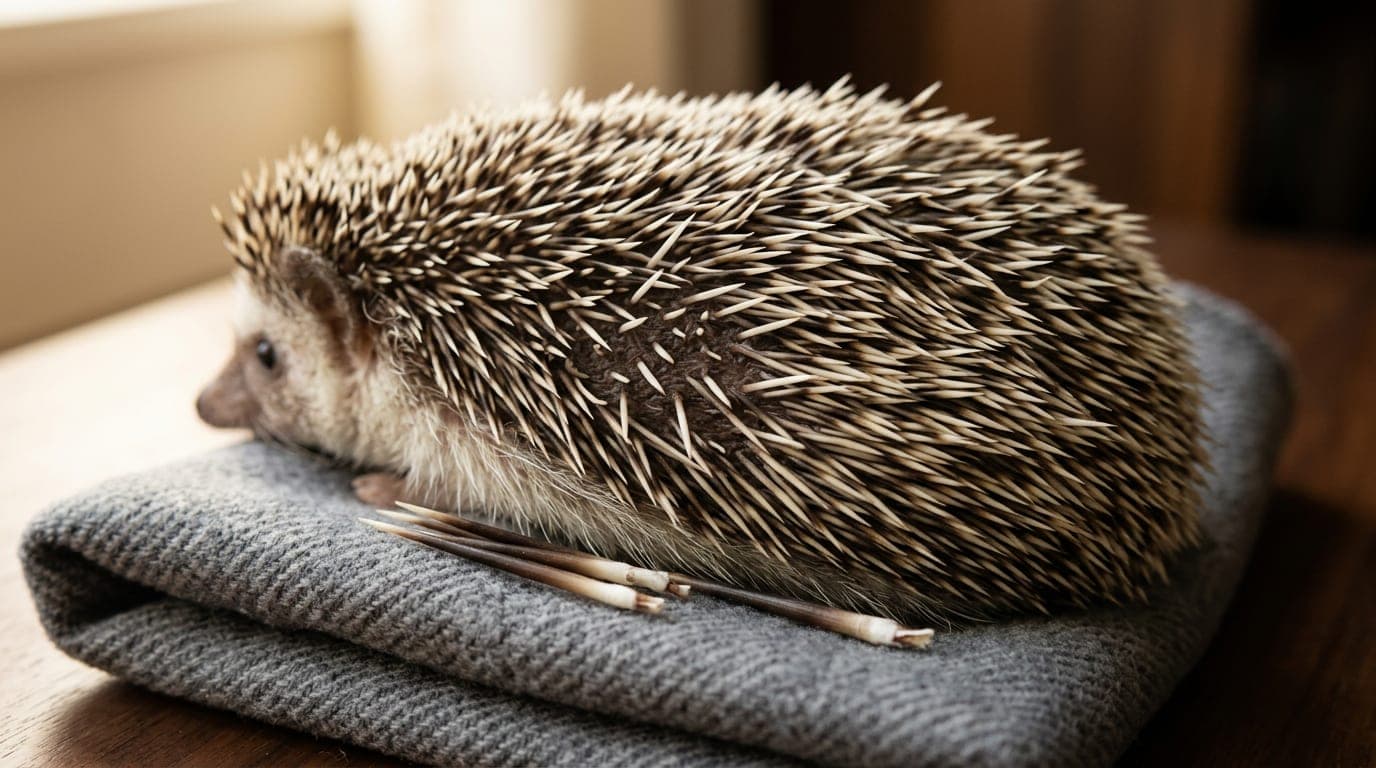
Quilling · new quills coming in · old ones shed · 2-4 weeks per phase
Quilling is the natural process of a hedgehog replacing one set of quills with another. It happens twice for sure (around 4 to 6 weeks and again around 4 to 6 months) and sometimes in smaller bursts throughout life. It looks alarming if you don't know what it is. The classic new-owner panic is finding 30 quills in the cage one morning and assuming the worst. This guide explains what's actually happening, how to tell quilling from the more serious thing it gets confused with (mites), and how to make your hedgehog more comfortable through it.
What quilling actually is
A hedgehog has roughly 5,000 to 7,000 quills covering most of their body. Like human hair, individual quills shed and regrow throughout life. What we call "quilling" is the larger, coordinated turnover when one developmental set of quills is replaced by another.
Three main quilling phases:
- First quilling: 4 to 6 weeks of age. Baby quills (soft, fine, white) replaced by juvenile quills (thicker, banded, more obvious). You usually don't see this because the hoglet is still with the breeder.
- Second quilling: 4 to 6 months of age. Juvenile quills replaced by adult quills (slightly thicker, full color pattern, final). This is the one most owners catch because the hedgehog is in their care by then.
- Smaller adult turnover: throughout life. Periodic minor shed-and-regrow cycles. Sometimes seasonal. A few quills at a time, no major change in coverage.
The mechanism is identical for all three: the old quill has reached the end of its lifespan and falls out, and a new quill grows in to replace it. The new quill emerges through the skin from the same follicle, which is part of why quilling is uncomfortable for the animal.
Signs of normal quilling
What you'll see when quilling is happening as it should:
- Quills appearing on the fleece liner or in the cage. Sometimes a few, sometimes a lot in one morning. Pick one up and look at the root: if it's white and pointy, it shed naturally. The pointy root is a good sign.
- New quills visibly emerging from the skin. If you gently part the existing quills along the back, you can see new ones poking up — sometimes as small white tips just breaking through.
- Mild dandruff-like flaking. The skin reorganizes around new quill growth, which produces some flaking. It should be modest and clear within a few weeks.
- Behavioral grumpiness. Increased huffing, more defensive balling-up, less tolerance during handling. They're uncomfortable; they're not turning against you.
- Mild scratching, especially with the back feet. Scratching the itchy area where new quills are coming through. Should be occasional, not constant.
The combination of the visible new quill growth and the white-rooted shed quills is the key marker. If you see those, quilling is the most likely explanation.
Signs it's not quilling
The thing quilling gets confused with most often is mites. The two can look similar at first glance but are quite different on close examination.
Looks like mites, not quilling, if:
- Lost quills don't show the white pointy root — instead they may be broken off, brittle, or pulled out by scratching
- No new quills are visible emerging through the skin
- Loss is in patches rather than balanced across the body
- Persistent scratching, especially at night
- Scabby, red, or broken skin where the scratching has caused damage
- Heavy dandruff-like flaking that worsens rather than resolves
- Behavioral lethargy, refusing food, becoming more lethargic over time
If you're seeing any of these, especially the patchy loss and persistent scratching, the next step is a vet skin scrape. The full mite treatment protocol is in the mites article.
Looks like fungal infection, not quilling or mites, if:
- Round patches of quill loss that look like they have defined edges
- Crusty or scaly appearance on the skin
- Sometimes itchy, sometimes not
- Doesn't resolve with mite treatment
Fungal infections (often ringworm) need a different prescription. A vet visit and skin scrape catches this distinction.
Looks like stress quilling, not normal quilling, if:
- Sudden quill loss after a stress event (move, new pet, illness)
- Otherwise normal-appearing skin and quills
- Resolves within a few weeks once stress is reduced
Stress can trigger or worsen a quilling episode. Not technically "abnormal," but worth knowing because the cause is environmental rather than developmental.
How to make quilling easier
Three things help most hedgehogs through a quilling phase:
Oatmeal baths
The single most useful intervention. Plain colloidal oatmeal (the kind sold for human eczema, no additives) stirred into shallow lukewarm water creates a soothing soak that calms itchy skin.
How to do it:
- Mix one cup of colloidal oatmeal into about 1 inch of lukewarm water in a small container or sink. The water should look milky.
- Place the hedgehog gently in the water for 5 to 10 minutes. Don't submerge them; let them stand in the shallow water.
- Use a soft cloth to gently dab the oatmeal water over their back and sides. Avoid the face.
- Rinse thoroughly with plain lukewarm water — oatmeal residue left in the quills can dry crusty.
- Towel dry completely, then return to a warm cage.
Once a week during a quilling phase is plenty. Skip the soap; oatmeal alone is enough.
Reduced handling intensity
Cut handling sessions to 10 to 15 minutes (down from the usual 20 to 30) and be extra gentle when picking them up. They may be more reactive to touch because the new quills coming through are tender at the base.
Don't skip handling entirely — the routine still matters and breaks in handling lengthen the recovery to baseline behavior afterward. Just dial down the intensity for the duration.
Patience with the personality shift
A hedgehog mid-quilling can be noticeably grumpier, more defensive, less responsive to scent recognition that worked the week before. This isn't permanent. Within 2 to 4 weeks of quilling completion, most return to their baseline temperament.
What doesn't help (despite common advice):
- Extra protein supplements. A common piece of internet advice. There's no evidence high-protein supplementation helps quilling, and it can stress kidneys in small mammals. Stick to the regular diet.
- Pulling loose quills. Don't pull anything that isn't already shed. Even loose-feeling quills will fall out on their own when ready.
- Aloe or moisturizer on the skin. Most products marketed as hedgehog-skin-friendly aren't tested at hedgehog scale. Stick to plain oatmeal water.
- Frequent baths. More than once a week dries the skin further and makes the discomfort worse.
When to call a vet during quilling
Most quilling phases resolve without veterinary involvement. Some warrant a call:
- Quill loss continues beyond 4 weeks without any new growth visible
- Skin becomes raw, bleeding, or visibly inflamed
- The hedgehog refuses food for more than 24 hours
- Lethargy that doesn't fit the usual "grumpy from discomfort" pattern
- You're not sure whether it's quilling or mites — better to confirm than guess
Vet visits during this period are usually short and reassuring. The skin scrape rules out mites; the visual exam confirms quilling. Once you've been through one quilling cycle and learned the difference, you'll handle the next with more confidence.
What's normal during quilling but feels alarming
Things that look bad but are usually fine:
- Bare-looking patches that are actually just thinner. New quill growth fills in over a week or two.
- The hedgehog seems to "shrink." Without their full quill density they look smaller. They're not.
- They become more vocal. Some hedgehogs huff more or make small distress noises during the discomfort. Returns to baseline post-quilling.
- Refusing handling that they'd accepted before. Temporary regression. Resume gradually once quilling completes.
- More time hidden in the hide. Reasonable response to feeling uncomfortable. Make sure they're still eating and drinking.
Things that look fine but warrant attention:
- Behavioral changes that persist beyond the quilling window (more than 4 to 6 weeks)
- Quill loss that continues past the expected end date
- Smell changes from the cage that aren't explained by cleaning frequency
The order of the developmental quilling
If you brought your hedgehog home around 8 weeks, you missed the first quilling but you'll catch the second. The timeline:
- Weeks 1 to 4 with you: baseline behavior, juvenile quills
- Months 2 to 4 with you (so 4 to 6 months of age): second quilling. Expect 2 to 4 weeks of the signs above.
- Months 5 onward: baseline adult behavior, occasional minor turnover
Some hedgehogs have a less obvious second quilling and barely noticeable changes; others have a dramatic phase that produces a noticeable cage of shed quills and visible new growth. Both are normal individual variation.
After the second quilling, future quill changes are gradual and rarely noticeable unless you specifically look. A few quills here and there, regrown without ceremony.
Quick reference: is this quilling?
A diagnostic shortcut for the moment of panic:
| Sign | Likely quilling? |
|---|---|
| White pointy root on shed quills | Yes |
| New quills visibly emerging | Yes |
| Hedgehog is 4 to 6 months old | Yes (this is the window) |
| Loss is balanced across body | Yes |
| Mild flaking, mild grumpiness | Yes |
| Patchy loss with bare skin | Probably mites |
| No new quills emerging | Probably mites or fungal |
| Persistent scratching at night | Probably mites |
| Scabs or broken skin | Vet visit either way |
| Refusing food more than 24 hours | Vet visit either way |
If most of your signs are in the upper section, you're almost certainly looking at quilling. Run an oatmeal bath, dial back handling intensity, and wait for it to pass. If most of your signs are in the lower section, the next step is the vet.
Common questions
Common questions
How long does hedgehog quilling last?
Each quilling phase typically lasts 2 to 4 weeks. The first phase happens around 4 to 6 weeks of age (when you usually don't see it because the hoglet is still with the breeder), and the second phase happens around 4 to 6 months when juvenile quills are replaced by adult ones. Some hedgehogs go through smaller quill turnover periods throughout life, especially seasonally.
How can I tell if my hedgehog is quilling or has mites?
Quilling: lost quills have a white pointy root, you see new quills emerging visibly through the skin, the loss is gradual and balanced across the body, no excessive scratching. Mites: lost quills come out in patches with no new growth, persistent scratching especially at night, scabby or red patches on the skin, dandruff-like flaking that doesn't resolve. When in doubt, get a vet skin scrape — they'll tell you definitively.
How can I help my hedgehog during quilling?
Three things help most: oatmeal baths once a week (a cup of plain colloidal oatmeal stirred into shallow lukewarm water, then a careful rinse) to soothe itchy skin; shorter and gentler handling sessions because they're physically uncomfortable; and patience because they may be huffier and more defensive. Avoid extra protein supplements — that's a common piece of advice that doesn't have evidence behind it and can cause kidney strain.
Is it normal for hedgehogs to lose quills as adults?
A few quills here and there throughout life is completely normal. They shed and regrow continuously, like human hair. What's not normal: bald patches, quills that come out easily when gently lifted, persistent loss without new growth, or any of these combined with skin issues. If you can lift visible patches of skin under the quills, that's beyond normal shedding.
Why is my hedgehog so grumpy during quilling?
Because new quills emerging through the skin is physically uncomfortable, like adult teething. They may huff more, ball up more readily, refuse to unfurl during handling, and seem generally less tolerant. This is temporary. Reduce handling intensity but don't skip it entirely — the routine still matters. They go back to baseline within 2 to 4 weeks.
Related on this site
Sources
Sources
- African pygmy hedgehog — quilling, dermatology, and developmental considerations — LafeberVet
- Hedgehogs — owning, behavior, and developmental milestones — VCA Animal Hospitals